
Book Review: Renaissance scholar illuminates brief, transgressive life of poet Christopher Marlowe
Advertisement
Read this article for free:
or
Already have an account? Log in here »
We need your support!
Local journalism needs your support!
As we navigate through unprecedented times, our journalists are working harder than ever to bring you the latest local updates to keep you safe and informed.
Now, more than ever, we need your support.
Starting at $15.99 plus taxes every four weeks you can access your Brandon Sun online and full access to all content as it appears on our website.
Subscribe Nowor call circulation directly at (204) 727-0527.
Your pledge helps to ensure we provide the news that matters most to your community!
To continue reading, please subscribe:
Add Brandon Sun access to your Free Press subscription for only an additional
$1 for the first 4 weeks*
- Enjoy unlimited reading on brandonsun.com
- Read the Brandon Sun E-Edition, our digital replica newspaper
*Your next Free Press subscription payment will increase by $1.00 and you will be charged $20.95 plus GST for four weeks. After four weeks, your payment will increase to $24.95 plus GST every four weeks.
Read unlimited articles for free today:
or
Already have an account? Log in here »
Hey there, time traveller!
This article was published 25/08/2025 (361 days ago), so information in it may no longer be current.
The English poet and playwright Christopher Marlowe was born in 1564, the same year as his frenemy William Shakespeare. Yet unless you majored in English in college, it is quite possible you never heard of him. Except you have.
Marlowe was the guy who wrote about Helen of Troy: “Was this the face that launched a thousand ships” (“Doctor Faustus”). Who penned the much-imitated line “Come live with me and be my love” (“The Passionate Shepherd to His Love”). Who virtually invented Elizabethan theater by writing his first play for the London stage, “Tamburlaine,” in unrhymed blank verse.
In his riveting new biography, “Dark Renaissance: The Dangerous Times and Fatal Genius of Shakespeare’s Greatest Rival,” Harvard scholar Stephen Greenblatt explores Marlowe’s short, subversive life and argues that it was he, even more than Shakespeare, who “awakened the genius of the English Renaissance.”
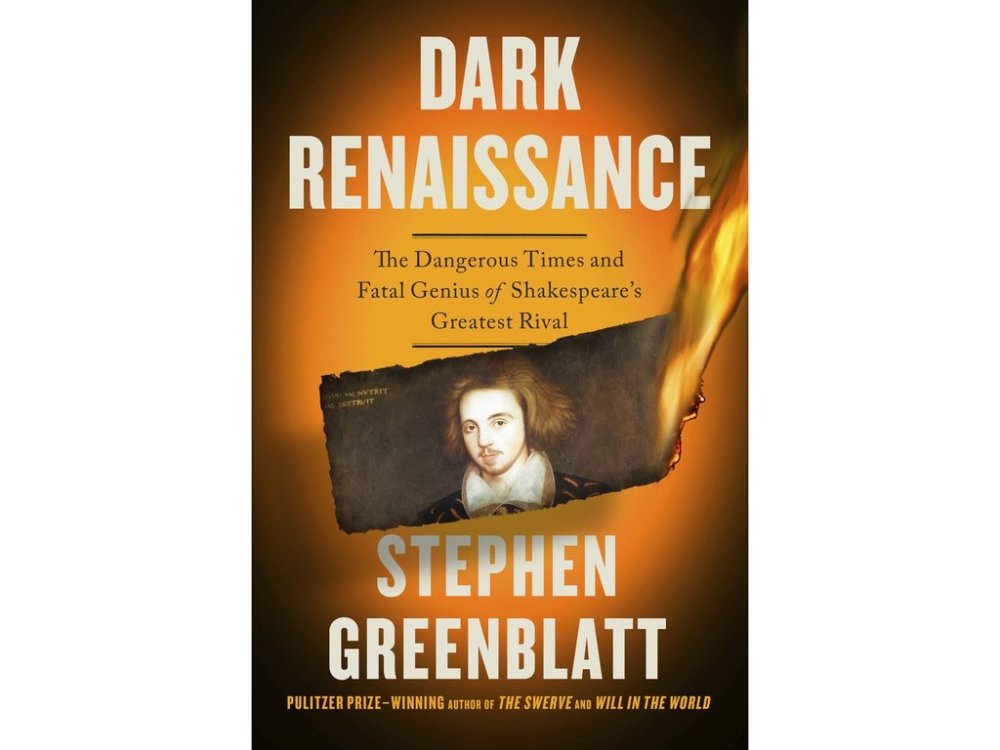
Born to a poor cobbler in Canterbury, “Kit” Marlowe was a prodigy from the start. He won a scholarship to a private secondary school, where he was first exposed to Greek and Latin poetry and “a whole world opened up.” From there, it was on to Cambridge, again on a scholarship, where he earned his bachelor’s and master’s degrees.
Under ordinary circumstances, a boy from his humble background could have looked forward to a career in the church. But nothing about Marlowe was ordinary. Indeed, Greenblatt argues that during the years he was pursuing his master’s degree, he was likely recruited as a spy for the royal court, tasked with hunting down Catholic subversives plotting to overthrow the Protestant monarch. Then, at age 29, he was killed in a bar fight for reasons that are not entirely clear, though Greenblatt suggests he had run afoul of authorities because of his “transgressive” personality, including being an atheist and queer.
In previous books including “Will in the World,” his best-selling biography of Shakespeare, and the Pulitzer Prize-winning “The Swerve,” Greenblatt emphasized the importance of cultural context in understanding literature, the so-called “new historicism.” In “Dark Renaissance,” he does so with dazzling effects, evoking England circa 1580 as an almost dystopian backwater:
“Narrow lanes were filled with excrement and offal. On London Bridge… severed heads of convicted traitors were stuck up on spikes.” The queen was paraded “like a weird religious icon,” “her face painted a ghastly white… her teeth turning black.” Then, Greenblatt writes, “not instantly but with startling rapidity,” everything changed, with one “remarkable figure” embodying the “ferocious energy and daring” of the era. That figure wasn’t Shakespeare, it was Marlowe.
___
AP book reviews: https://apnews.com/hub/book-reviews