
Hollywood meets the Middle East as Red Sea International Film Festival opens in Jeddah
Advertisement
Read this article for free:
or
Already have an account? Log in here »
We need your support!
Local journalism needs your support!
As we navigate through unprecedented times, our journalists are working harder than ever to bring you the latest local updates to keep you safe and informed.
Now, more than ever, we need your support.
Starting at $15.99 plus taxes every four weeks you can access your Brandon Sun online and full access to all content as it appears on our website.
Subscribe Nowor call circulation directly at (204) 727-0527.
Your pledge helps to ensure we provide the news that matters most to your community!
To continue reading, please subscribe:
Add Brandon Sun access to your Free Press subscription for only an additional
$1 for the first 4 weeks*
*Your next subscription payment will increase by $1.00 and you will be charged $20.00 plus GST for four weeks. After four weeks, your payment will increase to $24.00 plus GST every four weeks.
Read unlimited articles for free today:
or
Already have an account? Log in here »
JEDDAH, Saudi Arabia (AP) — The fifth edition of the Red Sea International Film Festival, one of the Middle East’s largest film festivals, opened Thursday in the coastal city of Jeddah, marking a significant moment for the kingdom’s growing film industry.
Running from Dec. 4 to 13, the Red Sea International Film Festival brings together filmmakers and talent from around the world, screening more than 100 films from over 70 countries.
The festival’s prestigious “Red Sea: Competition” strand features a selection of 16 narrative features, animations and documentaries from the Arab world, Asia and Africa, all vying for the top honor: the Yusr Awards, which will be presented at the closing ceremony.
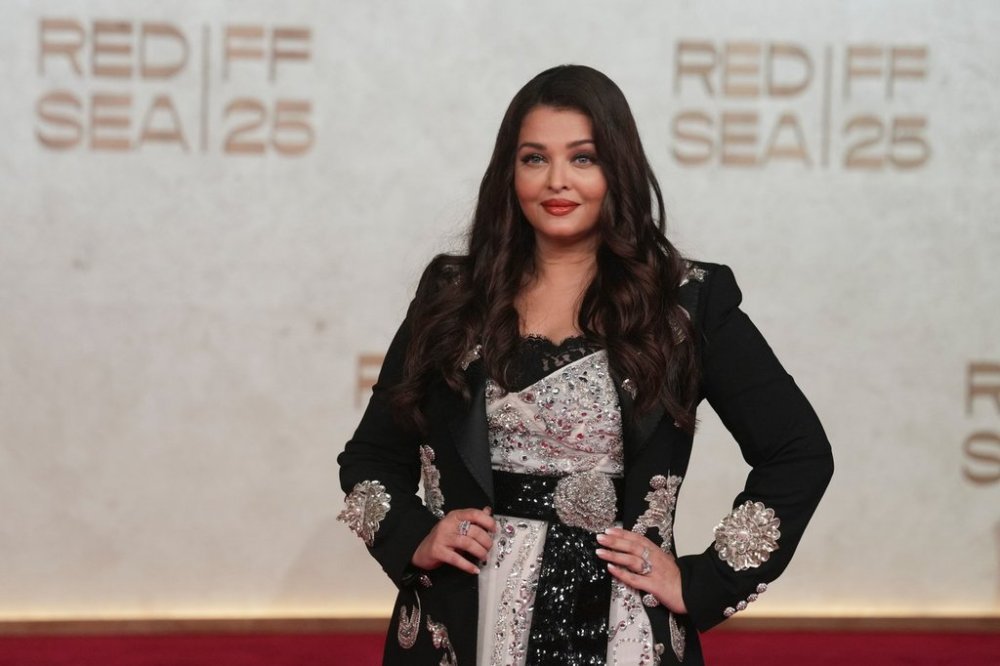
The festival takes place in Jeddah’s Al-Balad district — a UNESCO World Heritage site — blending Saudi heritage with international cinema.
This year, the selection jury is being led by the Academy Award-winning filmmaker Sean Baker, best known for “Anora,” which won five Oscars, four of which went to Sean Baker himself.
“This festival is really exciting because of how big it’s become just in the last five years,” Baker said. “It’s rare that I see a festival just exploding in terms of importance and impact on world cinema.”
The festival opens with “Giant,” a true story of legendary British-Yemeni boxing champion Prince Naseem ‘Naz’ Hamed. The film stars Egyptian-British actor Amir El-Masry as Hamed and Pierce Brosnan as his Irish trainer, Brendan Ingle, and is directed by British filmmaker Rowan Athale.
“It was probably one of the hardest roles I’ve ever done,” El-Masry said, noting that his preparation involved four and a half weeks of training, during which he lost about eight kilos.
“It’s been a passion project for me for a long time,” said Athale. “I come from a similar neighborhood — actually within a few miles of Naz. He was a hero of mine growing up, particularly being multiracial in the region. I’ve always wanted to make a film about him. So it’s a privilege to make it.”
Reflecting on the premiere, he added, “To have it as the opening night film here — I mean, look at this. I’ve never seen anything like this. Not at Cannes, not anywhere. It’s daunting, it’s terrifying, but it’s an honor.”
The opening night drew a wide range of international stars, including Hollywood and Bollywood figures including Adrien Brody, Sir Michael Caine, Vin Diesel and Ana de Armas walking the red carpet.
Veteran actor Giancarlo Esposito, also attending the festival, said the gathering reflects the unifying power of cinema. “This celebration at the Red Sea Film Festival is really about celebrating film,” he said.
The Red Sea International Film Festival was founded by Saudi Arabia’s Ministry of Culture and supported by the Red Sea Film Foundation. It is funded by the kingdom’s Public Investment Fund sovereign wealth fund and private sponsors. It aims to play a vital role in promoting regional filmmakers and fostering global connections.
The festival is part of Saudi Arabia’s Vision 2030 objectives, which include diversifying the economy, strengthening cultural infrastructure and fostering local creative talent.
The event comes as Saudi Arabia invests heavily in sectors like film, gaming and sports as part of its broader transformation efforts. However, various rights groups have criticized these actions, saying they serve to draw away attention from the kingdom’s human rights record, including its high rate of executions and restrictions on free expression.