
As men’s health enters the national conversation, advocates call for co-operation
Advertisement
Read this article for free:
or
Already have an account? Log in here »
We need your support!
Local journalism needs your support!
As we navigate through unprecedented times, our journalists are working harder than ever to bring you the latest local updates to keep you safe and informed.
Now, more than ever, we need your support.
Starting at $15.99 plus taxes every four weeks you can access your Brandon Sun online and full access to all content as it appears on our website.
Subscribe Nowor call circulation directly at (204) 727-0527.
Your pledge helps to ensure we provide the news that matters most to your community!
To continue reading, please subscribe:
Add Brandon Sun access to your Free Press subscription for only an additional
$1 for the first 4 weeks*
*Your next subscription payment will increase by $1.00 and you will be charged $20.00 plus GST for four weeks. After four weeks, your payment will increase to $24.00 plus GST every four weeks.
Read unlimited articles for free today:
or
Already have an account? Log in here »
OTTAWA – The upcoming launch of a national strategy on men’s and boys’ health is a positive sign that men’s well-being is becoming part of the mainstream conversation in Canada, advocates say — even as they warn that it should not become partisan political fodder.
The Movember Institute of Men’s Health and researchers from the University of British Columbia called on the government to launch such a strategy in a report released last summer.
Health Minister Marjorie Michel said she plans to launch a national strategy on men’s and boys’ health in 2026 by working with colleagues in multiple departments, including Veterans Affairs, Women and Gender Equality and Indigenous Services.
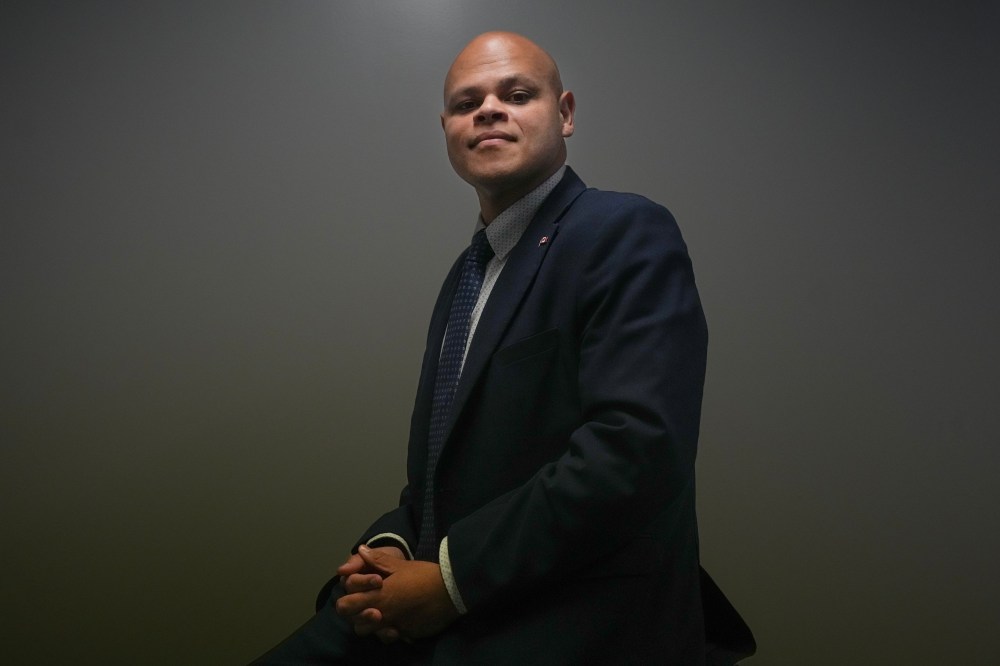
Catherine Corriveau, Movember’s director of policy and advocacy, said the government has taken an important first step by acknowledging the problem.
“Men and boys haven’t really been part of the conversation in government policy,” she said.
The Movember report’s findings showed Canadian men are about three times more likely than women to die by suicide, and face significant barriers in seeking access to all kinds of health care.
Corriveau said Canada can look to the United Kingdom and Australia for guidance — countries which have launched men’s health strategies of their own.
The U.K. strategy report points out that British men live shorter lives than women and are more likely to be diagnosed with cancer, cardiovascular disease and Type 2 diabetes. Three out of four people who died by suicide in the U.K. in 2024 were men.
The British report also states that “good health is not a zero-sum game and improving the health and well-being of men and women are complementary objectives.”
It calls for changes to the health-care system, better funding for disease prevention initiatives, and social change.
The British report also notes that men are the primary perpetrators of violence against women and that exposure to domestic violence in childhood can increase one’s risk of becoming a victim or a perpetrator of such violence in adulthood. It looks to close the gap in services for men and boys who are victims of violence at home.
Michel’s office said she plans to engage on the coming strategy with MPs from all sides of the House of Commons.
One of the people who wants to be part of that discussion is Conservative MP Jamil Jivani, who has been gathering signatures for an open letter he presented to Prime Minister Mark Carney in late January calling for action to help young men “in crisis.”
Jivani said he thinks a national strategy is a win — as long as it’s followed up by action.
He echoed calls for investment in mental health care and addiction treatment programs and said the federal government needs to get serious about the number of young people who can’t find jobs.
Jivani has undertaken a tour of university campuses in Canada. In an interview with The Canadian Press in January, he said he hopes this will help him become “the country’s No. 1 expert on what young people in Canada want for their future.”
He said he’d be willing to help the Liberal government in its efforts to draft a strategy, if it asked.
The Ontario MP drew criticism from the Liberal benches and got a dismissive response from Carney last week when he travelled to Washington, D.C., to meet his longtime friend, Vice President J.D. Vance.
It seems the reception from the government side will be different in this case: a spokesperson for Michel said her office will be in touch with Jivani soon.
Jivani’s interest in the issue predates his political career. His 2018 book “Why Young Men” looked to explore how young men were becoming radicalized toward violence.
He said he’s seen a positive shift in the conversation since then.
He said that as he wrote the book, he “felt like it was very difficult for people to acknowledge that young men might be in a disadvantaged position.”
“I really believe good-hearted, well-intentioned people used to feel that if you’re talking about boys, you’re taking something from girls, or vice versa, and I just think we’re over that now.”
He chalked that up in part to social media, where he said men have been able to open up about their experiences and find support.
But he acknowledged social media can also be a source of negative influences — particularly for young men who feel isolated and are susceptible to algorithms pushing them into darker spaces. Influencers like Andrew Tate, for example, “have hatred in them toward women in many cases,” he said.
Corriveau said Movember is trying to reach young men online with more positive, healthier alternatives to the so-called “manosphere.”
“I think it stems from bigger societal problems where men are feeling like they need to find answers,” she said.
Corriveau said a public health approach is needed to deal with those problems.
“This is not a partisan issue,” she said.
This report by The Canadian Press was first published Feb. 8, 2026.