
In the hour of chaos, Allison Russell chooses connection
Advertisement
Read this article for free:
or
Already have an account? Log in here »
We need your support!
Local journalism needs your support!
As we navigate through unprecedented times, our journalists are working harder than ever to bring you the latest local updates to keep you safe and informed.
Now, more than ever, we need your support.
Starting at $15.99 plus taxes every four weeks you can access your Brandon Sun online and full access to all content as it appears on our website.
Subscribe Nowor call circulation directly at (204) 727-0527.
Your pledge helps to ensure we provide the news that matters most to your community!
To continue reading, please subscribe:
Add Brandon Sun access to your Free Press subscription for only an additional
$1 for the first 4 weeks*
- Enjoy unlimited reading on brandonsun.com
- Read the Brandon Sun E-Edition, our digital replica newspaper
*Your next Free Press subscription payment will increase by $1.00 and you will be charged $20.95 plus GST for four weeks. After four weeks, your payment will increase to $24.95 plus GST every four weeks.
Read unlimited articles for free today:
or
Already have an account? Log in here »
TORONTO – Allison Russell isn’t a big doomscroller.
Not because the Grammy-winning singer-songwriter is unaware of what’s happening around her — quite the opposite.
“I’m a queer, Black, Canadian woman immigrant, living in the U.S. right now, living in Tennessee, which is experiencing a rise in fascism and bigotry and a bad-acting, concerted effort to drive wedges between people and to make people fear each other,” she says.
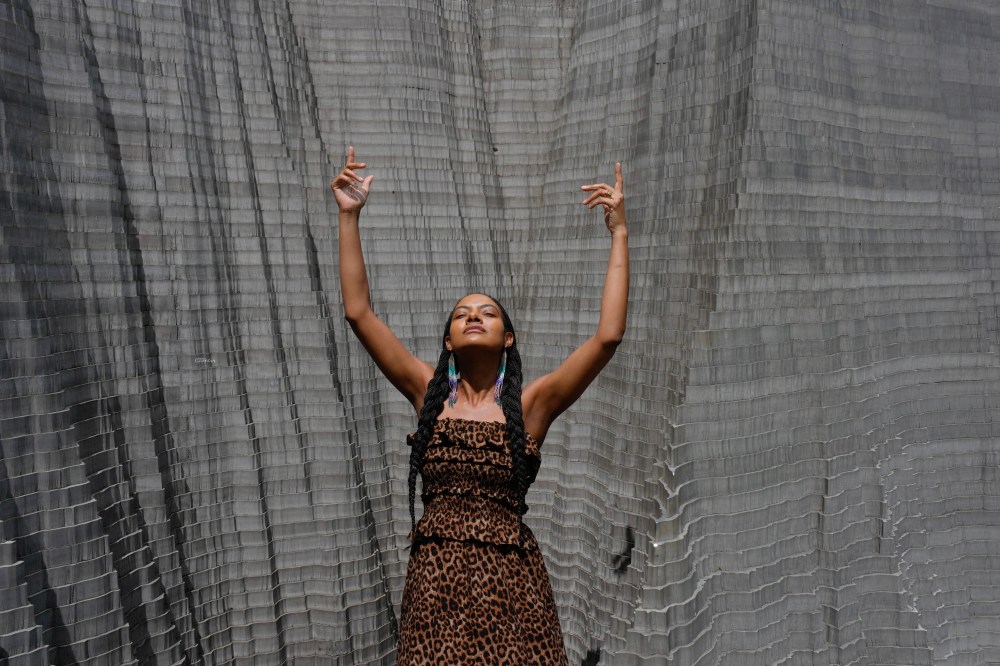
But Russell believes despair can become its own kind of trap.
“There’s plenty that is awful that’s happening, but the only antidote that we have to that is imagining better together in real life,” she explains on a balmy day in Toronto.
Her new album, “In the Hour of Chaos,” is built around that idea: that in a moment in President Donald Trump’s America where communities are being fractured, coming together can be an act of defiance.
Out this week, it’s the Montreal-born, Nashville-based roots artist’s third solo album, though it’s “solo” only in the loosest sense. The record brings together a sprawling cast of collaborators, many of them women of colour: Ruby Amanfu, Brittney Spencer, Norah Jones, Joy Oladokun and Kyshona, among several more.
The result is an uplifting collection of sun-drenched folk-pop songs that sound like a chorus of voices refusing to be drowned out by a storm.
“I was feeling the need very much to just be in community with people that I love and admire and who love and admire me back,” says Russell. “To just build circles of safety and joyful resistance, frankly, to those narratives that try to dehumanize us.”
Resilience has become a defining thread in Russell’s work, forged through deeply personal experience. On her 2021 debut, “Outside Child,” she recounted the childhood sexual abuse she endured at the hands of her adoptive father before leaving home as a teenager and finding her “chosen family.”
But on 2023’s “The Returner,” she shifted the focus from what was lost to what was reclaimed, celebrating survivor’s joy. “Eve Was Black” — a track from the album where she confronts the racism tied to her abuse — earned Russell her first Grammy in 2024 for best American roots performance.
Now, on “In the Hour of Chaos,” she moves from documenting personal wounds to addressing the collective suffering of a world in crisis.
But rather than dwell on the crises unfolding around her, Russell explains she wanted to create music rooted in possibility.
“When you get stuck in an endless cycle of outrage or apathy and repudiation of all that is wrong, instead of imagining what we could do right, that is a trap,” she says.
Opening track “Rainbows” is a breezy, acoustic ode to hope amid uncertainty, where she sings, “Magic’s only magic if you believe it.”
Russell recently spent time on Broadway playing Persephone in “Hadestown,” an opportunity that came after fans who saw her open for Irish singer Hozier on his 2024 tour began campaigning online for her to join the cast. She says the experience inspired the partly theatrical approach of her new album, calling it “the mixtape for a musical that has yet to be written.”
One song, the celestial lullaby “Two Stars,” reunites her with Nigerian-American actor Chibueze Ihuoma, whom she met while performing in “Hadestown.”
Russell says the album’s communal ethos reflects the chosen family she’s built throughout her career.
She still marvels at becoming friends with Norah Jones — who she duets with on the soul-stirring “Really Real” — after the pair performed together at Willie Nelson’s 90th birthday celebration.
Russell also lights up when talking about her friendship with Joni Mitchell, having become a regular at the legendary Canadian singer-songwriter’s recurring ‘Joni Jam’ sessions. Earlier this year, Russell joined Mitchell onstage at the Juno Awards for a group performance of “Big Yellow Taxi” as Mitchell accepted a lifetime achievement award.
She credits Mitchell herself with offering advice that has become something of a creative mantra.
“More muse, less ick,” Russell recalls Mitchell telling her.
“Don’t chase trends. Don’t chase hits. Just follow your muse and make art. That’s Joni.”
Living in the U.S., Russell says she’s been watching civil rights erode with alarming speed, while expressing appreciation that her home country has avoided the same path: “Thankfully Canada saw what happened in the U.S. and we made a different decision here.”
Still, she believes the answer to a fractured world isn’t more division.
“We’ve got to call each other in,” she says, riffing on the language of online call-out culture. “Back into the circle together. Back into creative communion, creative problem solving.”
That outlook is also shaped by motherhood. Russell dedicates the album to her 12-year-old daughter Ida Maeve, who sings on the fizzy, keyboard-dappled “Cold April” along with her middle school choir.
“I never thought I would be a mother,” she says. “She makes me try to do better and be braver every day.”
Ultimately, Russell says that’s what “In the Hour of Chaos” is trying to do as well.
“We have to think about the next seven generations of humanity and the planet and how we are safeguarding all this bounty and beauty for them,” she says.
“We have to do the next good thing that we can do with as many people as we can.”
This report by The Canadian Press was first published July 11, 2026.