
The Oscar statuette is Hollywood’s ultimate recognition, full of lore, mysteries and rules
Advertisement
Read this article for free:
or
Already have an account? Log in here »
We need your support!
Local journalism needs your support!
As we navigate through unprecedented times, our journalists are working harder than ever to bring you the latest local updates to keep you safe and informed.
Now, more than ever, we need your support.
Starting at $15.99 plus taxes every four weeks you can access your Brandon Sun online and full access to all content as it appears on our website.
Subscribe Nowor call circulation directly at (204) 727-0527.
Your pledge helps to ensure we provide the news that matters most to your community!
To continue reading, please subscribe:
Add Brandon Sun access to your Free Press subscription for only an additional
$1 for the first 4 weeks*
- Enjoy unlimited reading on brandonsun.com
- Read the Brandon Sun E-Edition, our digital replica newspaper
*Your next Free Press subscription payment will increase by $1.00 and you will be charged $20.95 plus GST for four weeks. After four weeks, your payment will increase to $24.95 plus GST every four weeks.
Read unlimited articles for free today:
or
Already have an account? Log in here »
LOS ANGELES (AP) — I’d like to thank the Academy for the Oscar.
Yes, the awards might have been a mere afterthought in Louis B. Mayer’s dreams for “the Academy” — part PR ploy to persuade the public that Hollywood was not a den of sin and scandal, part consolidation of power by a group of producers bucking unionization efforts. Yes, no one knows exactly who is responsible for the name “Oscar” (though Academy librarian Margaret Herrick is said to have nicknamed the statue after her uncle).
And yes, they often get it very wrong. Let’s not forget that “Citizen Kane” and “Brokeback Mountain” lost best picture, that “Crash” and “Green Book” won, that “2001: A Space Odyssey,” “Do the Right Thing” and “Hoop Dreams” weren’t even nominated and that David Lynch never received a competitive Oscar. Sometimes they get it right, too (see: “One Battle After Another”).
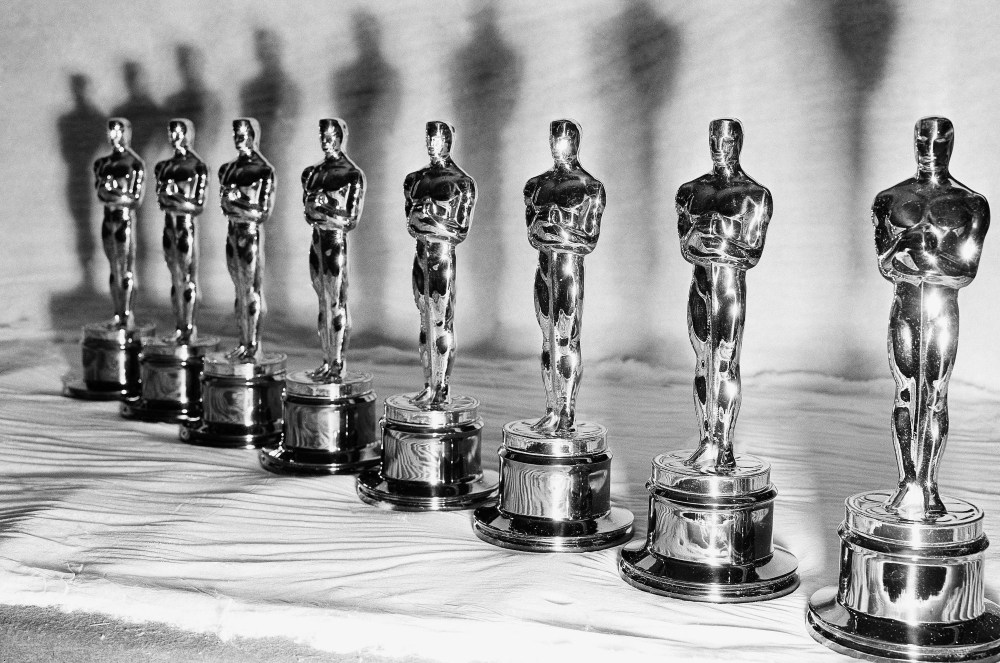
Like many things about the business of making movies in America, the Oscars are full of contradictions.
It is at once an undeniable honor — the most recognizable award one can receive for making movies — and a manifestation of everything that’s rotten in moviemaking, with egos, money and power tipping the scales over merit. But since the first awards were handed out in 1929 in a ceremony that took all of 10 minutes, the Oscars have become a cultural bellwether and a billion-dollar cottage industry — the culmination of an “awards season” supporting consultants, pundits, publications, stylists, stagehands and dreamers.
The value of an Oscar is both everything and nothing. The statue itself is relatively modest. Studios shell out tens of millions on awards campaigns. For some lucky winners, bigger paychecks can follow. Still, it’s hardly a guarantee of a better life or career. And the resale market is complicated. If you won your award after 1951, neither you nor your heirs may sell or even dispose of the statue without first giving the Academy the option to purchase it for $1.
Oscar’s popularity has fluctuated across the years. Not just with viewers, who have tuned in and out since the first broadcast in 1953. In 1969, a 22-year-old Candice Bergen raised her hand to help recruit a younger class of Academy members, like Dennis Hopper. In 2015, a tweet, #OscarsSoWhite, started another membership revolution. Critics have been crying irrelevance since its earliest days.
Still, we watch. Complaining about the Oscars is, after all, its own pastime.
___
Lindsey Bahr is a movie writer for The Associated Press. Part of a recurring series, “American Objects,” marking the 250th anniversary of the United States. For more American objects, click here. For more stories on the anniversary, click here.