
Hope and laughter: Comedy’s role after 9/11 terrorist attacks
Advertisement
Read this article for free:
or
Already have an account? Log in here »
We need your support!
Local journalism needs your support!
As we navigate through unprecedented times, our journalists are working harder than ever to bring you the latest local updates to keep you safe and informed.
Now, more than ever, we need your support.
Starting at $15.99 plus taxes every four weeks you can access your Brandon Sun online and full access to all content as it appears on our website.
Subscribe Nowor call circulation directly at (204) 727-0527.
Your pledge helps to ensure we provide the news that matters most to your community!
To continue reading, please subscribe:
Add Brandon Sun access to your Free Press subscription for only an additional
$1 for the first 4 weeks*
- Enjoy unlimited reading on brandonsun.com
- Read the Brandon Sun E-Edition, our digital replica newspaper
*Your next Free Press subscription payment will increase by $1.00 and you will be charged $20.95 plus GST for four weeks. After four weeks, your payment will increase to $24.95 plus GST every four weeks.
Read unlimited articles for free today:
or
Already have an account? Log in here »
Jasmeet Raina leaned on comedy days after the Sept.11, 2001, terrorist attacks, when students at school began circulating rumours that his uncle was Osama bin Laden.
“They were like, ‘Oh yeah, we saw Osama drop him off at school,'” he said.
The driver was his father, who is Sikh, wears a turban and took Raina to his middle school in Guelph, Ont., not the al-Qaida leader who plotted the deadly attacks on the United States.
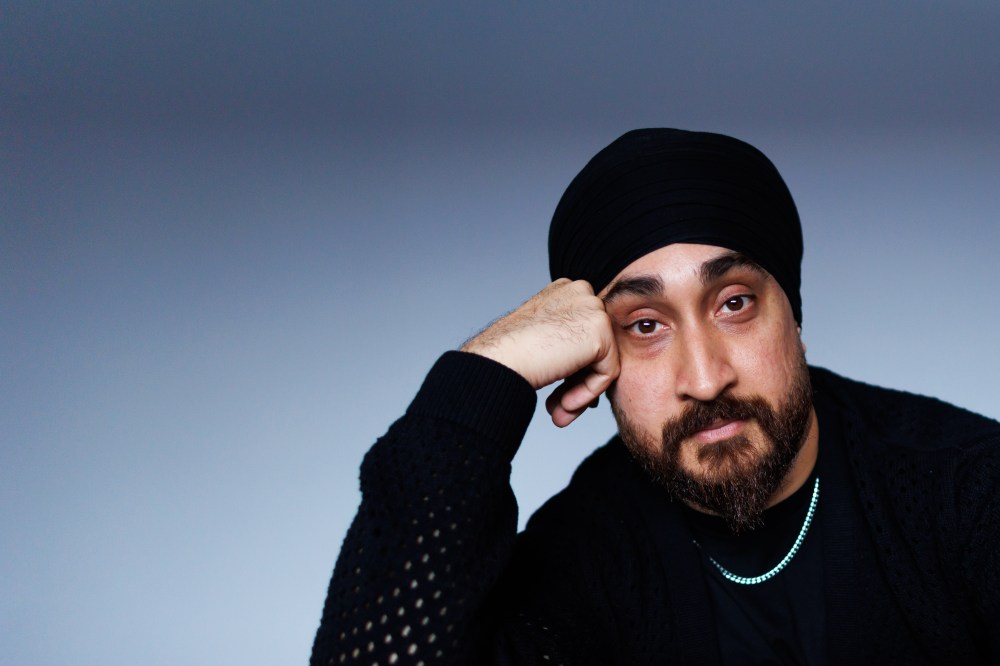
“It was a pretty traumatic part of my life, as I’m sure it was for a lot of people,” recalled the 36-year-old.
He used humour to defuse that tension and show others at school that he wasn’t a threat.
“I became a class clown,” said Raina, now a professional comedian and actor.
“I always liked comedy, but I really used it at that moment, because it was more like a survival instinct,” he said.
At that time not a lot of people knew what Sikh people were. I did my best to try to educate people on this.”
Next week marks the 25th anniversary of 9/11.
In the years after the attacks, Raina began posting comedic skits and monologues on YouTube about being a racialized kid growing up in Canada. They garnered hundreds of thousands of views and subscribers.
Those experiences also inspired his TV show “Late Bloomer,” streaming on Crave.
Set in suburban Toronto, the dramedy follows his character, Jasmeet Dutta, as he chases viral fame while navigating his family’s expectations.
One episode called “Not My Uncle” follows Raina’s own experience as a child at school on 9/11.
The attacks changed comedy, said Raina.
“There’s pre-9/11 racism and post-9/11 racism. And pre-9/11 was like more lighthearted Apu jokes (from “The Simpsons”), gas station jokes, taxi driver jokes,” he said.
“Then post-9/11, it just changed drastically, like, ‘You’re a terrorist, you want to bomb people, you want to kill.'”
Marlis Schweitzer, a theatre and performance studies professor at York University, said people around the world turned to comedy to overcome the trauma after 9/11.
It didn’t happen right away.
“In the immediate aftermath, there was this sense that irony was dead, that satire was dead,” Schweitzer said. “It was not acceptable to laugh or to poke fun at the horrific tragedy and the trauma of 9/11.”
After the attacks, comedian Rick Mercer cancelled his wildly popular segment “Talking to Americans” on CBC’s satirical news show “This Hour Has 22 Minutes.”
But there was eventually room for laughter.
James Nadler, a screenwriting and television professor at Toronto Metropolitan University, said many comedians started helping their audiences make sense of the tragedy.
“When we laugh, it’s because we recognize, ‘oh yeah, that is true,'” he said.
“In the core of every joke there is truth.”
Jon Stewart began criticizing government policies in his late-night satirical show in the United States.
“‘The Daily Show’ moved from being about pop culture to being much more political in its thrust, in terms of its comedy,” said Nadler.
And many tuned in to watch.
“There’s a whole generation that did not get their news from NBC or the New York Times or even Fox, but were getting it from the ‘Daily Show,'” Nadler said, adding the show inspired other satirical programming.
In Canada, Mercer launched the flagship “Rick Mercer Report” in 2004, travelling across the country, poking fun at politicians along the way.
Racialized Canadian comedians such as Raina and Russell Peters also began sharing their personal experiences with racism through comedy, Schweitzer added.
One of her favourite Canadian plays “The Adventures of Ali and Ali and the Axis of Evil” was produced after 9/11. The comedy follows two refugees from a war-torn country as they try to adapt to western culture.
Social media was also relatively new at the time, Schweitzer said, and it helped comedians share their satire across the world.
“The big genre shift was not so much longer-form comedy, but really bite-size comedy.”
Historically, comedy has always helped people overcome pain, Schweitzer said
“People, in periods of great loss and uncertainty, are seeking forms of community, ways of sharing connection, hope, laughter and comedy can provide that.”
This report by The Canadian Press was first published Sept. 5, 2026.