
‘The Final Act’ offers an intimate look at death through people who chose MAID
Advertisement
Read this article for free:
or
Already have an account? Log in here »
We need your support!
Local journalism needs your support!
As we navigate through unprecedented times, our journalists are working harder than ever to bring you the latest local updates to keep you safe and informed.
Now, more than ever, we need your support.
Starting at $15.99 plus taxes every four weeks you can access your Brandon Sun online and full access to all content as it appears on our website.
Subscribe Nowor call circulation directly at (204) 727-0527.
Your pledge helps to ensure we provide the news that matters most to your community!
To continue reading, please subscribe:
Add Brandon Sun access to your Free Press subscription for only an additional
$1 for the first 4 weeks*
- Enjoy unlimited reading on brandonsun.com
- Read the Brandon Sun E-Edition, our digital replica newspaper
*Your next Free Press subscription payment will increase by $1.00 and you will be charged $20.95 plus GST for four weeks. After four weeks, your payment will increase to $24.95 plus GST every four weeks.
Read unlimited articles for free today:
or
Already have an account? Log in here »
TORONTO – After filming 69-year-old Céline Carpentier take her final breaths before a medically assisted death, Sophie Deraspe couldn’t help but notice, in sharp focus, all the life around her.
On the hour-long drive back home, the Montreal filmmaker said mundane scenes seemed to vividly come to life — the light shining, people talking, cars moving, and even the person mowing the lawn.
Her son was the first person she saw when she arrived home. She told him she had just filmed a person dying.
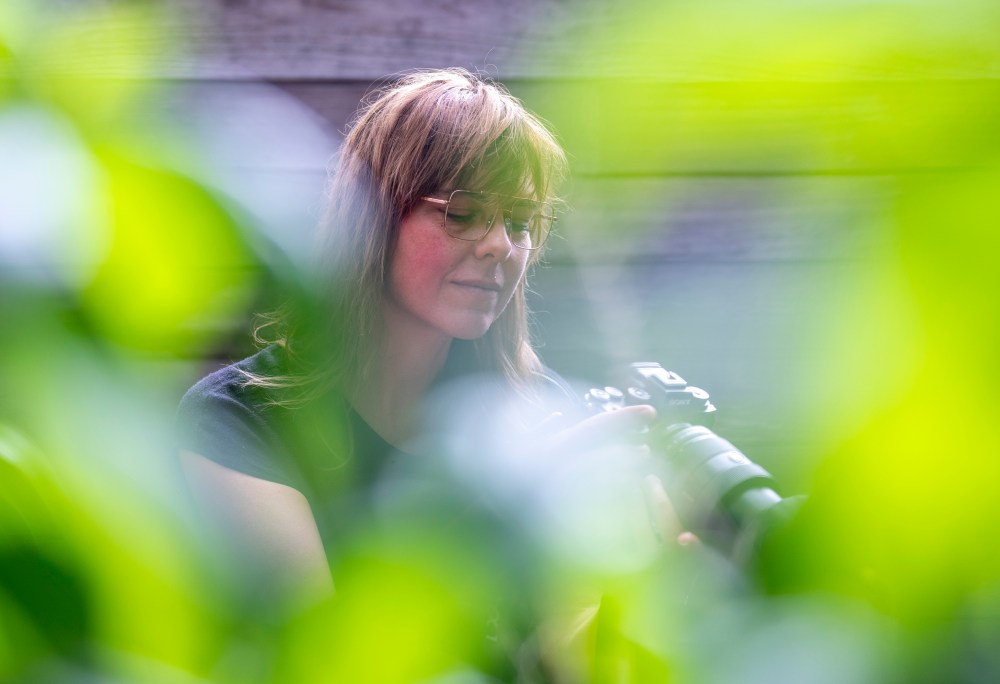
“My experience was so soothing and so, it was so peaceful that I wasn’t afraid of telling him. And the first thing he said: ‘I want to see it.’”
Deraspe showed him the footage and she began to cry.
“I felt emotional. Yes, sad she’s gone. She’s not in this world anymore. But also emotional because it was so beautiful.”
Deraspe aims to share that feeling with a broader audience with her documentary “The Final Act,” which is premiering at the Toronto International Film Festival on Sunday.
Carpentier’s death is shown in the documentary, along with those of others who chose medically assisted deaths.
Their circumstances vary, but they all said they didn’t want to suffer any longer. She captures the final moments of their lives as they say goodbye to family and impart their last reflective thoughts.
Deraspe wants to be clear – this is not a movie about the political and legal debates that have arisen around MAID in the decade since it was legalized in Canada.
People who are suffering intolerably with a serious and incurable illness or disability are eligible to apply for a medically assisted death. Their death does not have to be reasonably foreseeable, a criteria that was eliminated in 2021, and has been divisive since. Some people say death should not be offered as a solution to suffering, while others want more people who are suffering to have access.
However, Deraspe’s film does not delve into the controversies surrounding the end-of-life procedure, and instead is a philosophical interrogation of the place that death has in society, through the eyes of those who have chosen it and the health providers who assist them.
Her previous French-language feature films and documentaries, such as “Antigone” and “Shepherds,” often explore shared elements of humanity.
“MAID made it possible to have a conversation about death with people who know they are going to die rather soon,” Deraspe said.
She was surprised by how many people wanted her to film their deaths, not just allowing her to be there with her camera, but welcoming her to share how they were feeling right before they died.
“That’s why we came into the world, to share,” a 101-year-old named Paulette Fiset-Germain says in the documentary before receiving MAID.
Deraspe said she tried to make her presence inconspicuous while filming, but sometimes found it impossible to be invisible.
She recalls her heart pounding when she realized she forgot to remove the microphone from Carpentier, who was about to die. She was tucked into bed surrounded by loved ones.
Deraspe did not want to disrupt such an intimate moment, but then Carpentier herself reminded the filmmaker to remove it.
Though Carpentier’s diagnosis is not discussed, she describes not wanting to end life in a steep decline. “It’s a relief to go like this,” she says in the film.
Deraspe’s hands shook as she unclipped the microphone from Carpentier’s bra strap. They hugged goodbye.
“I get emotional when I think about that moment,” Deraspe said.
“I don’t know her much, we had met twice, you know. But what we shared was, well, it was something so real and we were two human beings being real.”
“The Final Act” screens Sunday, Sept. 13 and Tuesday, Sept. 15 at TIFF. It’s set for theatrical release in April.
This report by The Canadian Press was first published Sept. 12, 2026.
Canadian Press health coverage receives support through a partnership with the Canadian Medical Association. CP is solely responsible for this content.