
Children’s singer Raffi on his 50-year career, screen time and Ms. Rachel
Advertisement
Read this article for free:
or
Already have an account? Log in here »
We need your support!
Local journalism needs your support!
As we navigate through unprecedented times, our journalists are working harder than ever to bring you the latest local updates to keep you safe and informed.
Now, more than ever, we need your support.
Starting at $15.99 plus taxes every four weeks you can access your Brandon Sun online and full access to all content as it appears on our website.
Subscribe Nowor call circulation directly at (204) 727-0527.
Your pledge helps to ensure we provide the news that matters most to your community!
To continue reading, please subscribe:
Add Brandon Sun access to your Free Press subscription for only an additional
$1 for the first 4 weeks*
- Enjoy unlimited reading on brandonsun.com
- Read the Brandon Sun E-Edition, our digital replica newspaper
*Your next Free Press subscription payment will increase by $1.00 and you will be charged $20.95 plus GST for four weeks. After four weeks, your payment will increase to $24.95 plus GST every four weeks.
Read unlimited articles for free today:
or
Already have an account? Log in here »
Fifty years ago, Raffi was a struggling folk singer driving across Toronto, lugging boxes containing his debut children’s album, “Singable Songs for the Very Young,” hoping to convince stores to sell the record.
The album was a word-of-mouth hit and, coupled with 1980’s “Baby Beluga,” transformed the Egypt-born singer of Armenian descent into one of North America’s most famous children’s musicians. Raffi’s fun and heartwarming songs, including “Down By the Bay” and “Shake My Sillies Out,” remain a mainstay for parents and teachers of young children, even as the way kids consume music has changed significantly.
“Well, the technology changes; children don’t,” Raffi told The Associated Press in a recent interview via Zoom from his home in western Canada.
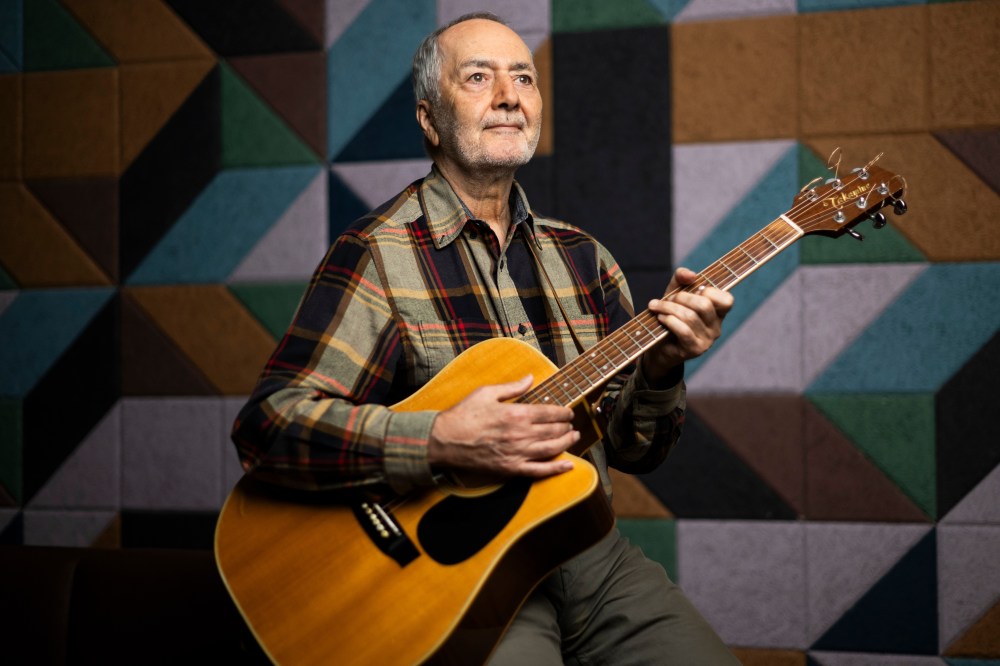
And the 78-year-old isn’t done yet. His latest album, “Love is Everywhere,” comes out Friday and features songs that celebrate individuality (“No One Like You”), as well as “ABC Democracy” — a pro-voting anthem that reflects his longstanding willingness to wade into politics and activism. He’s also marking the 50th anniversary of “Singable Songs” with a special reissue Nov. 13.
Raffi spoke to the AP about the enduring appeal of his music, why he once turned down a deal from the producers of “Shrek,” and his kinship with Ms. Rachel, the children’s entertainer who has been an outspoken advocate for kids in Gaza and those detained by U.S. Immigration and Customs Enforcement. Remarks have been edited for clarity and brevity.
AP: What’s the process of writing a Raffi song in 2026? And how is it different from when you were working in the ’70s?
RAFFI: What’s the same is that I’m considering my audience and what songs would appeal directly to them, and what songs would stretch the imagination of a child. And what’s different is that I’ve got 50 years of songwriting behind me right now, so I certainly feel confident, more so than ever, in what I’m doing.
It’s a good feeling to know that when I write and record a song now, it’ll have a long shelf life. My fans still tell me that “Baby Beluga” is the one song that will calm their child when needed, and I think, “Wow, that song came out, what, 46 years ago?”
AP: The new album is called “Love is Everywhere.” At a time when so much of what’s happening in the world is so frightening, is it harder to write such hopeful songs?
RAFFI: The theme of the album is the power of love. This album is a response to these times that, for so many of us, feel anxious and worrisome. And the fact is that love is everywhere. You can say, “How is that so?” And I would say to you, “Are there children everywhere? Yes. Is there love everywhere? Yes.”
It’s so wonderful that there are others echoing this call of love, and Ms. Rachel is doing this brilliantly. I’m such a champion of this kind of effusive expression of love and caring for every child.
AP: What’s your relationship with Ms. Rachel? I know you’ve defended her against some blowback she’s gotten, particularly regarding her comments about the crisis in Gaza.
RAFFI: Well, Ms. Rachel is a “Beluga grad” (Raffi’s term for children who grew up listening to his music). We had a wonderful video meeting about a year ago. I told her how happy I am with what she’s done on her YouTube offerings.
And then I saw her very brave stance on the rights of Palestinian children, like the right of any child, to live and thrive. When we say every child, we mean it. How would anyone deny the children of any region or any people the right to self-determination, to love and respect? I’m right there with Ms. Rachel. Her heart and my heart resonate well.
AP: When “Singable Songs” was released 50 years ago, kids were listening on record players or cassettes. Nowadays, they’re listening via Spotify or YouTube. Has that changed how kids listen to music?
RAFFI: Well, the technology changes; children don’t. It’s up to us adults, though, to make sure that the technology that children are surrounded by doesn’t interfere with the healthy development of their brains, hearts and imagination.
AP: One track that stood out to me from the new album was “ABC Democracy.” What was the inspiration for that song?
RAFFI: I wrote “ABC Democracy” a year ago and released it as a single. And then I found out that children loved that song. It must be because I wrote the best first line of a song ever: “A, B, C, Dee-mocracy!” They hear that, and they’re hooked because they love the ABCs. And then there can be this conversation with mom or dad as to, “Hey, what is this about?” Learning about our civic duties from a young age — who could ask for more than that?
AP: What do adults tend to sometimes forget or get wrong about kids?
RAFFI: You don’t need to talk down to a child. Children are very intelligent. They ask great questions.
You should respect the intelligence of the young learner — keep in mind that young children are learning the most sophisticated tasks of language acquisition, syntax, grammar and conversational skills all without being in university.
AP: You’ve been clear about never wanting to exploit kids for cash through advertising, toys, etc. What offers have you left on the table?
RAFFI: You wouldn’t exploit those who you respect, right? Why would you exploit the innocence of a young child who isn’t able to appraise the sales pitch if you’re directly advertising or even indirectly to children through fast food joints?
It’s not fair to young children to have someone they look up to selling them things that they’re not old enough to understand.
So I’ve consistently left on the table all these offers, including one from the producers of “Shrek” who wanted to make a “Baby Beluga” film. We asked the question, “Will this movie be directly advertised through fast food joints?” “Oh yes,” they said. So we said, “No thank you. We don’t do that.”
AP: Finally, we had a lightning round of questions from kids that we wanted to pose to you. Nine-year-old Coco asks, “Do you like apples or bananas better?”
Raffi: Both!
AP: Four-year-old Miles asks, “What do you look like? Are you a giant?”
RAFFI: Ha! (In deep voice) Yes I am! To a small child, I probably look quite big, but no bigger than other adults. I’m about 5-foot-8 1⁄2.
AP: Six-year-old Walt asks, “What part do you play in ‘Bananaphone’?”
RAFFI: I’m the guy who sings about the banana and eats it too. That’s me. A troubadour with a peel!
AP: Four-year-old Henry asks, “What’s your favorite song?”
RAFFI: It might just be “Bananaphone,” or it might be “Baby Beluga.” I really like “Baby Beluga” because, you know, it’s a love song, and when you love a beautiful creature like a Beluga whale, you want to protect it.
AP: Seven-year-old Elsa asks, “How do you choose what to sing about?”
RAFFI: Well, I just think of what would be fun for me, and then I think of what would be fun for the audience that I’m singing with, because they sing with me. That’s how I decide.