
Kardinal Offishall finds fresh fire after personal loss, career highs and lows
Advertisement
Read this article for free:
or
Already have an account? Log in here »
We need your support!
Local journalism needs your support!
As we navigate through unprecedented times, our journalists are working harder than ever to bring you the latest local updates to keep you safe and informed.
Now, more than ever, we need your support.
Starting at $15.99 plus taxes every four weeks you can access your Brandon Sun online and full access to all content as it appears on our website.
Subscribe Nowor call circulation directly at (204) 727-0527.
Your pledge helps to ensure we provide the news that matters most to your community!
To continue reading, please subscribe:
Add Brandon Sun access to your Free Press subscription for only an additional
$1 for the first 4 weeks*
- Enjoy unlimited reading on brandonsun.com
- Read the Brandon Sun E-Edition, our digital replica newspaper
*Your next Free Press subscription payment will increase by $1.00 and you will be charged $20.95 plus GST for four weeks. After four weeks, your payment will increase to $24.95 plus GST every four weeks.
Read unlimited articles for free today:
or
Already have an account? Log in here »
TORONTO – Just a few years after helping put Toronto hip-hop on the map, Kardinal Offishall was running out of money, struggling to land gigs and wondering what had gone wrong.
In 2001, the trailblazing rapper released his breakthrough album, “Quest for Fire: Firestarter, Vol. 1,” bringing the Caribbean-inflected sounds of his hometown to the world through club-rattling hits such as “BaKardi Slang” and “Ol’ Time Killin’.”
But the industry wasn’t as kind behind the scenes. His American label, MCA Records, was absorbed by Geffen, and plans for a follow-up album featuring Pharrell and Timbaland fell apart. Offishall says the new executives tried to force him into a “cookie-cutter” mould.
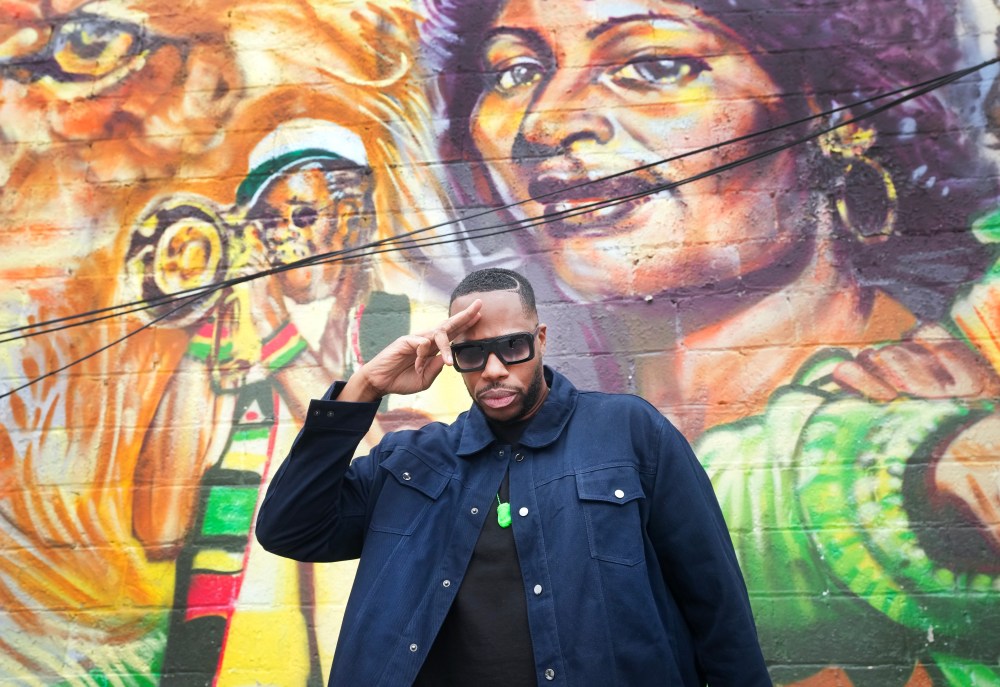
“I was like, oh, you guys really have no idea who I am,” he shares in a recent interview.
After parting ways with the label, Offishall struggled financially.
“Money’s running out and I’m like, yo, we got any tours coming up? They’re like, nah,” the rapper recalls asking his team.
“It was rough, to where them bank accounts were going on E after a few years.”
He eventually toured with Akon and Gwen Stefani, though life on the road was far from glamorous.
“I didn’t even have a room every night. So I was sleeping on the tour bus and I would just go in somebody’s room and use their shower every day.”
For two months, he recorded music in the back of the bus, increasingly uncertain about his future.
“I remember just being like, yo, what is going on with my life?”
Then, on the final night of the tour, he recorded “Dangerous,” the Akon-assisted smash that would introduce him to a new generation of listeners.
“As soon as we did that, that’s when my life changed again,” he says.
Nearly two decades later, Offishall is looking back on that journey with “Firestarter Vol. 2: Everyday, Sometimes…,” a long-awaited sequel that finds the rapper, born Jason Harrow, trading bombast for candid reflections on grief, relationships and being a 50-year-old family man.
Despite his public profile as a “Canada’s Got Talent” judge and the global A&R lead for Def Jam Records, Offishall says he’s long guarded his personal life. Opening up on the record meant accepting that he’d have to discuss painful subjects with strangers.
“People could ask you about your dad that passed. People could ask about your wife and that relationship,” he says. “I’ve always been a pretty private guy.”
Offishall’s last album was 2015’s “Kardi Gras, Vol. 1: The Clash.” In recent years, a succession of deaths among loved ones left him in no emotional state to make another.
“There was so much death,” he says. “They didn’t warn me about this when I was a kid, that I was going to get to an age where there will be people passing away like flies.”
Nearly a year without another funeral finally gave him room to heal and rediscover the joy of making music.
The 10-track “Firestarter Vol. 2” features some song ideas he’s had for years. The chest-thumping “Top 3” boasts verses from reggae star Buju Banton and British actor Idris Elba.
Singer BJ the Chicago Kid joins title track “Everyday, Sometimes…,” which addresses days when even getting out of bed feels overwhelming. Offishall wanted to show that celebrity offers little protection from ordinary human suffering.
“Money, accolades, fame, those things do not come into play when you have a loved one who is sick,” he says.
Offishall is releasing the album independently, noting streaming and direct-to-consumer distribution allow artists more freedom to chart their own course, without the pressure to make an immediate commercial splash.
“You can kind of do things the way that you want it. It’s not as rigid as it used to be in the industry,” he says.
Meanwhile, his executive role at Def Jam allows him to influence the industry from within, an approach inspired by advice from Stephen Marley: “You can’t change the system from outside of the system.”
That means being in meetings where he can advocate for artists and challenge executives’ assumptions, he says.
Offishall won’t wait another decade to drop more music. He and Elba, a longtime friend, have recorded an entire collaborative project they’re hoping to release in spring or summer 2027.
Most of the vocals were recorded during the COVID-19 pandemic, but Offishall reworked the production this year, adding orchestral flourishes.
“Strings and orchestras and brass sections and it’s nasty. It’s really nasty,” he says.
Other projects in the works include an EP with Toronto producer Slakah the Beatchild and a possible collaboration with Canadian R&B singer Glenn Lewis.
Offishall is currently on a U.S. press tour, including a stop with radio personality Ebro Darden, who at the height of the Drake-Kendrick Lamar feud sparked debate by suggesting Toronto lacked a distinctive sound.
For a rapper who helped export the city’s diverse music scene, the idea of a singular “Toronto sound” is unnecessarily limiting.
“I’m just glad that the whole Toronto sound thing has died down because I just feel it puts everybody in a box,” Offishall says.
Pointing to the different styles of Drake, the Weeknd and Nav, he adds: “I think the Toronto sound is excellence.”
He says the city’s artists should focus more on setting trends than following them, citing advice from his friend, Toronto Raptors announcer Mark Strong: “You never move with the times, you move the times.”
“We’ve got to continue to create that wave.”
This report by The Canadian Press was first published Oct. 24, 2026.