
Survival thriller ‘Someone’s Daughter’ asks big questions about the justice system
Advertisement
Read this article for free:
or
Already have an account? Log in here »
We need your support!
Local journalism needs your support!
As we navigate through unprecedented times, our journalists are working harder than ever to bring you the latest local updates to keep you safe and informed.
Now, more than ever, we need your support.
Starting at $15.99 plus taxes every four weeks you can access your Brandon Sun online and full access to all content as it appears on our website.
Subscribe Nowor call circulation directly at (204) 727-0527.
Your pledge helps to ensure we provide the news that matters most to your community!
To continue reading, please subscribe:
Add Brandon Sun access to your Free Press subscription for only an additional
$1 for the first 4 weeks*
- Enjoy unlimited reading on brandonsun.com
- Read the Brandon Sun E-Edition, our digital replica newspaper
*Your next Free Press subscription payment will increase by $1.00 and you will be charged $20.95 plus GST for four weeks. After four weeks, your payment will increase to $24.95 plus GST every four weeks.
Read unlimited articles for free today:
or
Already have an account? Log in here »
German-Canadian director Wiebke von Carolsfeld doesn’t think it’s a filmmaker’s job to answer questions for viewers — only to ask them.
Her latest film, survival thriller “Someone’s Daughter,” asks a lot.
The questions centre on allegations of sexual misconduct and the justice system.
“It’s a very difficult conversation to have. And I think for the film also to ask those questions, it’s tough because not everybody wants to talk about it,” she said on a recent video call from her cottage in Quebec’s Eastern Townships.
She started with one particular query: why do female lawyers agree to defend powerful men accused of sexual misconduct?
She’d noticed a pattern, she said, spouting off a laundry list of cases of men who hire “a really smart, intelligent, strong female lawyer” to defend them.
She said she understood implicitly why a man would hire a woman in such a case — as though having a woman vouch for him might say something about his innocence.
But she wanted to further understand a female lawyer’s thought process when taking on such a client.
“And a lot of them say, well, everybody has a right for defence, which is true,” she said. She also hears them say that they’re just doing their job, and it’s not their responsibility to judge.
She wanted to dissect that answer in her film by coming at the issue from a slightly different direction.
“The question is then, well, what happens if it’s no longer just your job? What if all of a sudden your life might depend on a guy that may or may not be a rapist?”
This is the core of “Someone’s Daughter,” which is now playing in select theatres across Canada.
The film is tightly focused on just two characters.
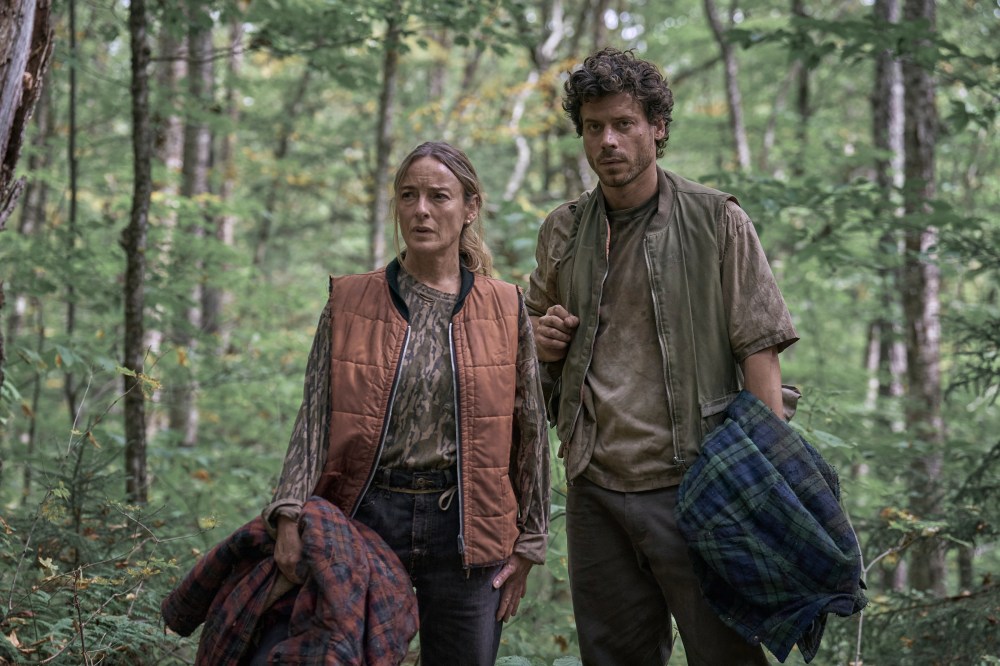
Paul, played by Francois Arnaud, is a thirty-something whose life was upended years earlier when, as a university student, he was charged with sexual assault. Sam, portrayed by Pascale Bussières, is a high-powered female lawyer in her 50s who successfully defended him in court.
The two are forced together when the father of Paul’s alleged victim kidnaps them and leaves them on a remote Canadian island to fend for themselves.
For most of the film, von Carolsfeld isn’t particularly concerned with addressing whether Paul was guilty — which is part of what appealed to Arnaud about the character.
“I kind of saw him as sort of (being) in arrested development, like he’s still a teenage boy in so many ways, even though he’s clearly in his thirties,” Arnaud said on a video call from Los Angeles.
He also found himself thinking about the broader themes as he was filming, such as whether it’s possible to know what happened between two people when nobody else was there, and also about the justice system.
“I come from a family of lawyers who work for the Canadian and Quebec governments and who are very involved in the justice system. I was taught to believe that it’s the closest thing we have to–” he said, cutting himself off, before starting again: “I think it’s very deeply imperfect, and obviously we’re seeing how imperfect it is.”
“It’s obvious I’m weighing my words very carefully,” he added.
But, like von Carolsfeld, he doesn’t have the answers.
It’s “part of a broader conversation that I think we need to have about the culture that we live in and what is acceptable,” Arnaud said.
“I think we’re all longing for some sort of consensus that I think is a really difficult thing to find.”
As for von Carolsfeld, the closest thing she has to an answer is a firmly held belief that the system is failing victims.
Some advocates argue that the judicial system can be retraumatizing for complainants, who during a trial must repeat their allegations over and over again, often under questioning. They may feel like they don’t have an advocate in court, because the Crown attorney is not actually their lawyer but instead represents the government.
“There is no easy answer to these questions, but I think it is important for us to raise those questions and to keep talking about it and to find better ways for victims to get just a measure of justice and be treated fairly and well in the process and not re-victimized in the process.”
This report by The Canadian Press was first published Oct. 30, 2026.