
Godzilla returns in special-effects glory in the latest movie with an anti-war message
Advertisement
Read this article for free:
or
Already have an account? Log in here »
We need your support!
Local journalism needs your support!
As we navigate through unprecedented times, our journalists are working harder than ever to bring you the latest local updates to keep you safe and informed.
Now, more than ever, we need your support.
Starting at $15.99 plus taxes every four weeks you can access your Brandon Sun online and full access to all content as it appears on our website.
Subscribe Nowor call circulation directly at (204) 727-0527.
Your pledge helps to ensure we provide the news that matters most to your community!
To continue reading, please subscribe:
Add Brandon Sun access to your Free Press subscription for only an additional
$1 for the first 4 weeks*
- Enjoy unlimited reading on brandonsun.com
- Read the Brandon Sun E-Edition, our digital replica newspaper
*Your next Free Press subscription payment will increase by $1.00 and you will be charged $20.95 plus GST for four weeks. After four weeks, your payment will increase to $24.95 plus GST every four weeks.
Read unlimited articles for free today:
or
Already have an account? Log in here »
TOKYO (AP) — Japan’s most famous monster is back in “Godzilla Minus Zero” in all its fire-breathing, stomping glory, delivering its trademark allegorical message of the destruction of nuclear war and the pathos of human folly.
“Godzilla is not just any old monster but a metaphor for war and nuclear weapons, reflecting all the uncertainties of this world that still exist everywhere, in people’s hearts,” said Takashi Yamazaki, the director, writer and head of special effects.
“Being able to see that, taking shape, is important, even if it’s destroying a city.”
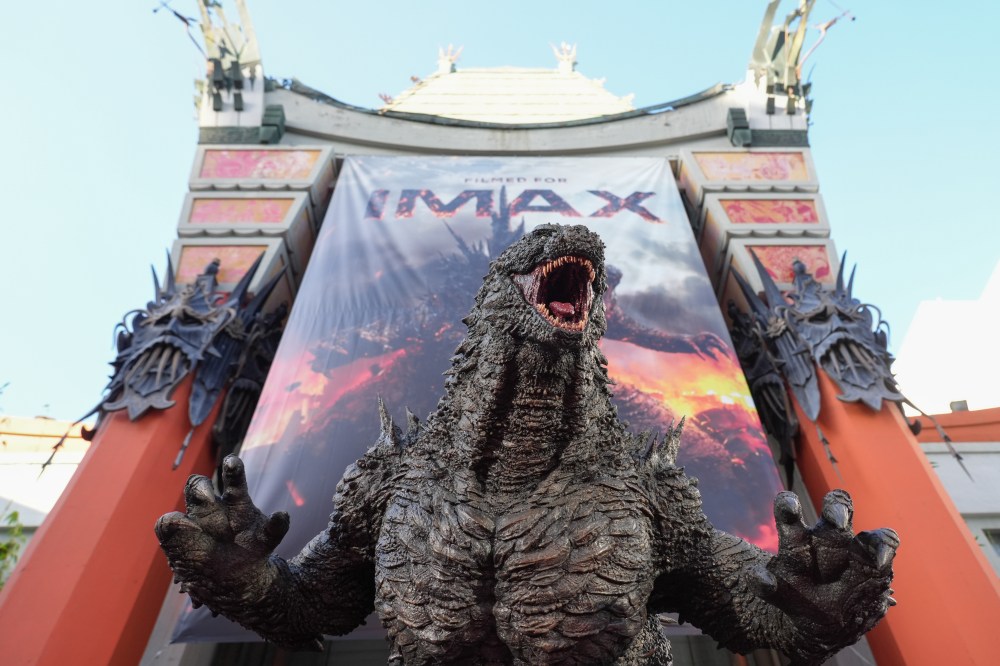
The new movie is proving to be a huge hit, topping $31.6 million over the opening weekend, scoring a record debut for a foreign-language live-action film at the North American box office.
Yamazaki also directed “Godzilla Minus One,” released three years ago, which won the Oscar for best visual effects. Except this time, the Godzilla story moves forward in time, from 1947 to 1949.
In his latest Godzilla, the same human characters are back: the pilot with a heart of gold, played by Ryunosuke Kamiki, and his sweetheart, portrayed by Minami Hamabe, who suffers from a mutative sickness inflicted by Godzilla’s earlier attack on Tokyo.
Hidetaka Yoshioka is cast in the role of the well-meaning-but-hapless official trying to save Japan, along with new characters, including a Hiroshima bombing survivor who became a mad scientist of sorts, portrayed with angst by seasoned dancer and actor Min Tanaka.
But the star of the show is undeniably Godzilla, first concocted in the 1954 classic directed by Ishiro Honda.
Since then, Godzilla, or Gojira in Japanese, based on the words for gorilla and “kujira,” or whale, has been featured in more than 30 films, mostly from Toho Co., the Japanese studio behind the original.
Yamazaki stressed he made sure to tackle the big question of “what makes for a Godzilla.” And he swears it turns out to be pretty basic, while also being surprisingly freeing and flexible, as there have been so many Godzillas over the years.
“As long as it has those spikes on its back,” he told The Associated Press in a recent interview. “Our Godzilla stays true to the original.”
The human melodrama might drag on at first. But when Godzilla finally appears, shuddering as it belts out its roar, dorsal spikes glowing fluorescent blue, it’s the moment filmgoers have all been waiting for.
The storyline is scripted to get the audience cheering for Godzilla, as it fights the golden winged dragon Ghidorah, according to Yamazaki. Ghidorah is to Godzilla, he added with a laugh, what the Joker is to Batman.
The latest Godzilla is the first in that franchise to be filmed using IMAX technology, meaning it feels tingingly immersive, delivering the illusion that everything is up close and coming right at you.
“It’s such an experience it’s something you get soaked in, not just a movie you watch. It’s overpowering,” said Ryosuke Matsui, who designed the shoes for the filmmaker’s red carpets.
IMAX is a challenge for filmmaking because the viewer is seeing a much bigger image with clearer resolution, which means more work for the special-effects team. But IMAX is perfect for framing Godzillian scenes, which typically have the giant monster chasing tiny fleeing people.
IMAX also delivers tremendous sound quality that’s effective for evoking terror, Yamazaki said.
He also made sure the new score by Naoki Sato kept the original Godzilla theme by Akira Ifukube in key scenes. Ifukube also created Godzilla’s scream, as the legend goes, by running a leather glove across the strings of a contrabass.
“It’s so iconic it’s unavoidable. That has to be the centerpiece. It’s how you create on top of that,” said Yamazaki.
The late Haruo Nakajima, the stunt actor who portrayed Godzilla in the early works, used to say he was careful to show through his movements how Godzilla simply could not stop itself.
It had no choice but to keep going, stomping, one heavy step at a time, a tragic creature that went on to become an enduring artistic statement from the only nation in the world to suffer atomic bombings.
Yamazaki expressed openness to keeping the Godzilla franchise going, although he is now busy with a Hollywood film starring English-speaking actors. Details are still under wraps for the work, likely set for release in 2028.
___
Yuri Kageyama is on Threads: https://www.threads.com/@yurikageyama