
Movie Review: Ryusuke Hamaguchi’s ‘All of a Sudden’ looks at those who care at the end of a life
Advertisement
Read this article for free:
or
Already have an account? Log in here »
We need your support!
Local journalism needs your support!
As we navigate through unprecedented times, our journalists are working harder than ever to bring you the latest local updates to keep you safe and informed.
Now, more than ever, we need your support.
Starting at $15.99 plus taxes every four weeks you can access your Brandon Sun online and full access to all content as it appears on our website.
Subscribe Nowor call circulation directly at (204) 727-0527.
Your pledge helps to ensure we provide the news that matters most to your community!
To continue reading, please subscribe:
Add Brandon Sun access to your Free Press subscription for only an additional
$1 for the first 4 weeks*
- Enjoy unlimited reading on brandonsun.com
- Read the Brandon Sun E-Edition, our digital replica newspaper
*Your next Free Press subscription payment will increase by $1.00 and you will be charged $20.95 plus GST for four weeks. After four weeks, your payment will increase to $24.95 plus GST every four weeks.
Read unlimited articles for free today:
or
Already have an account? Log in here »
The two main characters of Ryusuke Hamaguchi’s film “All of a Sudden” share similar names, but little else on the surface.
Mari ( Tao Okamoto ) is an acclaimed Japanese theater director facing a terminal diagnosis. Marie-Lou ( Virginie Efira ) is the director of a nursing home facility who works around the clock and rarely comes up for air. But a chance encounter in Paris brings the two women together.
The pull between Mari and Marie-Lou is magnetic but not necessarily sexual. There is, however, a romantic quality to their connection and immediate, insatiable need for one another’s thoughts and feelings. They start talking one afternoon and continue into the morning’s early hours, stopping only because at a certain point they know they both must sleep. Both know French and Japanese, though eventually each reverts to her own language in their long, deep conversations. As the actor Gorō (played by Kyōzō Nagatsuka) in Mari’s one-man play notes: Emotions just work better in one’s native tongue.
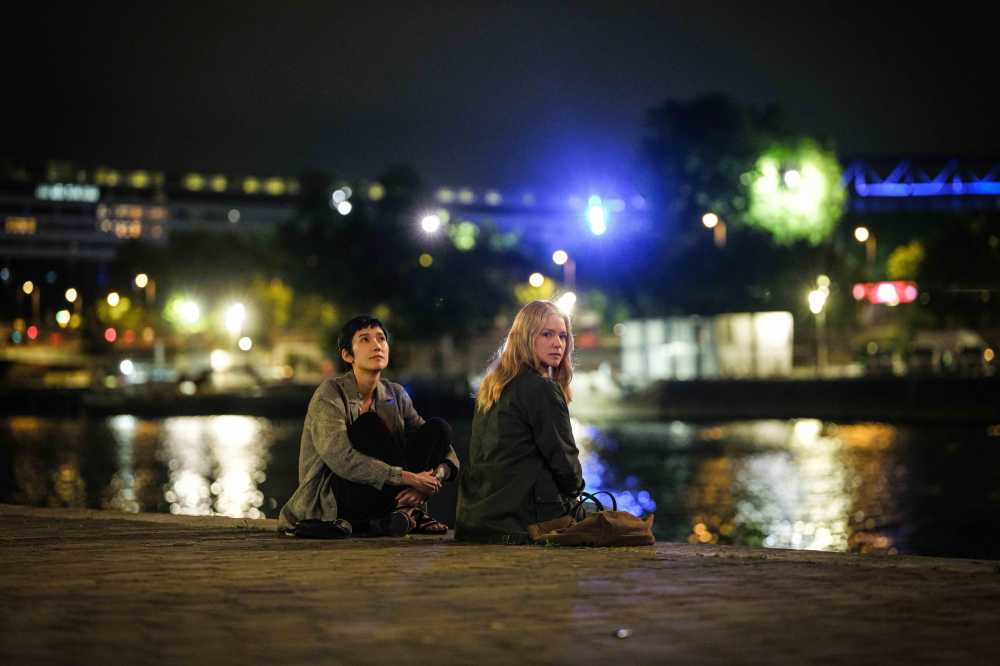
Hamaguchi was loosely inspired by real letters between a philosopher with cancer, Makiko Miyano, and an anthropologist, Maho Isono, that were compiled into the book “When Life Suddenly Takes a Turn.” Little was taken from the actual letters, he has said, aside from the spirit of the burgeoning relationship.
Marie-Lou is at a moment of exhaustion and frustration when she meets Mari. She has been hired to implement a new system called Humanitude and is facing resistance from both the nursing staff who bristle at the training and extra work and the higher-ups who refuse to raise salaries. It might cut into their own profits, after all.
Though Humanitude sounds like a dystopian artificial intelligence company, it is actually rooted in bringing humanity and dignity back to the care industry, which Marie-Lou worries has become too much like a business that prioritizes maximizing profits and minimizing risk. Humanitude is a system that puts the patient’s personhood first, that asks the nurses to slow down, to talk, to touch, to communicate, to encourage them to walk and stand whenever possible and, generally, to meet the person on their level. This requires more time with each patient, and the staff is stressed about their workload and quality of life — where is the work-life balance if the ones living on site are the first to be called in an emergency?
Marie-Lou is the one picking up much of the slack too, working days and nights and through her vacations. But one day she does leave, and it’s out in the world where she meets Mari, on a walk with her actor. Gorō’s grandson Tomoki (Kodai Kurosaki) had run ahead of them; Marie-Lou saw Tomoki from her bus, noticed his evident developmental disability, and got off to wait with him until his guardians arrived.
Tomoki, we learn, is nonverbal and has severe autism. Like the people with dementia in Marie-Lou’s home, Tomoki is someone society would rather ignore. “All of a Sudden” is a film that asks you to do the opposite. The production was shot in a real nursing home, where fiction and reality blur a bit. And it’s all rather lovely and hopeful about our collective capacity to help.
Hamaguchi isn’t the only creative thinking about the elderly. Mike Leigh dabbles in similar territory in “Tender Loving Care.” And there’s clearly something in the zeitgeist when even a Saturday Night Live skit spawns dozens of think pieces about the burden of care.
The population is aging, birth rates are declining, and dementia will come for many of us. Still, in a moment where so many things seem to be getting worse, “All of a Sudden” gently invites you to slow down, to talk, think and share something with someone, maybe over a cup of instant ramen while out on a walk.
Like many great films this year, “All of a Sudden” is a commitment: The film is three hours and 16 minutes of quiet conversation. But there’s a power in Hamaguchi’s languid, naturalistic approach — the emotions on display might not be big and showy, but the effect is profound and life-affirming.
“All of a Sudden,” a Neon release in select theaters Wednesday, is rated PG-13 by the Motion Picture Association for smoking. Running time: 196 minutes. Three and a half stars out of four.