
Back to normal? Cannes Film Festival prepares to party
Advertisement
Read this article for free:
or
Already have an account? Log in here »
We need your support!
Local journalism needs your support!
As we navigate through unprecedented times, our journalists are working harder than ever to bring you the latest local updates to keep you safe and informed.
Now, more than ever, we need your support.
Starting at $15.99 plus taxes every four weeks you can access your Brandon Sun online and full access to all content as it appears on our website.
Subscribe Nowor call circulation directly at (204) 727-0527.
Your pledge helps to ensure we provide the news that matters most to your community!
To continue reading, please subscribe:
Add Brandon Sun access to your Free Press subscription for only an additional
$1 for the first 4 weeks*
*Your next subscription payment will increase by $1.00 and you will be charged $20.00 plus GST for four weeks. After four weeks, your payment will increase to $24.00 plus GST every four weeks.
Read unlimited articles for free today:
or
Already have an account? Log in here »
Hey there, time traveller!
This article was published 14/05/2022 (1391 days ago), so information in it may no longer be current.
After the 2020 Cannes Film Festival was canceled by the pandemic and the 2021 edition was scaled back — even kisses were forbade on the red carpet — the lavish French Riviera cinema soiree is set to return with a festival that promises to be something like normal.
Or at least Cannes’ very particular brand of normal, where for 12 days formal wear and film mingle in sun-dappled splendor, stopwatch-timed standing ovations stretch for minutes on end and director names like “Kore-eda” and “Denis” are spoken with hushed reverence.
What passes for the usual at Cannes has never been especially ordinary, but it has proven remarkably resilient to the fluctuations of time. Since its first festival, in 1946 on the heels of World War II, Cannes has endured as a maximalist spectacle that puts world cinema and Cote d’Azur glamour in the spotlight. This year marks Cannes’ 75 anniversary.
“Hopefully it will back to a normal Cannes now,” says Ruben Östlund, who returns this year with the social satire “Triangle of Sadness,” a follow-up to his Palme d’Or-winning 2017 film “The Square.”
“It’s a fantastic place if you’re a filmmaker. You feel like you have the attention of the cinema world,” adds Östlund. “To hear the buzz that’s going on, people talking about the different films. Hopefully, they’re talking about your film.”
This year’s Cannes, which opens Tuesday with the premiere of Michel Hazanavicius’ zombie movie “Z,” will unfold against not just the late ebbs of the pandemic and the rising tide of streaming but the largest war Europe has seen since WWII, in Ukraine. Begun as a product of war — the festival was initially launched as a French rival to the Venice Film Festival, which Benito Mussolini and Adolf Hitler had begun interfering with — this year’s Cannes will again resound with the echoes of a not-so-far-away conflict.
Cannes organizers have barred Russians with ties to the government from the festival. Set to screen are several films from prominent Ukrainian filmmakers, including Sergei Loznitsa’s documentary “The Natural History of Destruction.” Footage shot by Lithuanian filmmaker Mantas Kvedaravičius before he was killed in Mariupol in April will also be shown by his fiancée, Hanna Bilobrova.
At the same time, Cannes will host more Hollywood star wattage than it has for three years. Joseph Kosinski’s pandemic-delayed “Top Gun: Maverick” will be screened shortly before it opens in theaters. Tom Cruise will walk the carpet and sit for a rare, career-spanning interview.
“Every director’s dream is to be able to go to Cannes someday,” says Kosinski. “To go there with this film and with Tom, to screen it there and be a part of the retrospective they’re going to do for him, it’s going to be a once in a lifetime experience.”
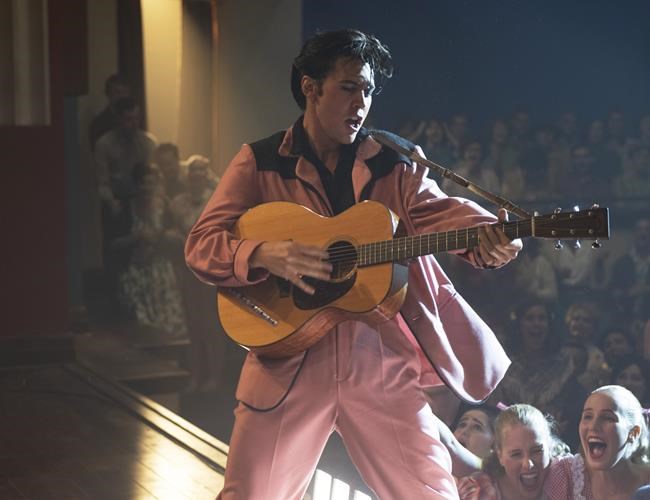
Warner Bros. will premiere Baz Luhrmann’s splashy “Elvis,” starring Austin Butler and Tom Hanks. George Miller, last in Cannes with “Mad Max: Fury Road,” will debut his fantasy epic “Thee Thousand Years of Longing,” with Idris Elba and Tilda Swinton. Ethan Coen will premiere his first film without his brother Joel, “Jerry Lee Lewis: Trouble in Mind,” a documentary about the rock ‘n’ roll legend made with archival footage. Also debuting: James Gray’s “Armageddon Time,” a New York-set semi-autobiographical coming-of-age tale with Anthony Hopkins, Anne Hathaway and Jeremy Strong.
Far from all of Hollywood will be present. Cannes’ regulations regarding theatrical release have essentially ruled out streaming services from the competition lineup from which the Palme d’Or winner is chosen. This year’s jury is headed by French actor Vincent Lindon.
Last year’s Palme winner, Julia Ducournau’s explosive “Titane,” which starred Lindon, was only the second time Cannes’ top honor went to a female filmmaker. This year, there are five movies directed by women in competition for the Palme, a record for Cannes but a low percentage compared to other international festivals.
This year’s lineup, too, is full of festival veterans and former Palme winners, including Hirokazu Kore-eda (“Broker”), Christian Mungiu’s (“RMN”) and Jean-Pierre and Luc Dardennes (“Tori and Lokita”). Iconoclast filmmakers like Claire Denis (“Stars at Noon”), David Cronenberg (“Crimes of the Future”) and Park Chan-wook (“Decision to Leave”) are also up for the Palme, as is Kelly Reichardt, who reteams with Michelle Williams in “Showing Up.”
Even with a robust slate full of Cannes all-stars, how much can the festival really revert back to old times? Last year’s light-on-crowds edition included masking inside theaters and regular COVID-19 testing for attendees. It still produced some of the year’s most acclaimed films, including the best picture-nominated “Drive My Car,” “The Worst Person in the World” and “A Hero.” Cannes remains an unparalleled platform for the best in cinema, while still susceptible to criticisms of representation.
What’s not likely to return anytime soon is the same amount of partying that characterized the years where Harvey Weinstein was a ubiquitous figure at the festival. COVID-19 concerns aren’t gone. Attendees won’t be tested and are strongly encouraged to mask. Few non-streaming companies have the budgets for lavish parties. Crowds will be back at Cannes but to what extent?
“It’s going to be different than it’s ever been before,” says Tom Bernard, co-president of Sony Pictures Classic and a longtime Cannes regular. “Are they going to have parties? Are they going to have COVID concerns? Or is everyone going to go there and just try to ignore stuff?”
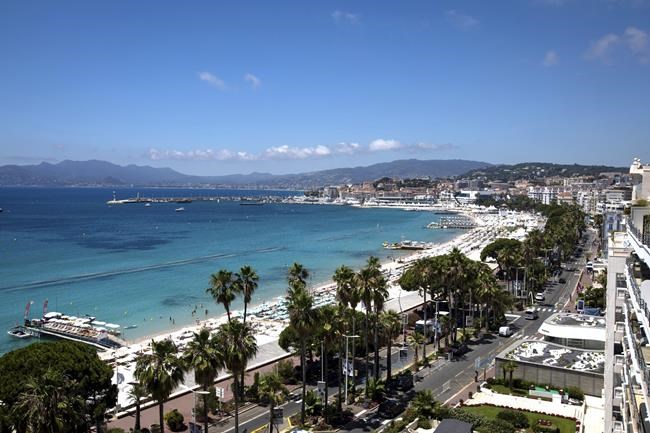
Bernard has noticed some practices in the Cannes market, where distribution rights for films are bought and sold, remain virtual. Initial meet-and-greets with sellers, in which executives and producers typically hop between hotels along the Croisette, have taken place largely on Zoom before the festival, he says. Deal-making has gotten more focused. Cannes, known for being both high-minded and frivolous, has perhaps grown slightly more sober.
“It’s a reshuffle of an event that’s always been sort of the same, in every way,” says Bernard. “The routine, I think, will change.”
One thing that can relied on with ironclad certainty at Cannes is frequent and ardent overtures to the primacy of the big screen, despite ongoing sea changes in the film industry. Some films, like Östlund’s, which co-stars Woody Harrelson, will hope to straddle the disparate movie worlds that collide in Cannes.
“The goal we set out for ourselves,” says Östlund, “was to combine the best parts of the American cinema with the European cinema, to try to do something that’s really entertaining and at the same time thought-provoking.”
___
Follow AP Film Writer Jake Coyle on Twitter at: http://twitter.com/jakecoyleAP
___
For more Cannes Film Festival coverage, visit: https://apnews.com/hub/cannes-film-festival