
Livestock may need to be rushed out of flood zones
Advertisement
Read this article for free:
or
Already have an account? Log in here »
We need your support!
Local journalism needs your support!
As we navigate through unprecedented times, our journalists are working harder than ever to bring you the latest local updates to keep you safe and informed.
Now, more than ever, we need your support.
Starting at $15.99 plus taxes every four weeks you can access your Brandon Sun online and full access to all content as it appears on our website.
Subscribe Nowor call circulation directly at (204) 727-0527.
Your pledge helps to ensure we provide the news that matters most to your community!
To continue reading, please subscribe:
Add Brandon Sun access to your Free Press subscription for only an additional
$1 for the first 4 weeks*
- Enjoy unlimited reading on brandonsun.com
- Read the Brandon Sun E-Edition, our digital replica newspaper
*Your next Free Press subscription payment will increase by $1.00 and you will be charged $20.95 plus GST for four weeks. After four weeks, your payment will increase to $24.95 plus GST every four weeks.
Read unlimited articles for free today:
or
Already have an account? Log in here »
Hey there, time traveller!
This article was published 11/05/2011 (5627 days ago), so information in it may no longer be current.
Tens of thousands of cattle, chickens, pigs and other livestock may need to be rushed out of flood zones, as rising water threatens pastures and barns in western Manitoba.
Provincial officials, farmers, ranchers and producer organizations are busily laying plans for a massive evacuation of livestock from around Lake Manitoba and through the area that may be flooded by the Hoop and Holler Cut – if the controlled dike breach happens tomorrow morning at 8 a.m.
Peter Reimer, the emergency co-ordinator for Manitoba Food, Agriculture and Rural Initiatives, said that producers in threatened areas are responsible for moving their livestock to dry ground. Compensation is available, and new compensation programs are being developed in relation to the controlled water release, if it happens.
If producers need help getting the move done in time, MAFRI has teams on the ground that can help evacuate animals to Crown land and other facilities.
MAFRI also has plans to deliver feed to any stranded livestock by boat or helicopter, or may even leave loaded feed trucks in some areas. “Sometimes it’s moving them, sometimes it’s moving them and (getting feed to them), sometimes it’s just feed,” Reimer said.
Most of the barns in the path of the Hoop and Holler Cut’s planned controlled release are protected, he added. Producer organizations are also helping to ease the logistics of transfers. “We’ve been working last couple years on plans for situations like this,” Reimer said. “Everybody has plans for the most part.”
On its website, the Manitoba Cattle Producers Association issued a directive to producers to take steps to ensure their herds remain safe, and put out a call for others to donate pasture or barn space to producers under flood pressure.
“(We are) urgently calling on all neighbours, producers, Crown lands (and) grain farmers for any and all assistance for those of our producers that are facing urgent evacuation circumstances,” the association wrote.
The current livestock evacuation directives are in place for Alonsa and the rural municipalities of Lakeview, Westbourne, Portage la Prairie, Woodlands, St. Laurent, Coldwell, Eriksdale, Siglunes, Grahamdale and the Lake Manitoba area.
Related Articles
Planned dike breach postponed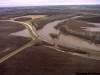
Advertisement Advertise With Us