
Municipality blasts provincial program
Flooded farms not eligible for tax relief
Advertisement
Read this article for free:
or
Already have an account? Log in here »
We need your support!
Local journalism needs your support!
As we navigate through unprecedented times, our journalists are working harder than ever to bring you the latest local updates to keep you safe and informed.
Now, more than ever, we need your support.
Starting at $15.99 plus taxes every four weeks you can access your Brandon Sun online and full access to all content as it appears on our website.
Subscribe Nowor call circulation directly at (204) 727-0527.
Your pledge helps to ensure we provide the news that matters most to your community!
To continue reading, please subscribe:
Add Brandon Sun access to your Free Press subscription for only an additional
$1 for the first 4 weeks*
- Enjoy unlimited reading on brandonsun.com
- Read the Brandon Sun E-Edition, our digital replica newspaper
*Your next Free Press subscription payment will increase by $1.00 and you will be charged $20.95 plus GST for four weeks. After four weeks, your payment will increase to $24.95 plus GST every four weeks.
Read unlimited articles for free today:
or
Already have an account? Log in here »
Hey there, time traveller!
This article was published 12/08/2011 (5552 days ago), so information in it may no longer be current.
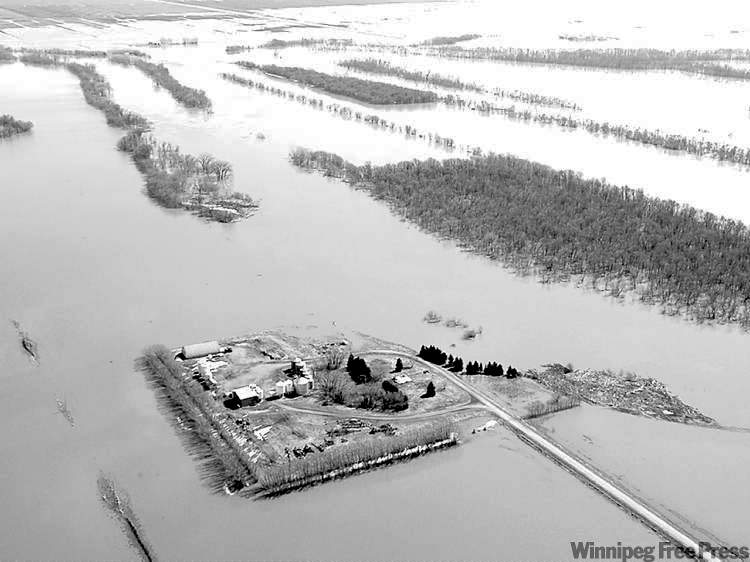
IT was supposed to be a ray of hope to help get lives back on track after heavy rains and this year’s flooding.
Instead, a helping hand from the province is being portrayed as just another kick in the shins for farmers still suffering.
The tiny Rural Municipality of Edward, in the southwest corner of Manitoba, blasted the Selinger government for pulling the rug out from under them when they tried to tap into the province’s property-tax flood relief program and use it to help cash-strapped and rain-soaked farmers.
“We were trying to find some fairness in the program,” the RM’s chief administrative officer, Audrey Bird, said.
Coun. Debbie McMechan said when the Provincial Property Tax Relief Program was rolled out in early July, the RM interpreted eligibility to be open to properties that couldn’t be used this year due to flooding. In the RM of Edward’s case, only five per cent of cropland was seeded this season because fields were too wet. The municipality’s tax base is small to begin with — it’s made up mostly of farms with some oil wells and has a population of only 621.
“If it met the definition that the usability of the property had pretty much (been) affected or diminished, and you couldn’t use it as you normally would, we felt we fit that criteria,” McMechan said.
So the RM submitted about 1,000 tax rolls for consideration under the property-tax relief program — just about every tax roll in the RM.
On Monday, they were told by provincial officials at a meeting of municipal leaders in Oak Lake they could not do that.
“It defies the intent and logic of the program,” explained Laurie Davidson, the assistant deputy minister for provincial-municipal support services.
Davidson said the program was not intended to be a compensation program or provide tax relief where properties get assistance through another program, such as the province’s Excess Moisture Assistance Program.
She also said the program is intended to be for those properties that experienced a permanent loss in real estate value, not to replace lost income.
Bird and McMechan said despite that, they believe they followed the program based on the guidelines first rolled out last month.
“What were we supposed to do? Not apply?” McMechan said. “We had to apply for our people. Now we have to look at our ratepayers and say we’re not going to get any of it. It was never intended for us.
“It seems to me that this is more evidence of a government that has a big disconnect with agriculture out here. I just feel our southwest corner hasn’t received a lot of attention for the shape that we’re in.”
Agassiz Progressive Conservative MLA Stu Briese said the RMs should not be faulted for applying for the program.
“I think they made a pretty big mess out of trying to communicate the program,” said Briese, who was at the Oak Lake meeting. “Now the province is scrambling to clarify it. Farmland was included in the original announcement. Now they’re trying to get out of it with the small print.”
bruce.owen@freepress.mb.ca
Provincial Property Tax Relief Program
Available to property owners who saw significant damage from this year’s flooding.
It’s goal is to recognize the loss in value of properties significantly damaged by 2011 flooding and to acknowledge the loss of value through the normal assessment-reduction and tax-reduction processes for municipalities.
Under the program, the province will pay 2011 municipal and school taxes for properties for the period of time from when they were damaged, through to the end of the year.
Municipalities are to identify the flood-affected properties to qualify for the program. Properties identified by municipalities for tax relief must have been damaged to a degree that the value of the property has been substantially reduced.
All property that has had significant flood damage may be eligible, including permanent residences, farm property and seasonal residences.
Farmland that was unseeded in 2011 due to flooding will not qualify for a property-tax relief payment; the Manitoba Excess Moisture Assistance Program assists producers affected by excess moisture in 2011 to recover their costs, which include property taxes. Should the land value be permanently reduced, it may qualify for property-tax relief.