
Cod stock off southern N.L. coast at critical levels, says Fisheries Department
Advertisement
Read this article for free:
or
Already have an account? Log in here »
We need your support!
Local journalism needs your support!
As we navigate through unprecedented times, our journalists are working harder than ever to bring you the latest local updates to keep you safe and informed.
Now, more than ever, we need your support.
Starting at $15.99 plus taxes every four weeks you can access your Brandon Sun online and full access to all content as it appears on our website.
Subscribe Nowor call circulation directly at (204) 727-0527.
Your pledge helps to ensure we provide the news that matters most to your community!
To continue reading, please subscribe:
Add Brandon Sun access to your Free Press subscription for only an additional
$1 for the first 4 weeks*
*Your next subscription payment will increase by $1.00 and you will be charged $20.00 plus GST for four weeks. After four weeks, your payment will increase to $24.00 plus GST every four weeks.
Read unlimited articles for free today:
or
Already have an account? Log in here »
Hey there, time traveller!
This article was published 20/11/2020 (1878 days ago), so information in it may no longer be current.
ST. JOHN’S, N.L. – Federal researchers say they’re not certain why the cod stock off the southern coast of Newfoundland and Labrador is at critically low levels but they say dramatic changes to the ecosystem may be playing a part.
The federal Fisheries Department recently released the results of a study completed in early November, which estimated the cod population in the fishing zone, known as division 3Ps, will likely remain critical until 2023.
While fishing mortality rates have decreased, the department said natural mortality rates of cod have been increasing for the last decade and were at their highest levels observed last year.
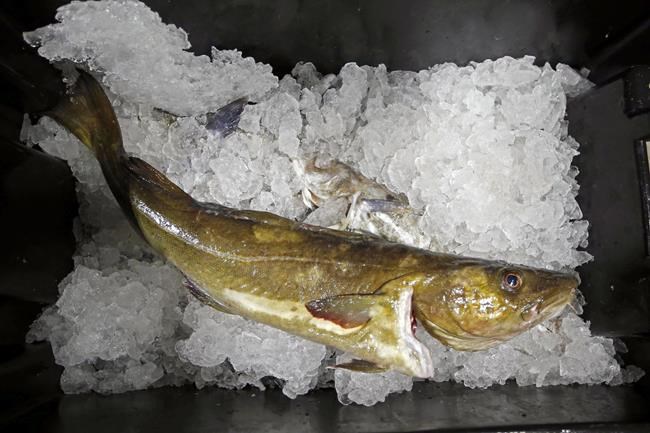
Fisheries Department stock assessment biologist Danny Ings says he doesn’t know exactly why cod are increasingly dying of natural causes, but, he says, the water in the area has warmed, changing the ecosystem.
“We’re seeing new species move in the area,” Ings said in an interview Friday. “We’re seeing a lot of changes in the community itself and what that means specifically for cod, we’re not quite sure.”
The cod population off the coast of Newfoundland and Labrador is in poor condition, he said, adding that the animals aren’t as fat as they should be compared to the length.
The Fisheries Department’s research found the number of newly born cod has been below the long-term average since the mid-1990s. Ings said the department suspects the struggling population may also be dealing with food scarcity.
He said the stock could rebound if fishing in the zone is kept to a minimum. The department said it will continue conducting research on cod natural mortality.
Management of the 3Ps fishing zone is shared between Canada and France, which has sovereignty over St-Pierre-Miquelon, a territory off the southern coast of Newfoundland.
The federal government said that by 2021, it will consult with Indigenous partners, provincial governments and other stakeholders to develop a new mandate for future negotiations with France over how to manage the waters.
This report by The Canadian Press was first published Nov. 20, 2020.
— — —
This story was produced with the financial assistance of the Facebook and Canadian Press News Fellowship.