
Program helping people to reconnect with traditional skills in Yellowknife
Advertisement
Read this article for free:
or
Already have an account? Log in here »
We need your support!
Local journalism needs your support!
As we navigate through unprecedented times, our journalists are working harder than ever to bring you the latest local updates to keep you safe and informed.
Now, more than ever, we need your support.
Starting at $15.99 plus taxes every four weeks you can access your Brandon Sun online and full access to all content as it appears on our website.
Subscribe Nowor call circulation directly at (204) 727-0527.
Your pledge helps to ensure we provide the news that matters most to your community!
To continue reading, please subscribe:
Add Brandon Sun access to your Free Press subscription for only an additional
$1 for the first 4 weeks*
- Enjoy unlimited reading on brandonsun.com
- Read the Brandon Sun E-Edition, our digital replica newspaper
*Your next Free Press subscription payment will increase by $1.00 and you will be charged $20.95 plus GST for four weeks. After four weeks, your payment will increase to $24.95 plus GST every four weeks.
Read unlimited articles for free today:
or
Already have an account? Log in here »
Hey there, time traveller!
This article was published 24/04/2023 (1257 days ago), so information in it may no longer be current.
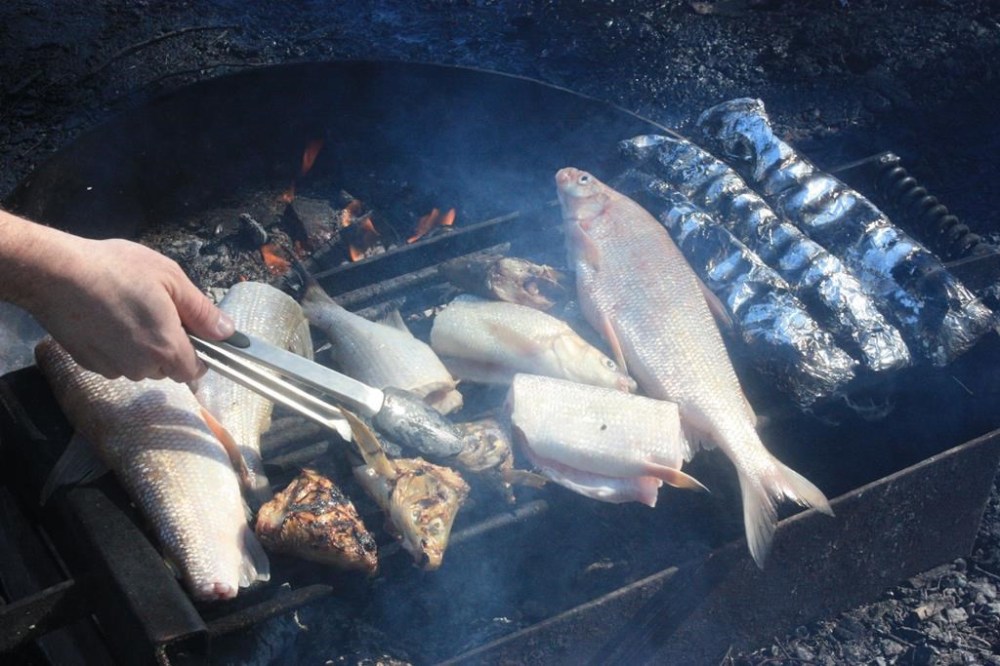
YELLOWKNIFE – By the shore of the still-frozen Yellowknife River, more than a dozen people gather to prepare fish for cooking over a crackling fire.
Originating from different communities across the North, they share the unique ways they’ve learned to clean and cut them.
Wildlife officers and trappers are reconnecting vulnerable people with on-the-land skills through a partnership between the Northwest Territories Department of Environment and Climate Change and the Yellowknife Women’s Society.
“We’ve heard a lot of people talk about how it helps some of their journeys,” said Vincent Casey, education outreach co-ordinator with the department.
“Certain people share with us a lot about their healing journeys themselves, as well as that connection back to lifestyles that they had when they were younger.”
“I think for a lot of people, they really enjoy being able to do something different than what they have and having this opportunity to have people come in and share and teach and be able to learn.”
Casey said the program is important, as trapping has a strong cultural connection for many people in the N.W.T., but is at risk as many lose touch with their traditional ways.
He said it’s part of longer-term plans to develop trapper training across the territory, including for underserved populations.
The program started as a pilot at the North Slave Correctional Complex last year, when every two weeks, inmates in Yellowknife learned outdoor skills from hunting and trapping to repairing snow machines.
Sessions at the jail have continued and the program has since expanded with a pilot for residents of Spruce Bough, a supportive housing facility that offers a managed alcohol program and other services, and the Yellowknife Women’s Centre, which provides shelter for women experiencing homelessness. Both are operated by the Yellowknife Women’s Society.
The program held its fourth and best attended session last week. It was also the first time they met outdoors, reflecting feedback from participants.
In previous sessions, Casey said they discussed different animals that can be trapped across the territory, trip planning, survival skills and rules and regulations. He said they also skinned squirrels and watched a demonstration of a fox pelt being prepared.
Jayson Quesada, manager of Spruce Bough, said many residents have experienced trauma and the program has helped reintroduce them to traditional skills and lifestyles they may have forgotten.
“They are more, I can say, relaxed,” he said. “It’s good for them to experience this again.
“We’re happy to provide services and help our brothers and sisters that are in need, especially dealing with evictions, trauma and discrimination.”
The group spent the sunny afternoon enjoying a meal of fish, potatoes, tea and coleslaw and ended by feeding the fire with tobacco and saying prayers.
This report by The Canadian Press was first published April 24, 2023.
___
This story was produced with the financial assistance of the Meta and Canadian Press News Fellowship.