
‘We need wetlands’: Saskatchewan environmental groups concerned over drainage plan
Advertisement
Read this article for free:
or
Already have an account? Log in here »
We need your support!
Local journalism needs your support!
As we navigate through unprecedented times, our journalists are working harder than ever to bring you the latest local updates to keep you safe and informed.
Now, more than ever, we need your support.
Starting at $15.99 plus taxes every four weeks you can access your Brandon Sun online and full access to all content as it appears on our website.
Subscribe Nowor call circulation directly at (204) 727-0527.
Your pledge helps to ensure we provide the news that matters most to your community!
To continue reading, please subscribe:
Add Brandon Sun access to your Free Press subscription for only an additional
$1 for the first 4 weeks*
- Enjoy unlimited reading on brandonsun.com
- Read the Brandon Sun E-Edition, our digital replica newspaper
*Your next Free Press subscription payment will increase by $1.00 and you will be charged $20.95 plus GST for four weeks. After four weeks, your payment will increase to $24.95 plus GST every four weeks.
Read unlimited articles for free today:
or
Already have an account? Log in here »
Hey there, time traveller!
This article was published 05/06/2023 (1203 days ago), so information in it may no longer be current.
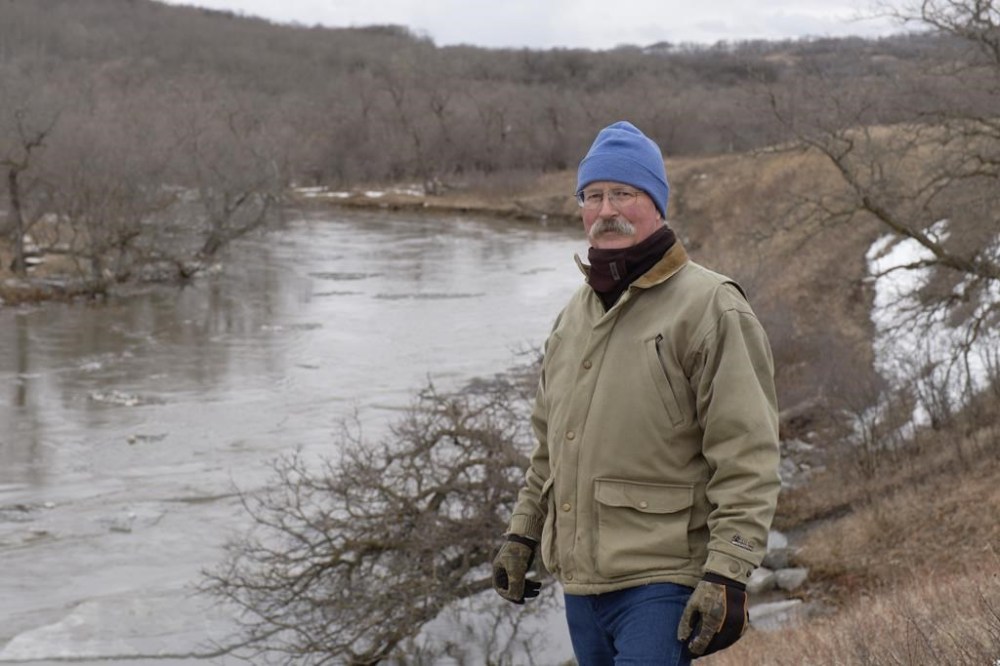
REGINA – Clint Blyth continues to see his stream banks erode each year.
The southeastern Saskatchewan rancher says the degradation is caused by those upstream who illegally drain water, as every year huge gushes take chunks out of the banks.
This year, it has forced him to move his fence line by about one metre.
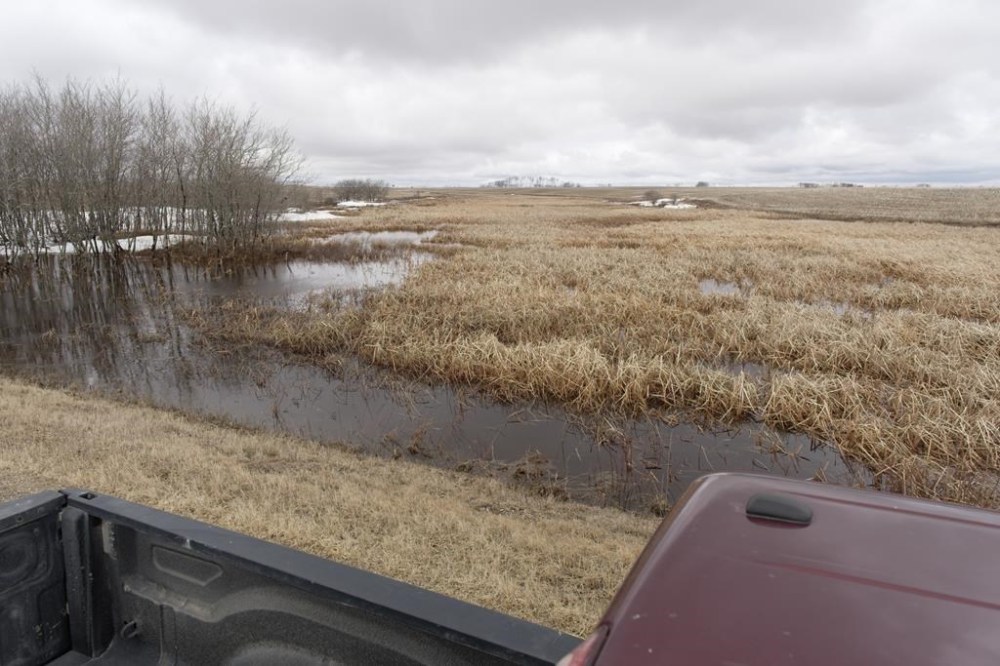
“In a lot of places, (the stream banks) are twice as wide as they were in 2010,” Blyth told reporters Monday at Regina’s McKell Wascana Conservation Park, an area lush with grasses and wetlands.
“We don’t have stream banks that look like this,” he said, pointing to the park.
“(Ours) get saturated, then the water drops, then they cave in.”
Blyth joined representatives from various Saskatchewan environmental groups to raise concerns over a new drainage policy that they argue is not adequately protecting the province’s ecosystems.
The groups, which include the Saskatchewan Alliance for Water Sustainability, the Calling Lakes Ecomuseum and Last Mountain Stewardship Group, said the province’s Agricultural Water Management Policy would allow farms to drain more wetlands and in effect put habitats, people and infrastructure at risk downstream.
The groups said losing more wetlands would also result in water quality to degrade, as there would be fewer of the areas to filter out contaminants.
Over time, as the climate changes, they said wetlands would become increasingly crucial to sustain communities, farms and industry.
“We support a growing Saskatchewan and we need wetlands in order to grow,” said Aura Lee MacPherson, chair of the Calling Lakes Ecomuseum.
Many farmers in Saskatchewan have been illegally draining water from wetlands over the years so they can grow more crops, helping them pay for land and increasingly expensive equipment.
The Water Security Agency is developing the policy and has said it’s working to bring unpermitted drainage into compliance.
The agency has indicated the policy would retain current drainage and allow further development if done responsibly. It’s also working on a strategy for wetlands that would ensure habitats are supported.
It did not immediately respond to a request for comment about the concerns.
Blyth said the agency hasn’t been enforcing the rules to stop people from draining.
He also said the agency has not done any work to slow down current drainage, resulting in continued erosion.
“We have an opportunity to fix and look after our wetlands, our streamflow and our water quality,” he said. “We’ve got to get past the short-sightedness of what we’re doing.”
MacPherson said Saskatchewan needs to develop a wetland policy that addresses people’s concerns while ensuring businesses aren’t affected.
“It would be making sure that what’s coming downstream is good water quality for everybody,” she said. “It would be creating neighbourliness and it would need regulation. It absolutely has to have regulation.”
Erika Ritchie, the Opposition NDP critic for the Water Security Agency, said the Saskatchewan Party government could look to Alberta and Manitoba for solutions in developing a wetland policy. The neighbouring provinces ensure protection for some wetlands.
Ritchie said the agency needs to be enforcing the rules so people aren’t illegally draining.
She also said the current approach of allowing drainage but in a slowed-down fashion is “not science-based.”
“They talked about creating larger wetlands, but they don’t function the same way. You may be having the same quantity of water in some cases, but they’re not part of the natural ecosystem in the same way in providing the same eco-services,” she said.
“I would like to see this government put partisanship aside and actually look at the science, listen to the experts … and put in a more balanced approach that’s going to take all these factors into consideration.”
This report by The Canadian Press was first published June 5, 2023.