
Wildlife unseen casualty as forests burn in worst wildfire season of the century
Advertisement
Read this article for free:
or
Already have an account? Log in here »
We need your support!
Local journalism needs your support!
As we navigate through unprecedented times, our journalists are working harder than ever to bring you the latest local updates to keep you safe and informed.
Now, more than ever, we need your support.
Starting at $15.99 plus taxes every four weeks you can access your Brandon Sun online and full access to all content as it appears on our website.
Subscribe Nowor call circulation directly at (204) 727-0527.
Your pledge helps to ensure we provide the news that matters most to your community!
To continue reading, please subscribe:
Add Brandon Sun access to your Free Press subscription for only an additional
$1 for the first 4 weeks*
- Enjoy unlimited reading on brandonsun.com
- Read the Brandon Sun E-Edition, our digital replica newspaper
*Your next Free Press subscription payment will increase by $1.00 and you will be charged $20.95 plus GST for four weeks. After four weeks, your payment will increase to $24.95 plus GST every four weeks.
Read unlimited articles for free today:
or
Already have an account? Log in here »
Hey there, time traveller!
This article was published 14/06/2023 (1233 days ago), so information in it may no longer be current.
As wildfires from coast to coast scorch large swaths of forest, sometimes changing it irreversibly, experts have zeroed in on an often overlooked casualty of the blazes: wildlife.
Spring fires, such as the ones now burning across the country, are unusual and will possibly affect several species, said Karen Hodges, a biology professor at the University of British Columbia’s Okanagan campus.
“If the tree with a nest burns, those eggs or chicks obviously will not survive. The adults may be able to escape the fire, but the chances that they would reproduce again somewhere else is unlikely for this year. I think one immediate impact is that many individuals will fail to breed this year. Some will die,” she said in a recent interview.
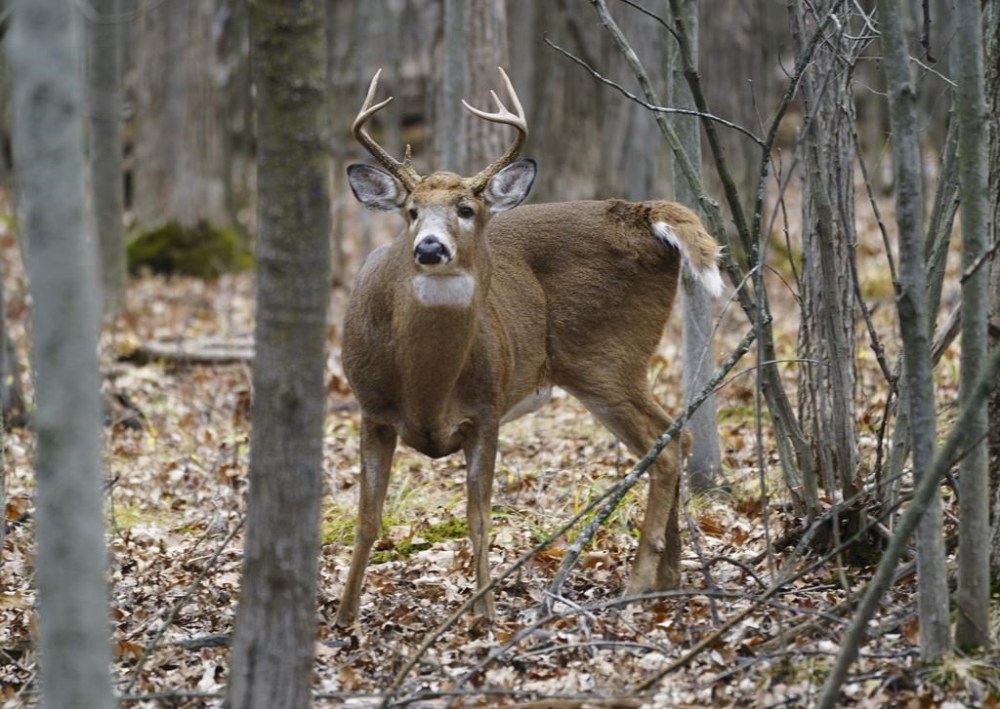
“Obviously, animals that can move away ahead of the fire will do so. But that depends how fast the fire is moving — whether the animals can outrun it. It’s really difficult to gauge that one.”
Emergency Preparedness Minister Bill Blair said Monday that more than 47,000 square kilometres have burned so far this year, with more than 430 wildfires raging across the country. Canada is experiencing its worst wildfire season of the 21st century, he said.
Hodges fears things will only get worse, with months of hotter temperatures ahead. “I do expect a lot of animals to be displaced or killed,” she said. “I do expect some populations in some regions to be gone, or small, for decades to come as a result of this year’s burns.”
Matthew Mitchell, research associate at the University of British Columbia’s land and food systems, said the carbon monoxide and particulate matter in wildfire smoke can have “acute” health effects on animals, some of which may not be seen for years.
“It can affect their lungs, it can change blood chemistry, lower oxygen levels, and so then you can also have effects on the immune system,” he said in an interview. “Those sorts of things can lead to changes in the demography, or the survival, growth and reproduction of animals as well.”
Wildfire smoke could also lead to changes in behaviour, including how active animals are, whether they look for mates and how much they sing, he said. Orangutans and gibbons affected by wildfire smoke in more tropical areas were found to make less noise than those that weren’t exposed, he said.
Scientists have observed fetuses of martens are negatively affected from wildfire smoke, Mitchell said. Early spring fires could impact pregnant animals or their newborns, just like they affect humans, he said.
A study published in February in the journal Ecology Letters examined the regenerative power of forest fires and concluded the news is not all bad for wildlife species.
It found that some ecosystems see a “species richness” after a fire, with birds and mammals seeing an increase in diversity.
“How ecological and evolutionary drivers translate to effects on animal richness remains to be seen, but our findings show the cumulative effects to be strikingly positive, at least for bird and mammal richness,” the paper by Canadian, American and European researchers said.
Animals that have the ability to reproduce faster do better in a fire-prone environment, it noted. But it warned that fires in areas where they are not a regular occurrence are not particularly beneficial. “In these ecosystems, fire is more of a modern threat than an important process to maintain, and recent fire activity in these systems is not a likely driver of richness,” it said.
While animals in Canada have adapted to wildfires that are a natural part of the ecosystem, Mitchell said repeatedly occurring “megafires” are changing the fire regime. There is less time between blazes, making it harder for the forest to recover.
And it is not just birds and land creatures that are affected by wildfires. “Whales and dolphins, because of the way they breathe, are often coming up and exchanging almost all the air in their lungs as they breathe,” he said. “They actually might be more susceptible as well.”
Mitchell said he worries most for endangered species. “I would expect that we are going to lose some species, if these kind of smoke events, and these wildfires keep increasing,” he said. “Predicting which exact species those are, that’s going to be as difficult, but I would expect there’s going to be some loss.”
On the flip side, some species may benefit, but he said it is hard to predict which ones.
Hodges said animals such as Canada lynx, marten, fisher and snowshoe hare need mature forests while others such as owls need big trees with cavities for nesting. But when fires burn these trees, it takes decades for them to grow back into mature forests. “These are going to be lasting changes.”
This report by The Canadian Press was first published June 14, 2023.