
Alberta minister says federal strings on electricity climate funding a ‘threat’
Advertisement
Read this article for free:
or
Already have an account? Log in here »
We need your support!
Local journalism needs your support!
As we navigate through unprecedented times, our journalists are working harder than ever to bring you the latest local updates to keep you safe and informed.
Now, more than ever, we need your support.
Starting at $15.99 plus taxes every four weeks you can access your Brandon Sun online and full access to all content as it appears on our website.
Subscribe Nowor call circulation directly at (204) 727-0527.
Your pledge helps to ensure we provide the news that matters most to your community!
To continue reading, please subscribe:
Add Brandon Sun access to your Free Press subscription for only an additional
$1 for the first 4 weeks*
- Enjoy unlimited reading on brandonsun.com
- Read the Brandon Sun E-Edition, our digital replica newspaper
*Your next Free Press subscription payment will increase by $1.00 and you will be charged $20.95 plus GST for four weeks. After four weeks, your payment will increase to $24.95 plus GST every four weeks.
Read unlimited articles for free today:
or
Already have an account? Log in here »
Hey there, time traveller!
This article was published 08/08/2023 (1167 days ago), so information in it may no longer be current.
EDMONTON – Ottawa is threatening the provinces by suggesting it will withhold federal funding from electricity projects that don’t reduce greenhouse-gas emissions, says Alberta’s minister of environment and protected areas.
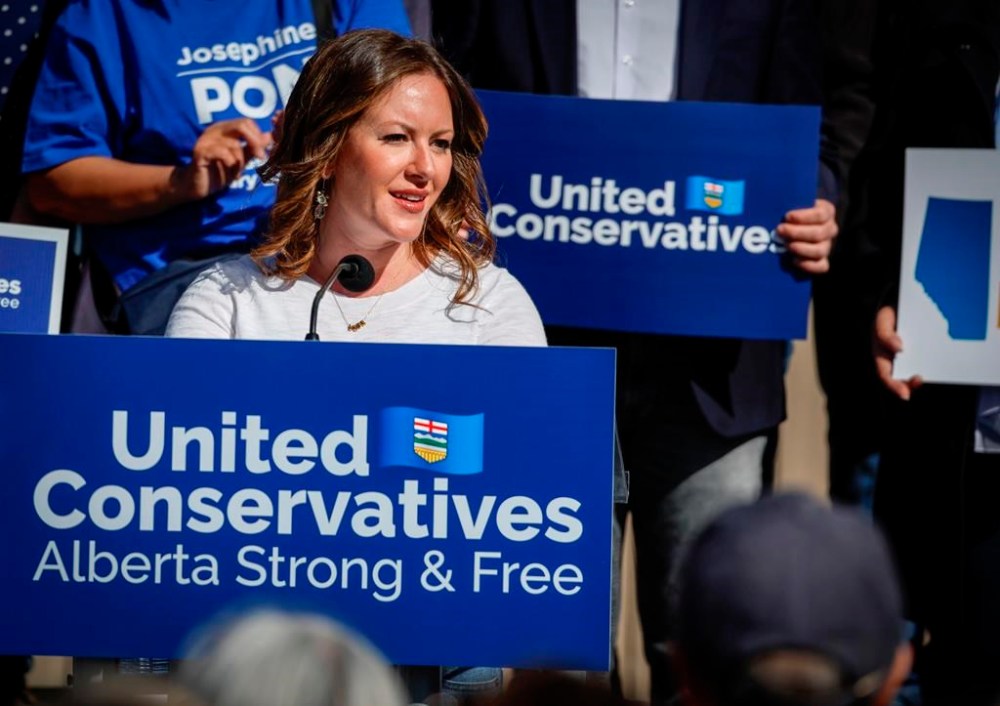
“We see (Federal Energy and Natural Resources Minister Jonathan) Wilkinson saying it isn’t his style to have fights and wanting to work with the provinces and have a national conversation,” Rebecca Schulz said Tuesday.
“Announcing in a press conference a threat to withhold funding isn’t really the right way to start a conversation.”
Earlier Tuesday in Vancouver, Wilkinson said billions of dollars in tax credits and grants will be tied to progress toward Ottawa’s target for a net-zero electricity grid by 2035.
“To access the tax credit will require that we are moving in the direction of a non-emitting grid,” he said.
That’s an ultimatum, said Schulz.
“Starting out from a position like that is not the way to enter a discussion in good faith.”
Saskatchewan’s minister for SaskPower, Don Morgan, said the federal position will increase electricity costs.
“By withholding the very funding meant to help provinces reach the Trudeau government’s net-zero targets, Saskatchewan’s customers will see a dramatic impact on their rates,” he said in a statement.
Neither Saskatchewan nor Alberta say they can meet the 2035 goal, preferring to set it off until 2050.
Wilkinson said provinces will be afforded flexibility in how they achieve the earlier target.
“We are cognizant of the need for the regulations to provide sufficient flexibility,” he said. “Every province and territory has different needs.”
He said talks between Ottawa and the provinces have already begun, including with Alberta Premier Danielle Smith.
Blake Schaffer, an energy economist at the University of Calgary, said much will depend on exemptions granted within the regulations, which are expected to be released this month. He said Canada’s rules are expected to be similar to those in the United States.
“Both Canada and the U.S., when they talk about clean power, both have in their plans very significant carve-outs and exemptions to recognize the need for flexibility,” he said.
The U.S., for example, contains provisions to allow old power plants to run out their life as well as for fossil fuel generation that only runs occasionally.
“From everything I’m hearing, (Canada’s) similarly contains much-needed flexibility.”
Schaffer said Canada’s rules could contain carve-outs for industrial facilities that generate their own power from waste heat — a big slice of Alberta’s power generation.
Meeting the federal 2035 target will be a stiff challenge, said Schaffer. But not necessarily impossible.
“You haven’t even heard what the final terms are yet,” he said.
Provinces, especially those with emissions-heavy grids, have much at stake. An analysis from Clean Energy Canada, a clean energy think tank at Simon Fraser University, has calculated that those jurisdictions are in line for a third more funding than those provinces that have cleaner power.
The group also said provinces with non-fossil-fuel-powered grids tend to have lower and more stable power prices.
This report by The Canadian Press was first published Aug. 8, 2023.