
Texas high court allows law banning gender-affirming care for transgender minors to take effect
Advertisement
Read this article for free:
or
Already have an account? Log in here »
We need your support!
Local journalism needs your support!
As we navigate through unprecedented times, our journalists are working harder than ever to bring you the latest local updates to keep you safe and informed.
Now, more than ever, we need your support.
Starting at $15.99 plus taxes every four weeks you can access your Brandon Sun online and full access to all content as it appears on our website.
Subscribe Nowor call circulation directly at (204) 727-0527.
Your pledge helps to ensure we provide the news that matters most to your community!
To continue reading, please subscribe:
Add Brandon Sun access to your Free Press subscription for only an additional
$1 for the first 4 weeks*
- Enjoy unlimited reading on brandonsun.com
- Read the Brandon Sun E-Edition, our digital replica newspaper
*Your next Free Press subscription payment will increase by $1.00 and you will be charged $20.95 plus GST for four weeks. After four weeks, your payment will increase to $24.95 plus GST every four weeks.
Read unlimited articles for free today:
or
Already have an account? Log in here »
Hey there, time traveller!
This article was published 31/08/2023 (1133 days ago), so information in it may no longer be current.
AUSTIN, Texas (AP) — The Texas Supreme Court allowed a new state law banning gender-affirming care for minors to take effect on Friday, setting up Texas to be the most populous state with such restrictions on transgender children.
Legal advocates who sued on behalf of the families and doctors, including the American Civil Liberties Union, called the law and the high court’s decision Thursday “cruel.“
“Transgender youth and their families are forced to confront the start of the school year fearful of what awaits them. But let us be clear: The fight is far from over,” the advocacy groups said in a joint statement.
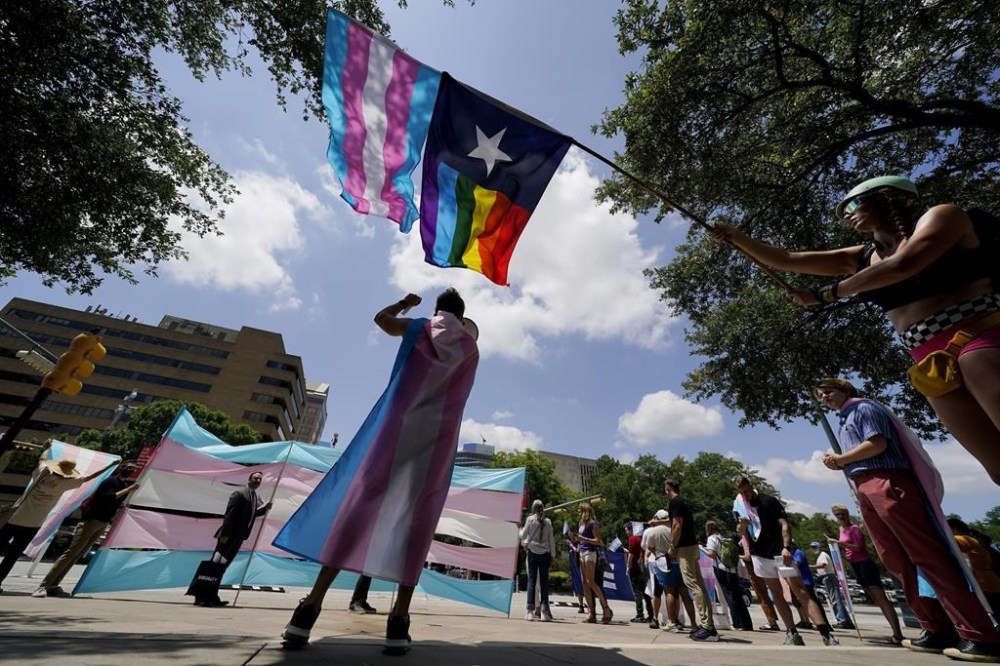
Last week, a state district judge ruled the pending law violated the rights of transgender children and their families to seek appropriate medical care, and violated doctors’ ability to follow “well-established, evidence-based” medical guidelines under threat of losing their license.
The judge issued a temporary injunction to block the law and state officials immediately appealed to the state’s highest court for civil cases.
The order from the all-Republican Supreme Court lifting the injunction and allowing the law to take effect did not explain the decision. The order did not address the lower court’s ruling that the law is unconstitutional, and a full hearing is expected.
More than 20 states have adopted laws to ban some gender-affirming care for minors, although some are not yet in effect or have been put on hold by courts.
The Texas law would prevent transgender minors from accessing hormone therapies, puberty blockers and transition surgeries, even though medical experts say such surgical procedures are rarely performed on children. Children who already started the medications being banned are required to be weaned off in a “medically appropriate” manner, the law said.
“Texas kids are safer today because of the Supreme Court ruling,” said Jonathan Covey, policy director of Texas Values, a conservative group that supported the law. “Protecting children from harmful and dangerous gender transition surgeries and puberty blockers is in the best interests of the child and something we all agree on.”
The lawsuit argued the Texas law will have devastating consequences for transgender teens if they are unable to obtain critical treatment recommended by their physicians and parents.
Several doctors who treat transgender children said they worry their patients will suffer deteriorating mental health, which could possibly lead to suicide, if they are denied safe and effective treatment.
The Texas ban was signed into law in June by Republican Gov. Greg Abbott, who was the first governor to order the investigation of families of transgender minors who receive gender-affirming care.