
‘Bear attack bad’: Alberta couple identified as pair killed in grizzly attack
Advertisement
Read this article for free:
or
Already have an account? Log in here »
We need your support!
Local journalism needs your support!
As we navigate through unprecedented times, our journalists are working harder than ever to bring you the latest local updates to keep you safe and informed.
Now, more than ever, we need your support.
Starting at $15.99 plus taxes every four weeks you can access your Brandon Sun online and full access to all content as it appears on our website.
Subscribe Nowor call circulation directly at (204) 727-0527.
Your pledge helps to ensure we provide the news that matters most to your community!
To continue reading, please subscribe:
Add Brandon Sun access to your Free Press subscription for only an additional
$1 for the first 4 weeks*
- Enjoy unlimited reading on brandonsun.com
- Read the Brandon Sun E-Edition, our digital replica newspaper
*Your next Free Press subscription payment will increase by $1.00 and you will be charged $20.95 plus GST for four weeks. After four weeks, your payment will increase to $24.95 plus GST every four weeks.
Read unlimited articles for free today:
or
Already have an account? Log in here »
Hey there, time traveller!
This article was published 04/10/2023 (1132 days ago), so information in it may no longer be current.
A family member of the couple killed by a grizzly bear in the wilderness of Banff National Park says he knew something was terribly wrong as soon as he received a call with a message from their satellite device.
Colin Inglis said his nephew, Doug Inglis, and Jenny Gusse, both 62, from Lethbridge, Alta., died in the bear attack on the weekend. Their seven-year-old border collie named Tris was also killed.
The longtime couple, he said, was on a weeklong backpacking trip in the area and had been checking in daily with him and Gusse’s mom.
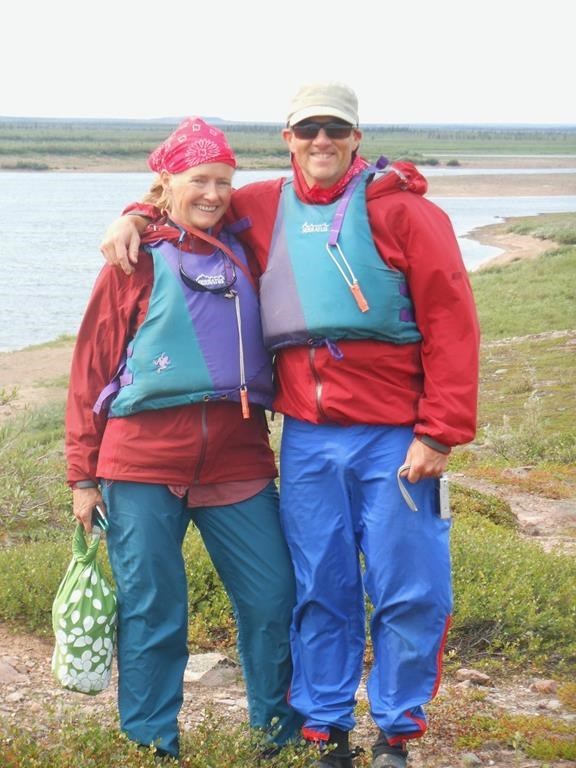
Inglis received a text message from their Garmin inReach device at 4:52 p.m. Friday saying they had been delayed but that everything was OK.
Then a representative with the satellite device company reached out at 8:15 p.m.
“I got an actual phone call from Garmin saying that the SOS had been activated and that somebody had actually entered into the inReach (a message) that said, ‘Bear attack bad,'” he said Wednesday in an interview from Edmonton.
“‘Bear attack bad’ means bad things. It means something is probably happening right then that is terrifying.”
Parks Canada has said its dispatchers also received an alert around 8 p.m. Friday from the inReach device about a bear attack west of Ya Ha Tinda Ranch, about 200 kilometres northwest of Calgary.
The agency immediately sent its Wildlife Human Attack Response Team to the remote area by ground because weather conditions in the mountains prevented it from using a helicopter. The team arrived at about 1 a.m. Saturday and found the two people dead, the statement said.
Parks Canada said the team, which is specially trained in firearms and wildlife attack site investigation and forensics, encountered a grizzly bear that displayed aggressive behaviour and charged toward them.
It was killed and a necropsy showed that the 25-year-old female bear was old, underweight and had bad teeth. DNA samples from the bear confirmed it was responsible for the attack, and it was not collared, tagged or previously known to wildlife staff in the park.
Parks officials said it will likely never be known what led to the attack and they won’t speculate on what happened.
Inglis said he believes the couple was in the wrong place at the wrong time.
They were always well prepared on their backcountry trips, he said. “But bears are unpredictable.
“This is a rogue bear. This is something unusual that has happened.”
He added that the couple had a routine. They would set up camp as soon as they arrived, start their food preparation and send inReach messages to family members.
“So, we knew they had established camp. They weren’t out wandering around.”
Once it got dark, he said, they would typically get into their tent and read.
“We believe that’s what they were doing,” said Inglis, adding the dog would have been in the tent with the couple before the attack.
He said the parks team found the tent had been crushed with their e-readers inside.
The couple, he added, was found outside the tent.
“They were in stocking feet, so that’s not normal. It was wet outside. It had been snowing.”
Parks officials have said the couple’s food had been hung appropriately and two cans of bear spray were found at the scene. They did not say whether the spray, which can be effective with some bears, had been used.
Inglis said he was told that a bear spray canister had been emptied and that there were signs the couple tried to scare off the bear.
“There was a struggle and the struggle didn’t stay in one place,” he said. “But, in the end, both bodies were back together.
“They were reconnected. That’s who they were. They were together in life, always.”
Inglis said the couple met as students at the University of Alberta, studied to be scientists and worked at the same lab for Agriculture Canada in Lethbridge. He had his PhD and worked as a scientist in the lab and she worked as a lab technician.
“Part of the draw for being there was, of course, access to the backcountry — to Waterton park and Banff park, being in the places they loved to be.”
Parks Canada said there have been three recorded non-fatal encounters with grizzly bears in Banff National Park in the past 10 years, and no fatalities in decades.
There are both grizzly bears and black bears in the park, which is Canada’s first and busiest national park.
This report by The Canadian Press was first published Oct. 4, 2023.