
Some nurse practitioners in Canada not being paid for administering MAID
Advertisement
Read this article for free:
or
Already have an account? Log in here »
We need your support!
Local journalism needs your support!
As we navigate through unprecedented times, our journalists are working harder than ever to bring you the latest local updates to keep you safe and informed.
Now, more than ever, we need your support.
Starting at $15.99 plus taxes every four weeks you can access your Brandon Sun online and full access to all content as it appears on our website.
Subscribe Nowor call circulation directly at (204) 727-0527.
Your pledge helps to ensure we provide the news that matters most to your community!
To continue reading, please subscribe:
Add Brandon Sun access to your Free Press subscription for only an additional
$1 for the first 4 weeks*
- Enjoy unlimited reading on brandonsun.com
- Read the Brandon Sun E-Edition, our digital replica newspaper
*Your next Free Press subscription payment will increase by $1.00 and you will be charged $20.95 plus GST for four weeks. After four weeks, your payment will increase to $24.95 plus GST every four weeks.
Read unlimited articles for free today:
or
Already have an account? Log in here »
Hey there, time traveller!
This article was published 20/11/2023 (1101 days ago), so information in it may no longer be current.
ST. JOHN’S, N.L. – For the past year, Ellen Gretsinger, a nurse practitioner in Ontario’s Niagara region, has been providing patients with medically assisted deaths — and not getting paid for it.
She has a full-time nursing job and a side gig offering virtual care, and in the evenings and on weekends, assesses patients for medical assistance in dying — known as MAID — and delivers the procedure. Like many provinces, Ontario does not have a mechanism for nurse practitioners to take on independent work and be paid for it, like a fee-for-service structure often in place for doctors.
And demand for MAID is growing across the country. So Gretsinger does the work for free. She believes in it, especially after watching her mother suffer before she died of cancer.
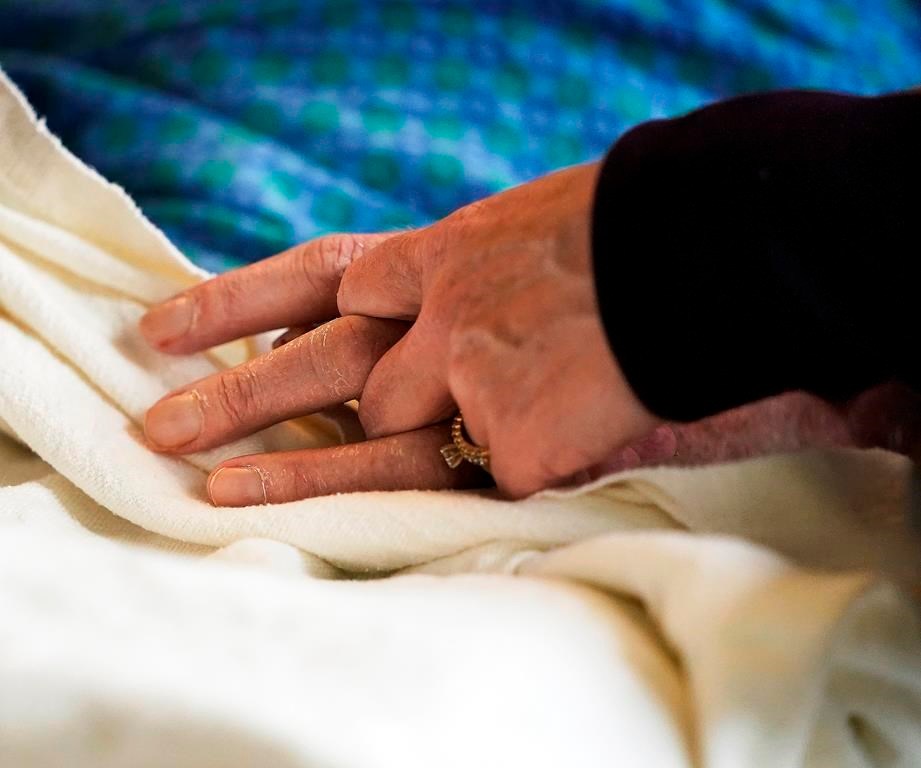
“I just feel that when people are suffering, and this is something that they’ve been told that they can access, then access needs to be there,” Gretsinger said in a recent interview. “So that’s why I have decided to do as much as I can.”
The number of doctors and nurse practitioners available to administer MAID in Canada has not kept up with increasing demand. A report last month from Health Canada shows the number of MAID providers has grown by an average of 18 per cent each year, but the number ofmedically assisted deaths — often referred to as provisions — has grown by nearly 33 per cent each year. According to federal law, MAID provisions and assessments can be done by nurse practitioners or doctors, and each request must be assessed by at least two providers.
There are a host of reasons why medical professionals may not be taking on MAID requests, from overwork in a strained system to hesitancy about MAID itself, said Dr. Tim Holland, head of bioethics at Dalhousie University. He considers medically assisted death to be the biggest cultural shift related to medicine since abortion.
But there are nurse practitioners like Gretsinger who are eager to take on the work.
“Finding a model that will allow nurse practitioners to be able to do this, in addition to their standard practice, would go a long way to increase capacity,” Holland said in an interview. “Every time we have a MAID conference, (the question) comes up every time … ‘How are we all going to advocate to get nurse practitioners paid?'”
Stan Marchuk, president of the Nurse Practitioner Association of Canada, said he’s aware of “a number” of nurse practitioners who are doing unpaid MAID work.
“I think it speaks to the fact that we just don’t have good compensation mechanisms in Canada for nurse practitioners,” he said in a recent interview. “We need more flexible models of compensation to allow nurse practitioners to be able to practice to their full scope in Canada.”
Compensation models for nurse practitioners have remained largely unchanged for decades, despite significant innovations in medicine and reforms to health systems, Marchuk said. In most provinces, nurses are salaried and tethered to health authorities, with no way to be compensated for work done outside their jobs.
Doctors, meanwhile, bill health authorities for any work they do, Marchuk said, adding that his organization is pushing for more flexible compensation models that would allow nurse practitioners to offer more services — or even set up independent practices providing MAID assessments and provisions.
“I think it’s really shameful that … people are providing a service for which they’re not being compensated,” he said.
British Columbia has made headway in offering different compensation models, and Alberta is in the process of figuring it out, Marchuk added.
In Newfoundland and Labrador, nurse practitioners can file up to five extra hours to do a MAiD assessment or provision outside of regular work shifts. It’s a new rule, part of the collective agreement between registered nurses and the provincial government, which was signed in July. Before that, nurse practitioners were doing the work for free, on their own time, just as Gretsinger is, said Yvette Coffey, president of Newfoundland and Labrador’s registered nurses’ union.
“They saw the need,” Coffey said in a recent interview. “And at the end of the day, it’s the needs of the patients that trump everything else.”
Gretsinger said she’d like to see Ontario health officials offer nurse practitioners a billing code for the work she does on medically assisted death. Until then, she’ll keep going. She worries that if she turns down those requests for assessments, patients would suffer longer. She said a woman had to adjust her desired day to die four times because it was hard to find providers.
“She suffered for another two months,” Gretsinger said. “It breaks my heart.”
This report by The Canadian Press was first published Nov. 20, 2023.