
Health Canada approves nationwide removal of blood donor ban sparked by mad cow fears
Advertisement
Read this article for free:
or
Already have an account? Log in here »
We need your support!
Local journalism needs your support!
As we navigate through unprecedented times, our journalists are working harder than ever to bring you the latest local updates to keep you safe and informed.
Now, more than ever, we need your support.
Starting at $15.99 plus taxes every four weeks you can access your Brandon Sun online and full access to all content as it appears on our website.
Subscribe Nowor call circulation directly at (204) 727-0527.
Your pledge helps to ensure we provide the news that matters most to your community!
To continue reading, please subscribe:
Add Brandon Sun access to your Free Press subscription for only an additional
$1 for the first 4 weeks*
*Your next subscription payment will increase by $1.00 and you will be charged $20.00 plus GST for four weeks. After four weeks, your payment will increase to $24.00 plus GST every four weeks.
Read unlimited articles for free today:
or
Already have an account? Log in here »
Hey there, time traveller!
This article was published 22/11/2023 (863 days ago), so information in it may no longer be current.
Health Canada has granted approval to lift a ban on blood donations from people who lived or travelled in the United Kingdom, Ireland or France for long periods of time in the 1980s and 1990s, Canadian Blood Services said Wednesday.
The ban was adopted more than two decades ago by blood agencies in many countries to prevent the transmission of variant Creutzfeldt-Jakob disease — the human form of bovine spongiform encephalopathy, or “mad cow disease.”
But almost 30 years of research and surveillance have made it clear that people who previously weren’t eligible to donate under the travel criteria can do so safely, said Dr. Aditi Khandelwal, medical officer for Canadian Blood Services.
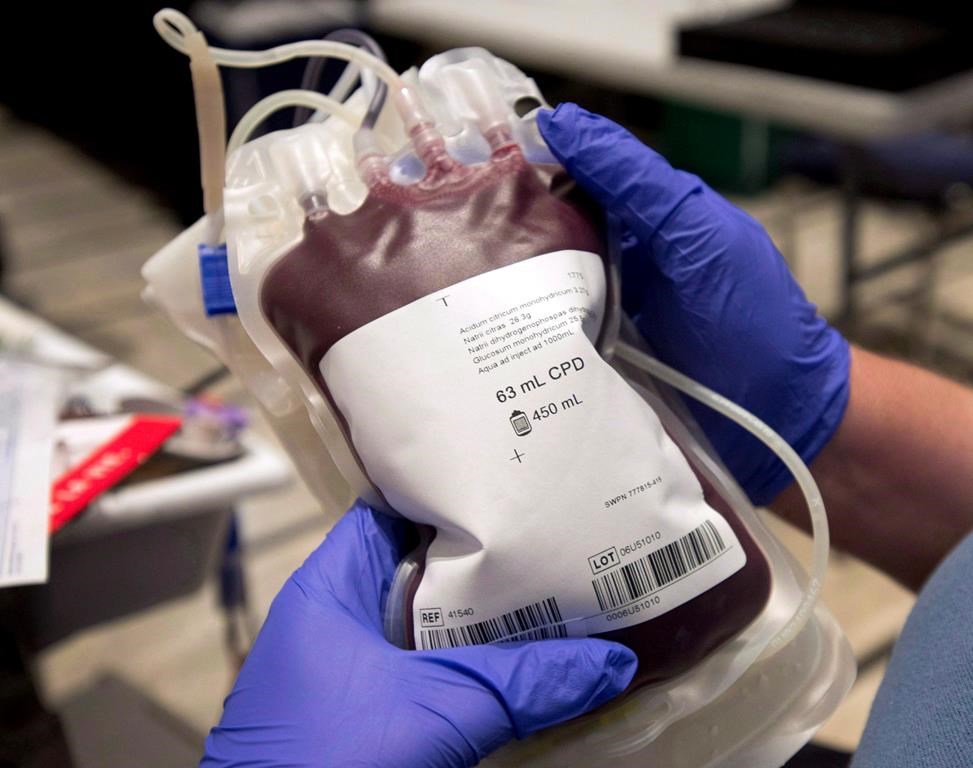
“By removing that criteria, we will not impact the safety of the blood supply. But what we may be able to do is improve access to being a donor for many, many new people and even donors who have been recently deferred from donation for these reasons,” said Khandelwal, who is also a hematologist and blood transfusion physician in Toronto.
“This is a massive effort on the part of many, many people (including) experts in Canada and across the world to understand this particular issue,” she said, noting that both the United States and Australia lifted similar donation bans in 2022.
The news came hours after Health Canada authorized Héma-Québec — which manages the blood supply in Quebec — to remove the same ban.
The change takes effect across the country on Dec. 4.
Since 2003, an estimated 70,000 people in Canada have been prevented from donating blood because their travel history in the United Kingdom, Ireland or France made them ineligible, said Ron Vezina, vice-president of public affairs at Canadian Blood Services.
About 7,500 people have been turned away in the last five years or so, he said, noting they are still listed in the blood agency’s system and may be contacted with a request to consider a donation.
The number of people across Canada who will now be able to donate blood is likely “a lot larger,” Vezina said.
“The great unknown for us is how many people out there (have) self-deferred. They had just heard about this (ban) through someone else or they never even tried to give blood because they just assumed they were ineligible.”
There is a big need for more blood donors in Canada, Vezina said. With only one out of 81 eligible people in Canada currently donating, the blood supply depends on a “small army.”
“Everyone thinks that someone else has got it covered or is doing it,” he said.
“The more people we can get to join the ranks and alleviate some of the pressures on that small army, the more resilient we’ll be for Canada’s needs in (blood) transfusion.”
The people who may become newly eligible to donate blood as of Dec. 4 are those who spent a total of three months or more in the U.K. between Jan. 1, 1980, and Dec. 31, 1996, or received a transfusion there.
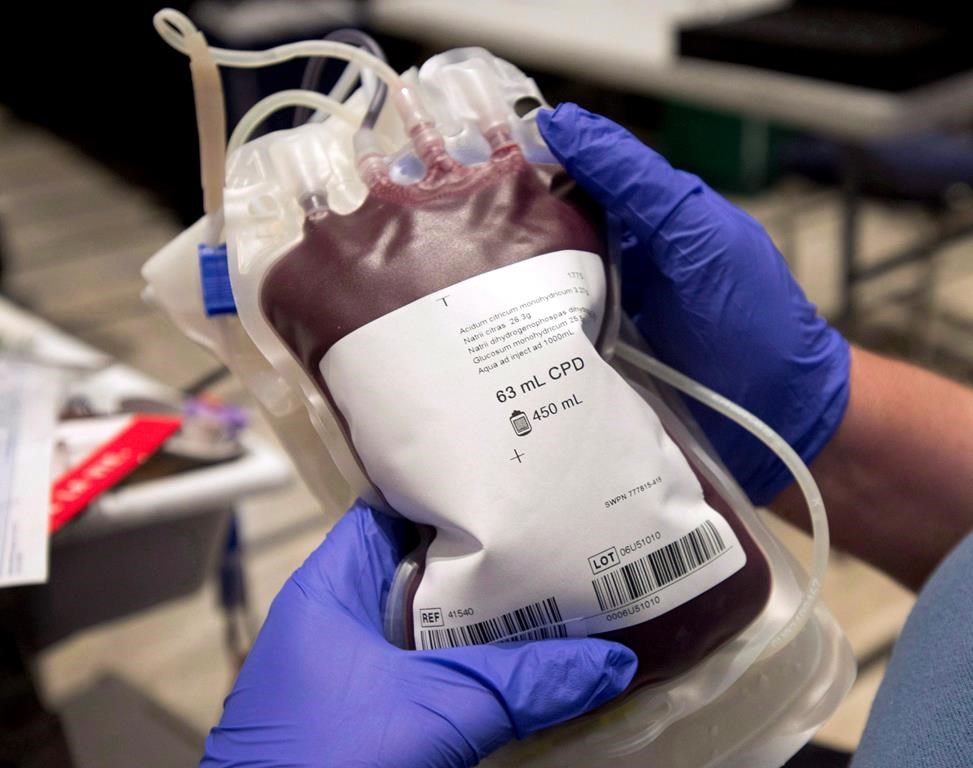
Those who spent a total of five years or more in France or the Republic of Ireland between 1980 and 2001, or received a transfusion there, may also be eligible to donate.
People who spent extended time in those countries were assumed to be more likely to have eaten beef products from cows that had bovine spongiform encephalopathy at a time when very little was known about the disease, said Khandelwal.
There have been 231 cases of variant Creutzfeldt-Jakob disease from eating cow products worldwide, she said.
There have been two cases of the disease in Canada. One had lived in the U.K. and the other had lived in Saudi Arabia and consumed beef imported from the U.K. Those cases happened in 2002 and 2011, respectively, Khandelwal said.
It’s now known that the average time from exposure to developing the illness is eight and a half years, she said, and that it can be fatal within about 14 months.
That means people who lived in the high-risk countries in the 1980s and 1990s would have developed the disease long before now, she said.
An additional safeguard is the fact that white blood cells are reduced or removed from blood donations before transfusion, Khandelwal said.
This report by The Canadian Press was first published Nov. 22, 2023.
Canadian Press health coverage receives support through a partnership with the Canadian Medical Association. CP is solely responsible for this content.