
Qapik Attagutsiak, last survivor of Inuit war effort and beloved elder, dies at 103
Advertisement
Read this article for free:
or
Already have an account? Log in here »
We need your support!
Local journalism needs your support!
As we navigate through unprecedented times, our journalists are working harder than ever to bring you the latest local updates to keep you safe and informed.
Now, more than ever, we need your support.
Starting at $15.99 plus taxes every four weeks you can access your Brandon Sun online and full access to all content as it appears on our website.
Subscribe Nowor call circulation directly at (204) 727-0527.
Your pledge helps to ensure we provide the news that matters most to your community!
To continue reading, please subscribe:
Add Brandon Sun access to your Free Press subscription for only an additional
$1 for the first 4 weeks*
- Enjoy unlimited reading on brandonsun.com
- Read the Brandon Sun E-Edition, our digital replica newspaper
*Your next Free Press subscription payment will increase by $1.00 and you will be charged $20.95 plus GST for four weeks. After four weeks, your payment will increase to $24.95 plus GST every four weeks.
Read unlimited articles for free today:
or
Already have an account? Log in here »
Hey there, time traveller!
This article was published 20/12/2023 (1013 days ago), so information in it may no longer be current.
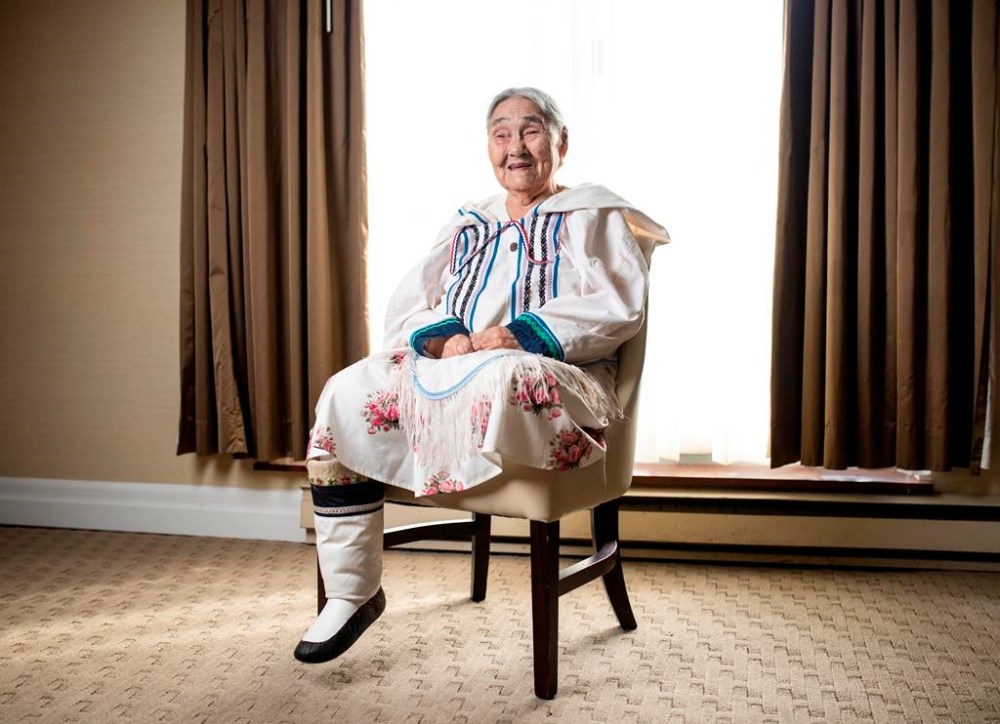
Qapik Attagutsiak was already a young woman in 1940, a mother at ease on the land and a skilled midwife, when she heard about a conflict occurring among many people in faraway lands.
Qapik, who preferred using that name in the Inuit tradition, was hunting walrus with her family near Foxe Basin when the local Catholic priest told her about battles being fought by men jumping from planes.
“Inuit are afraid to kill other people,” Qapik told a Parks Canada interviewer in 2018.
“We were afraid that our husbands would be killed if they encountered anyone who had jumped from an airplane. We would think that they will never come back.”
No paratroops landed in what is now Nunavut during the Second World War. But Qapik pitched in to that faraway conflict nonetheless.
The beloved elder, who died last week at 103, was the last surviving Inuk who collected bones and animal carcasses — tonnes of them — to help make explosives and fertilizer to fuel Canada’s fight.
During the war, citizens were encouraged to salvage as much waste as possible. Used materials like metal, rubber and paper were rolled into the war effort.
With those materials scarce in the Arctic, the Inuit collected what they could.
“We were informed that we must collect the bones as the army wants us Inuit to make something for smoke (Inuktitut had no word for explosives at the time),” Qapik told her interviewer.
“I gathered bones with them. We were terrified beyond belief. (The bones) were bloody and even if they have meat on the bones, they did not mind that. We would bag them.”
The carcasses were smelly and maggot-ridden, but Qapik and the other adults in her camp went out day after day, filling bag after bag — 170 kilograms a day for a full week.
“I suppose that it was worth it just as long as we win,” she said.
Born June 11, 1920, near Chesterfield Inlet in what is now Nunavut, Qapik grew up as a traditional Inuk.
She and her family lived in tents in the spring and summer, sod houses — qarmaqs — in fall and igloos during the winter. They travelled and hunted using dog teams, living off the animals they harvested and wearing clothes made from sinews and skins.
Qapik became an accomplished seamstress and worked into her 90s making and selling traditional clothing such as mitts and kamiks (boots), sharing the proceeds and the clothes with the needy in her community.
By the age of 10, she was working as a midwife and over the course of her life helped deliver hundreds of babies. In 2005, she helped found the Akausivik Inuit Family Health Team and Medical Centre in Ottawa, a program that still offers Inuit in that city a wide variety of health and well-being programs.
Along the way, she and her husband Attagutsiak raised 14 children. She has more than 200 descendants.
She was a beacon, said Nunavut Premier P.J. Akeeagok.
“Qapik’s contributions to the lives of Inuit and non-Inuit alike spans a century,” he said in a release.
“She has so generously shared her time and her stories, as well as her language, culture, skills and knowledge. Qapik embodied Inuit Qaujimajatuqangit (traditional knowledge) and Inuit societal values.”
Flags in Nunavut flew at half-mast in her honour, but that wasn’t her only recognition.
In 2012, she was awarded the Queen Elizabeth II Diamond Jubilee Medal. Parks Canada named her one of its Hometown Heroes in 2020 to mark her service to the war effort.
Qapik lived out her days in Arctic Bay on the northern coast of Baffin Island.
She had a house, with power and water and plumbing. But in 2016, a reporter from Up Here magazine found her — then 96 — living in a small outbuilding, heated and lit only by a traditional oil lamp.
She told her interviewer she preferred surroundings that reminded her of the qarmaqs of her youth.
Qapik died Dec. 14 in Ottawa.
This report by The Canadian Press was first published Dec. 20, 2023.