
B.C. trawlers dump thousands of salmon, depleting orcas’ food source: wildlife group
Advertisement
Read this article for free:
or
Already have an account? Log in here »
We need your support!
Local journalism needs your support!
As we navigate through unprecedented times, our journalists are working harder than ever to bring you the latest local updates to keep you safe and informed.
Now, more than ever, we need your support.
Starting at $15.99 plus taxes every four weeks you can access your Brandon Sun online and full access to all content as it appears on our website.
Subscribe Nowor call circulation directly at (204) 727-0527.
Your pledge helps to ensure we provide the news that matters most to your community!
To continue reading, please subscribe:
Add Brandon Sun access to your Free Press subscription for only an additional
$1 for the first 4 weeks*
*Your next subscription payment will increase by $1.00 and you will be charged $20.00 plus GST for four weeks. After four weeks, your payment will increase to $24.00 plus GST every four weeks.
Read unlimited articles for free today:
or
Already have an account? Log in here »
Hey there, time traveller!
This article was published 19/01/2024 (803 days ago), so information in it may no longer be current.
VICTORIA – A British Columbia wildlife protection group says chinook salmon that form the key diet for endangered orcas are being caught in their thousands by trawlers, only to be dumped or turned into compost.
Pacific Wild said it had obtained a yet-to-be-published Fisheries and Oceans Canada report on groundfish trawl bycatch, which found more than 28,000 salmon were netted as bycatch in the 2022-23 fishing season, with 93 per cent of them — more than 26,000 — chinook salmon.
Pacific Wild marine specialist Sydney Dixon said the valuable and threatened fish were wasted and the bycatch would have been enough to feed three or four endangered southern resident killer whales for a year.
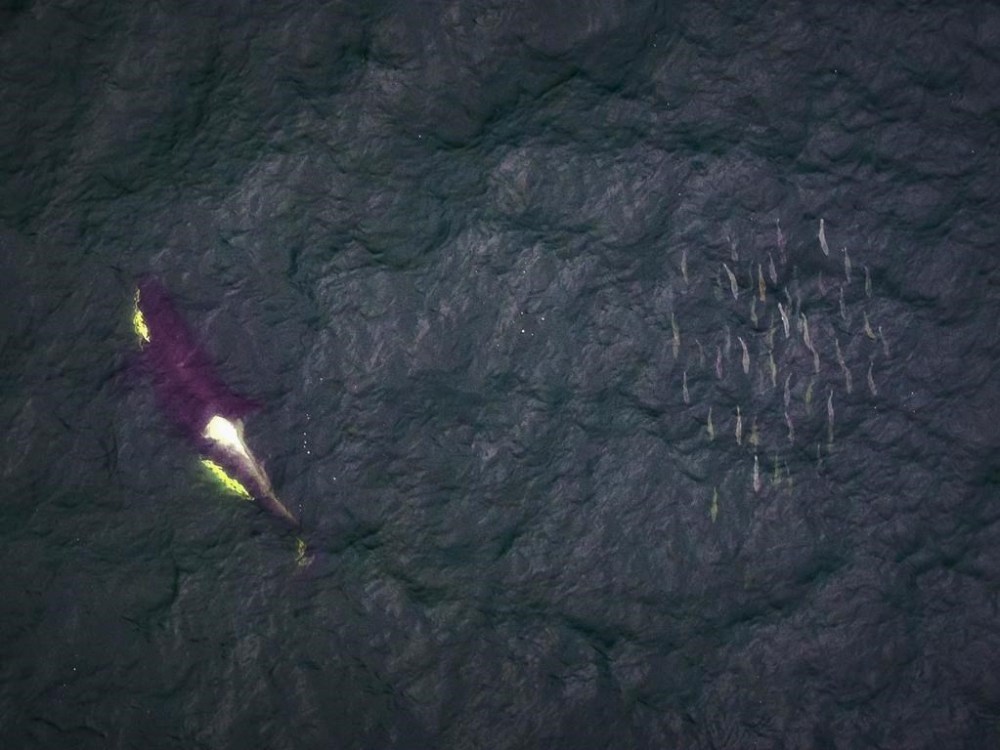
“Chinook salmon are the primary food source for these critically endangered southern resident killer whales,” Dixon said Friday.
“There are only 75 of these whales remaining. To be eliminating their primary food source is pretty tragic especially with these fish just being killed and wasted.”
Dixon said the report estimated more than 20,000 dead chinook were thrown overboard while another 3,700 were either discarded as offal, waste or compost.
“There’s millions of dollars going into the protection and recovery of these southern resident killer whales,” she said.
“There’s millions of dollars going into the conservation, recovery and restoration of chinook. The level of bycatch within this indiscriminate fishery, in my opinion, really undermines the conservation efforts that are happening.”
The Fisheries Department said in a statement that it can’t comment on its bycatch report until it is released publicly, likely within days.
The United Fishermen’s Allied Workers’ Union did not immediately respond to a request for comment.
Dixon said the bycatch results were compiled during a first-time enhanced monitoring effort by DFO from September 2022 to February 2023.
“It’s showing us some pretty scary numbers,” she said.
B.C.’s trawl fleet of about 45 vessels includes six large freezer boats that caught almost 75 per cent of the chinook bycatch that was thrown overboard dead, said Dixon.
“They certainly are not trying to catch salmon,” she said. “The salmon are incidental bycatch.”
Dixon said the trawlers, which drag nets along the ocean bottom or set them at mid-water levels, are looking to catch hake, pollock, flounder or other groundfish, but not salmon.
“The salmon are primarily caught in the mid-water trawl,” she said. “It’s these huge nets being dragged behind the boats through the water column. The freezer boats can be out there for weeks at a time.”
Pacific Wild supports a continued DFO enhanced monitoring program for the trawl fishery for the coming season, but wants the department to implement measures to eliminate the salmon bycatch, Dixon said.
This report by The Canadian Press was first published Jan. 19, 2024.
Note to readers: This is a corrected story. A previous version misstated the number of salmon netted as bycatch in the 2022-23 season.