
Manitoba First Nation declares state of emergency over flooding-related health crisis
Advertisement
Read this article for free:
or
Already have an account? Log in here »
We need your support!
Local journalism needs your support!
As we navigate through unprecedented times, our journalists are working harder than ever to bring you the latest local updates to keep you safe and informed.
Now, more than ever, we need your support.
Starting at $15.99 plus taxes every four weeks you can access your Brandon Sun online and full access to all content as it appears on our website.
Subscribe Nowor call circulation directly at (204) 727-0527.
Your pledge helps to ensure we provide the news that matters most to your community!
To continue reading, please subscribe:
Add Brandon Sun access to your Free Press subscription for only an additional
$1 for the first 4 weeks*
- Enjoy unlimited reading on brandonsun.com
- Read the Brandon Sun E-Edition, our digital replica newspaper
*Your next Free Press subscription payment will increase by $1.00 and you will be charged $20.95 plus GST for four weeks. After four weeks, your payment will increase to $24.95 plus GST every four weeks.
Read unlimited articles for free today:
or
Already have an account? Log in here »
Hey there, time traveller!
This article was published 01/05/2024 (869 days ago), so information in it may no longer be current.
PEGUIS, Man. – A Manitoba First Nation has declared a state of emergency in response to a health crisis caused by repeated flooding.
Peguis First Nation says it has endured persistent flooding over the years that has caused heavy damage to infrastructure and housing.
It says the community has seen significant rates of emotional distress and mental health disorders among children and adults, with a rise in self-harm among youth, drug addiction and incidents of domestic violence.
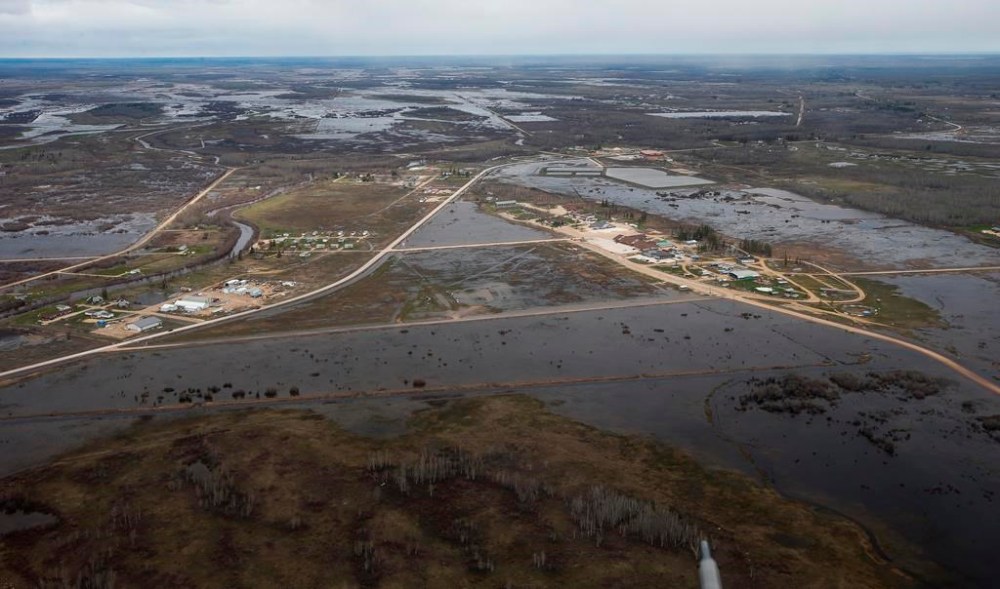
The First Nation recently filed a lawsuit alleging the federal and Manitoba governments failed to protect the community from the frequent flooding.
It also alleges two nearby municipalities diverted water from their areas to improve drainage, but in a way that added to flooding on the reserve’s land.
Chief Stan Bird says the $1-billion lawsuit shows their determination to fight for their rights and to secure the necessary resources for the community.
“Our staff are overwhelmed; our people continue to face a life of uncertainty,” Bird said in a statement. “This has caused immeasurable suffering on children, families and community.
“Despite these challenges, we are committed to a path of recovery, protection and justice.”
The lawsuit contains allegations that have not been proven in court, and the defendants have not yet filed statements of defence.
Peguis First Nation was originally in another part of Manitoba on fertile farmland. It was relocated more than a century ago to the marshy delta of the Fisher River, 200 kilometres north of Winnipeg.
The federal government conceded in 1998 that the land transfer that prompted the move was illegal. The two sides reached a settlement 11 years later.
The First Nation says it has suffered an average of one flood every two years since 2000. It says the worst flooding, in 2022, caused widespread damage and the evacuation of members to hotels in Winnipeg.
More than 500 members who left because of the 2022 flood still haven’t returned, it says, as is the case with 235 people who fled flooding in 2014 and 2017.
The federal government says it has worked with Peguis on an ongoing basis, including a memorandum signed last year to formalize long-term flood protection and recovery.
Despite the First Nation’s efforts to collaborate with the federal and provincial governments, however, Bird says the response has been “woefully inadequate.”
“We urgently call on the federal and provincial governments to engage with us, to listen to our needs, and to implement lasting solutions that will prevent future crises and support our community’s recovery,” he says.
This report by The Canadian Press was first published May 1, 2024.