
See a goofy-looking bird on the ground? It’s likely a baby and it’s fine, experts say
Advertisement
Read this article for free:
or
Already have an account? Log in here »
We need your support!
Local journalism needs your support!
As we navigate through unprecedented times, our journalists are working harder than ever to bring you the latest local updates to keep you safe and informed.
Now, more than ever, we need your support.
Starting at $15.99 plus taxes every four weeks you can access your Brandon Sun online and full access to all content as it appears on our website.
Subscribe Nowor call circulation directly at (204) 727-0527.
Your pledge helps to ensure we provide the news that matters most to your community!
To continue reading, please subscribe:
Add Brandon Sun access to your Free Press subscription for only an additional
$1 for the first 4 weeks*
- Enjoy unlimited reading on brandonsun.com
- Read the Brandon Sun E-Edition, our digital replica newspaper
*Your next Free Press subscription payment will increase by $1.00 and you will be charged $20.95 plus GST for four weeks. After four weeks, your payment will increase to $24.95 plus GST every four weeks.
Read unlimited articles for free today:
or
Already have an account? Log in here »
Hey there, time traveller!
This article was published 05/06/2024 (849 days ago), so information in it may no longer be current.
ST. JOHN’S, N.L. – It’s fledgling season, a time when animal rescue experts say they are inundated with calls about goofy-looking birds stumbling around on the ground.
In eastern Newfoundland, Karen Gosse of The Rock Wildlife Rescue gets so many calls about baby crows, she posted a reminder on social media that the drunk-looking birds aren’t really in danger — they’re just young and haven’t yet got their bearings.
“They’re doing their hop, they’re trying to get their wings open, and sometimes it’s not even and they’ll fall over,” Gosse said in an interview. “They’ll open their mouths sometimes and gape at people … they really do appear like there’s something not right with them.”
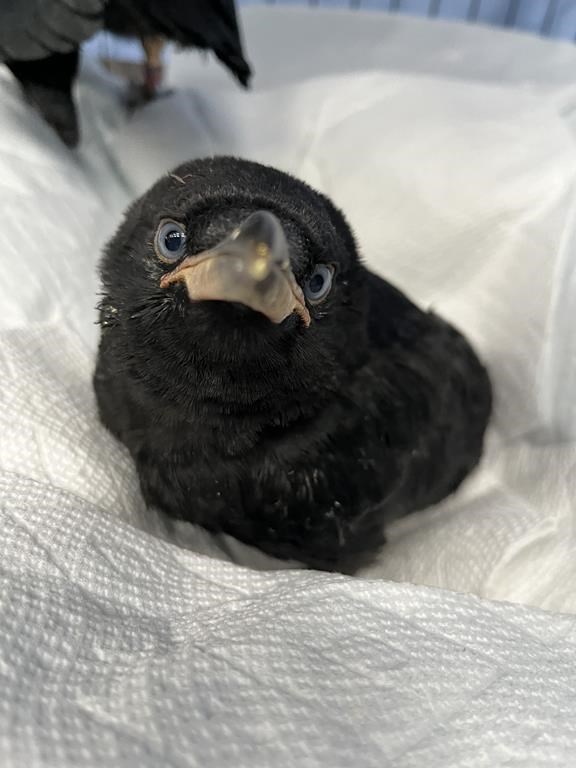
She got about 10 baby crow calls just last week.
But it’s not only flailing baby crows prompting passersby to call an animal rescue centre for help, said Michael Mesure of FLAP Canada, a bird conservation charity based in Ontario. Most wild birds have an awkward fledgling stage during which they’ve left the nest and are on the ground for some time, learning to fly, squawk and feed.
Fledglings can be as big as their parents, and look like adult birds too injured to fly, he said. Someone who sees one may think it needs help, but it really needs to be left alone.
“Rehab centres become overrun with baby birds, to the point that they actually can’t help other injured birds. It’s a big problem,” Mesure said in an interview. “In fact, if someone does their legwork and calls a rehab facility, most of them will put them through a regiment of questions just to make sure they’re not dealing with a baby bird.”
The only situation in which Mesure recommends intervening is if the bird is being stalked by a predator — a prowling house cat, for example — or if it’s in the path of traffic.
But proceed carefully, he warned. Anyone moving in to scoop up a bird should cover their hands with gloves or paper towels, and they should expect the bird to push back. They should also anticipate a fight from the bird’s parents, who are likely watching over their fledgling from a nearby tree, he added. Adult birds will typically swoop down toward the heads of anything or anyone interfering with their young.
Interactions can be especially hair-raising with crows, he cautioned: they’re big, strong, and more likely to scratch.
Gosse said people can recognize baby crows by their blue eyes, short tail feathers and the pink at the corners of their mouths. They may spend a week or two on the ground, and the majority will be fine.
“At night they usually snuggle into the base of the tree close to where their nest was,” she said. “Their parents and family still feed them, until they eventually learn to fly.”
This report by The Canadian Press was first published June 5, 2024.