
Minister to launch consultations on advanced requests for assisted dying
Advertisement
Read this article for free:
or
Already have an account? Log in here »
We need your support!
Local journalism needs your support!
As we navigate through unprecedented times, our journalists are working harder than ever to bring you the latest local updates to keep you safe and informed.
Now, more than ever, we need your support.
Starting at $15.99 plus taxes every four weeks you can access your Brandon Sun online and full access to all content as it appears on our website.
Subscribe Nowor call circulation directly at (204) 727-0527.
Your pledge helps to ensure we provide the news that matters most to your community!
To continue reading, please subscribe:
Add Brandon Sun access to your Free Press subscription for only an additional
$1 for the first 4 weeks*
*Your next subscription payment will increase by $1.00 and you will be charged $20.00 plus GST for four weeks. After four weeks, your payment will increase to $24.00 plus GST every four weeks.
Read unlimited articles for free today:
or
Already have an account? Log in here »
Hey there, time traveller!
This article was published 28/10/2024 (549 days ago), so information in it may no longer be current.
OTTAWA – Health Minister Mark Holland said the federal government will launch consultations this fall about expanding the medical assistance in dying regime to include advanced requests.
But Holland said such requests are still illegal under the Criminal Code for now, even as Quebec prepares to begin allowing the practice starting Wednesday.
The Quebec government announced last week that people who have conditions like dementia or Alzheimer’s disease will be able make a request for assisted dying before their mental capacity declines.
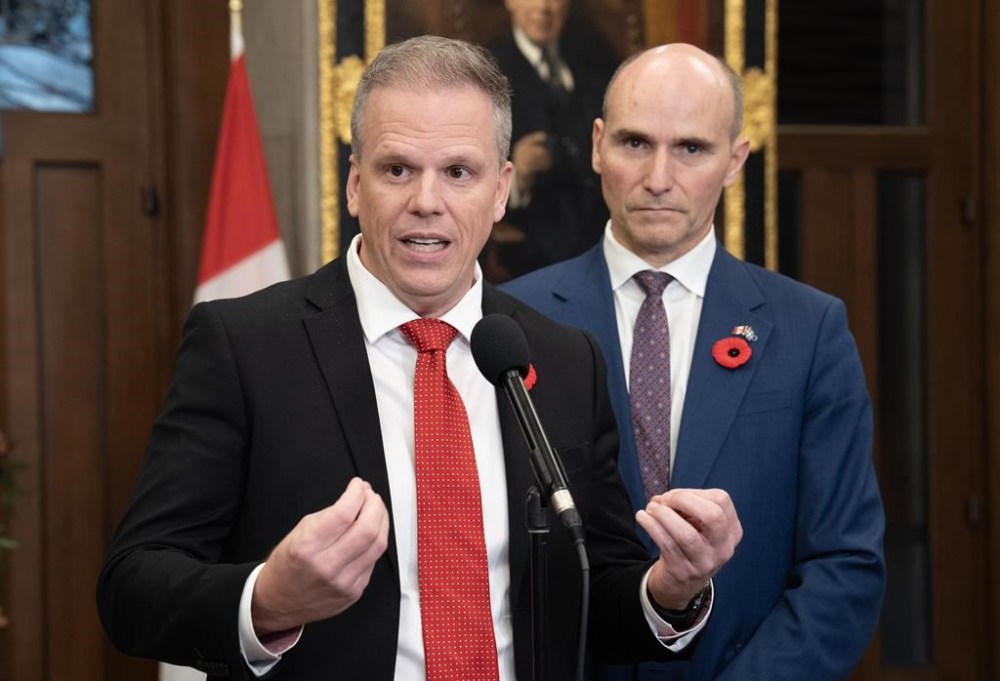
“What we’re saying very clearly is that this is an incredibly difficult issue, that we need to take the time to have a national conversation that includes our provincial and territorial colleagues, that where these lines are drawn and whether or not the system is ready is a very important step,” Holland said at a press conference on Parliament Hill on Monday.
“This continues to be illegal in this country, that if you act on an advance request, the Criminal Code is very clear that that is not legal.”
The Quebec government asked the provincial Crown prosecutor’s office to not pursue charges against doctors as long as they comply with the provincial law.
Holland said he is not in a place to direct provincial prosecutions.
“It’s extremely important to say that we have a spirit of co-operation here, that the issue that Quebec raises is a legitimate and fair issue,” Holland said.
Under the current laws, any health-care worker who administers medical assistance in dying must ensure the person gives express consent immediately before the procedure, and the patient must be given an opportunity to withdraw the request.
A person seeking an assisted death also must fulfil several criteria, including that they entered an arrangement specifying the day they wanted to die.
Earlier this year, professional groups representing Quebec’s doctors and nurses were among those who released a statement urging the federal government to amend the Criminal Code to allow for advanced requests.
People who want to fill out an advanced directive in Quebec will need to describe in detail the symptoms that health-care workers will need to witness before the procedure. They also must have a serious and incurable condition that causes “constant and unbearable physical or psychological suffering.”
Holland said the federal government will launch consultations on the issue in November, including with health professionals and provincial and territorial officials.
These consultations are scheduled to be done by the end of January 2025, with a final report expected in the spring.
This report by The Canadian Press was first published Oct. 28, 2025.