
US finds no link between ‘Havana syndrome’ and foreign power, but two spy agencies say it’s possible
Advertisement
Read this article for free:
or
Already have an account? Log in here »
We need your support!
Local journalism needs your support!
As we navigate through unprecedented times, our journalists are working harder than ever to bring you the latest local updates to keep you safe and informed.
Now, more than ever, we need your support.
Starting at $15.99 plus taxes every four weeks you can access your Brandon Sun online and full access to all content as it appears on our website.
Subscribe Nowor call circulation directly at (204) 727-0527.
Your pledge helps to ensure we provide the news that matters most to your community!
To continue reading, please subscribe:
Add Brandon Sun access to your Free Press subscription for only an additional
$1 for the first 4 weeks*
*Your next subscription payment will increase by $1.00 and you will be charged $20.00 plus GST for four weeks. After four weeks, your payment will increase to $24.00 plus GST every four weeks.
Read unlimited articles for free today:
or
Already have an account? Log in here »
Hey there, time traveller!
This article was published 10/01/2025 (440 days ago), so information in it may no longer be current.
WASHINGTON (AP) — U.S. intelligence has found no evidence linking a foreign power to the mysterious “Havana syndrome” injuries reported by some U.S. diplomats and other government personnel, though two agencies now say it’s possible a foreign adversary may have developed or even deployed a weapon responsible for the injuries.
The conclusion, which echoes early investigations, comes from a review conducted by seven different intelligence agencies who examined cases of brain injuries and other symptoms reported by American diplomats and other military and government personnel who have raised questions about the involvement of a foreign adversary.
The new assessment was released by U.S. intelligence on Friday. Five intelligence agencies in the review concluded that it is very unlikely that a foreign adversary was behind the incidents, according to a U.S. intelligence official who briefed reporters on the findings on condition of anonymity under rules set out by the Office of the Director of National Intelligence.
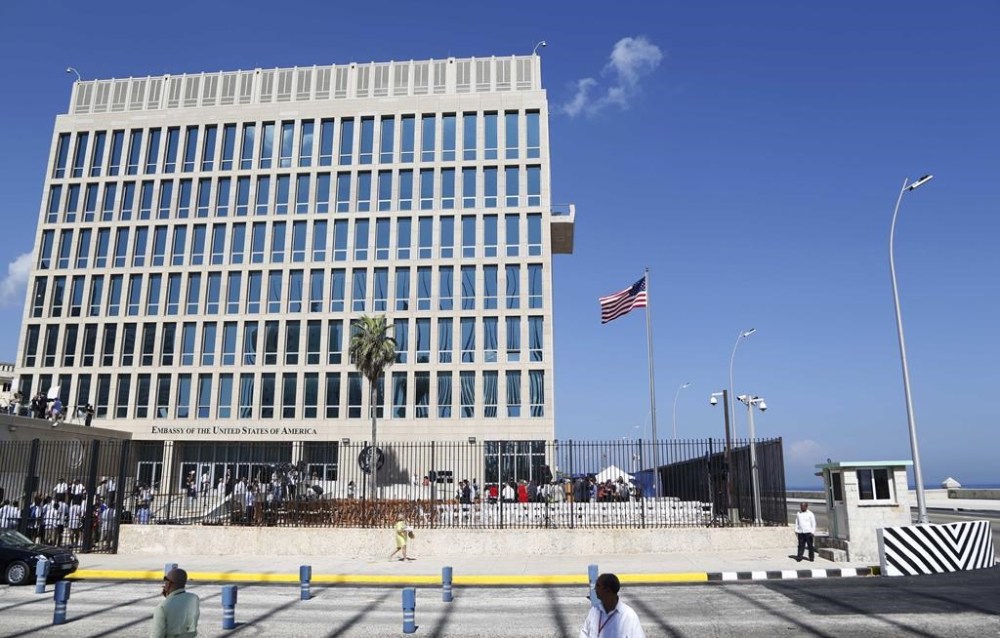
Two of the agencies, however, reached a different conclusion, finding that there is a possibility that a foreign power may have developed or even used a weapon capable of causing the injuries reported by U.S. diplomats and government officials.
Symptoms that include headaches, balance problems and difficulties with thinking and sleep were first reported in Cuba in 2016 and later by hundreds of American personnel in multiple countries. U.S. embassy personnel working in Havana were the first to raise concerns, which later led the series of health effects to be dubbed “Havana syndrome.”
In the new assessment, the two agencies, which officials did not identify, did not find evidence linking any specific incident to a foreign technology, but based their findings on understandings of foreign weapon development and capability. One of the agencies found there was a “roughly even chance” that a foreign government used such a weapon or prototype device in a “small, undetermined” number of cases affecting U.S. personnel.
The other agency determined that while it’s possible a foreign power has developed such a weapon, it’s unlikely that it has been deployed.
The Biden administration has faced pressure to investigate the incidents following the reports from U.S. personnel of significant brain injuries and other symptoms after being targeted by what some have suggested is an effort to harass and injure U.S. personnel working overseas. But so far, officials have been unable to find a single explanation for the incidents.
The new findings released Friday represent a “shift in key judgements by some intelligence components” that demonstrates the need for additional investigation, National Security Council spokesperson Sean Savett said in a statement emailed to reporters.
“Our focus on these priorities remains unwavering and must continue,” Savett said. “It is vital that the U.S. government continue critical research, investigate credible incidents, and strengthen efforts to provide timely care and long-term clinical follow-up.”
The intelligence official who briefed reporters on Friday downplayed the change, noting that the two agencies who held open the possibility that a foreign government was developing or deploying a weapon responsible for the injuries expressed “low confidence” in their findings.
The official noted that other national security agencies were more confident in their determination that foreign governments weren’t involved, and that specific intelligence clues found by some U.S. intelligence cast doubt on any foreign involvement.
“There’s no intelligence linking a foreign actor to any specific event,” the official told reporters.