
Alberta Premier Smith says unions prompted COVID-19 shot coverage expansion
Advertisement
Read this article for free:
or
Already have an account? Log in here »
We need your support!
Local journalism needs your support!
As we navigate through unprecedented times, our journalists are working harder than ever to bring you the latest local updates to keep you safe and informed.
Now, more than ever, we need your support.
Starting at $15.99 plus taxes every four weeks you can access your Brandon Sun online and full access to all content as it appears on our website.
Subscribe Nowor call circulation directly at (204) 727-0527.
Your pledge helps to ensure we provide the news that matters most to your community!
To continue reading, please subscribe:
Add Brandon Sun access to your Free Press subscription for only an additional
$1 for the first 4 weeks*
*Your next subscription payment will increase by $1.00 and you will be charged $20.00 plus GST for four weeks. After four weeks, your payment will increase to $24.00 plus GST every four weeks.
Read unlimited articles for free today:
or
Already have an account? Log in here »
Hey there, time traveller!
This article was published 21/08/2025 (218 days ago), so information in it may no longer be current.
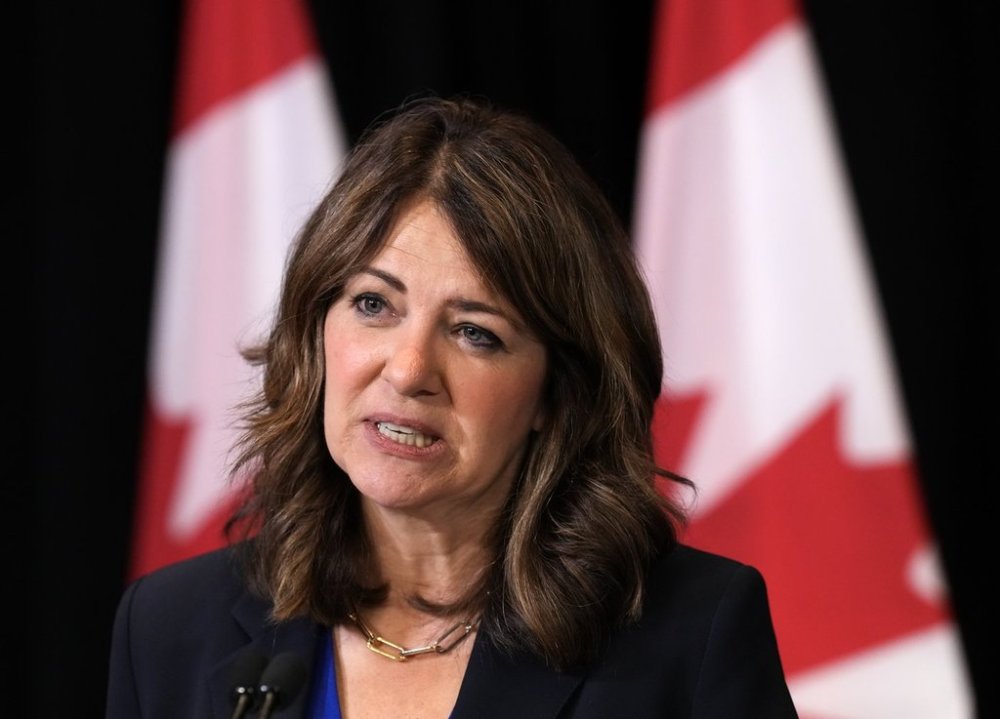
Alberta Premier Danielle Smith said Thursday her government’s sudden shift in COVID-19 vaccination policy was prompted by union demands.
Earlier this week, her health ministry said COVID-19 vaccine coverage would be extended to all health-care workers this fall under the first phase of the province’s rollout.
That came two months after the government said most Albertans, including health workers, would have to pay for a COVID-19 shot — potentially a cost of $110.
Smith said the change came out of a request from the Health Sciences Association of Alberta, which reached a tentative bargaining agreement last week.
“In consultation with other unions, they wanted to be able to offer it to their members. It won’t be mandatory. It’ll be certainly by choice,” said Smith at an unrelated event.
She said during the respiratory virus season, hospital settings are exposed to COVID-19, influenza, and respiratory syncytial virus or RSV.
“Any health-care professional who wants to take an extra measure of protection, we’re happy to support them on that,” she said.
Smith said she believes more clarity on the cost would come Friday.
The shift prompted even more calls from public health-care advocates and the Opposition NDP for the United Conservative Party government to further expand coverage, including to all seniors.
Public health experts have called the province’s COVID-19 strategy irresponsible and said it will create more barriers to getting vaccinated and lead to higher health-care system costs.
Critics have warned that also excluding pharmacies from the rollout will limit access for many, including rural residents, shift workers and others who rely on community-based care.
The province said in June those who have compromised immune systems, people on social programs and seniors in congregate settings would be covered.
The goal is to avoid wastage and cover costs, Smith has said.
The province said it has ordered 485,000 doses of COVID-19 vaccine for the fall — about 250,000 fewer doses than were administered last year.
The federal government put provinces in charge of buying COVID-19 shots this year, and Alberta’s COVID-19 policy makes it an outlier.
Smith said Thursday more than half the province’s doses were spoiled last year and that fewer Albertans are choosing to get it.
“We don’t pay for every vaccine … so we’re just trying to align our approach on COVID with the same approach we’re taking on RSV.”
Smith estimated that more than 100,000 people have so far logged onto a government website to pre-order their COVID-19 vaccines.
They still need to book appointments when they becomes available in October.
However, those who don’t pre-order by a Sept. 30 deadline can still book appointments once doses become available.
The specifics of qualifying health conditions for a free shot have not been released.
This report by The Canadian Press was first published Aug. 21, 2025.