
Hundreds of Canada goose deaths in Manitoba leave wildlife experts perplexed
Advertisement
Read this article for free:
or
Already have an account? Log in here »
We need your support!
Local journalism needs your support!
As we navigate through unprecedented times, our journalists are working harder than ever to bring you the latest local updates to keep you safe and informed.
Now, more than ever, we need your support.
Starting at $15.99 plus taxes every four weeks you can access your Brandon Sun online and full access to all content as it appears on our website.
Subscribe Nowor call circulation directly at (204) 727-0527.
Your pledge helps to ensure we provide the news that matters most to your community!
To continue reading, please subscribe:
Add Brandon Sun access to your Free Press subscription for only an additional
$1 for the first 4 weeks*
*Your next subscription payment will increase by $1.00 and you will be charged $20.00 plus GST for four weeks. After four weeks, your payment will increase to $24.00 plus GST every four weeks.
Read unlimited articles for free today:
or
Already have an account? Log in here »
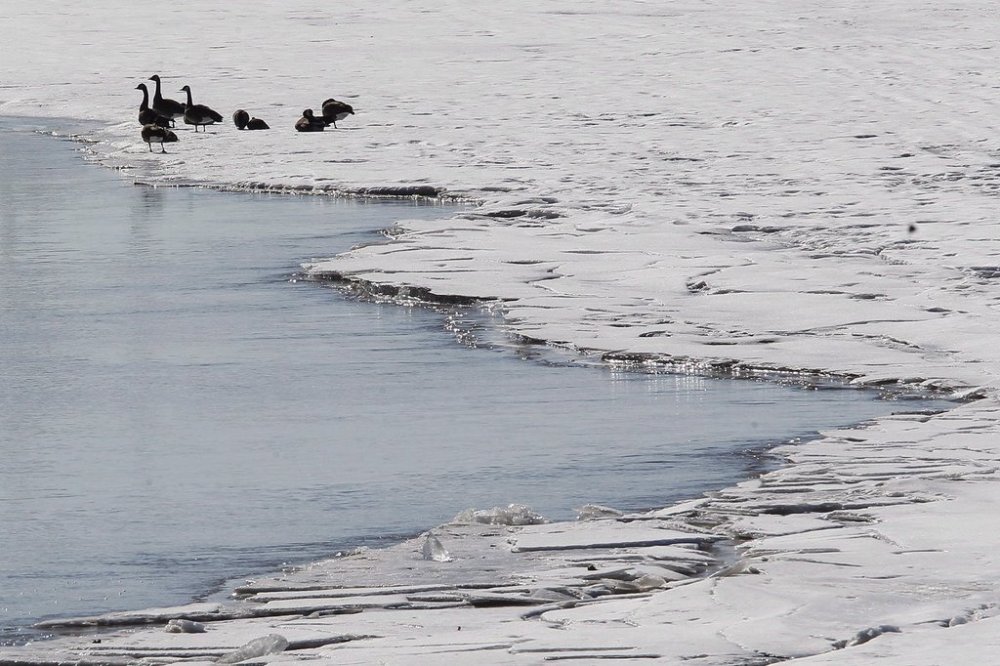
WINNIPEG – Infectious disease and wildlife experts are scratching their heads at the recent discoveries of mass Canada goose deaths in southern Manitoba, with some communities reporting carcasses found frozen in waterways.
Some of the deaths have been linked to avian influenza, more commonly known as the bird flu, a contagious viral infection that affects hundreds of species.
While these particular infections are common in wild birds, such as geese and ducks, it is rare to see the level of mortality that has been documented since a subtype of the virus called H5N1 was reported in Canada in 2021.
“We saw these mass mortality events when it was first introduced, and then as it’s now been around for a few years, we haven’t been seeing as many fatalities, likely because there’s some amount of immunity now in the population,” said Hannah Wallace, an infectious disease researcher at the University of Manitoba.
“It’s a bit strange that at this point in the history of this virus in North America … that we would see a change like that now.”
The Canadian Wildlife Service said close to 500 birds have been found in Niverville, Man., a small town south of Winnipeg, with 200 of those being picked up last week.
The town posted on social media on Nov. 13 that the virus was detected in the goose population and had been discovered in surrounding communities before this.
The wildlife service received reports of another mass die-off on Monday — this time in the community of Lockport, Man., just north of Winnipeg.
Other areas hit with the same problem include Winnipeg, Portage la Prairie, Blumenort and spots along the Red River between St. Andrews and Lockport, the agency said.
The Manitoba government said it is aware of the recent wild bird deaths across the province and recommends people not touch or handle sick or dead birds.
The natural resources department has tested 726 individual birds, and 54 have been confirmed to be carrying the H5N1 strain of the virus, which is one that can affect humans.
Health Canada says the risk of avian influenza infection to most people in Canada remains low.
There have been 900 human cases of the virus reported around the world since 1997. The first instance of a human case of H5N1 that came from transmission within Canada was announced in November 2024.
Most cases have been from close, prolonged contact with infected animals, such as people who work in the poultry industry.
Wallace said scientists believe chickens or turkeys that contract avian influenza often die because of the differences in their immune systems compared to waterfowl such as geese.
The large groups of bird that have been found dead in the province have been located near open bodies of water. The Canadian Wildlife Service said the largest amounts reported have been within the past few weeks because of the warmer temperatures in October and November.
“Birds like Canada geese stick around until there’s no food that’s available in the agricultural fields or until they’re forced to leave because they don’t have open water,” said Frank Baldwin, a wildlife biologist with the agency.
“So, they’ve stayed really late this year, and likely the concentration of those birds has really caused the virus to move through what’s left for the population really quickly.”
He added that the Canada geese that were late to migrate were then faced with cold temperatures and no food, likely leading to the mass deaths seen recently.
Wallace said that other factors, such as the age of the birds, a mutation of the virus or whether the affected bird was also infected with another bacterial or viral infection, could also have contributed to the mass deaths.
She expects a necropsy will be performed on some of the dead birds to answer some of these questions.
“It’s a bit of a mystery at this point, but we will figure at least some of that out.”
This report by The Canadian Press was first published Dec. 10, 2025.
— With files from Daniela Germano in Edmonton