
Landmark Alberta legislature sitting raises questions on politicians and rule of law
Advertisement
Read this article for free:
or
Already have an account? Log in here »
We need your support!
Local journalism needs your support!
As we navigate through unprecedented times, our journalists are working harder than ever to bring you the latest local updates to keep you safe and informed.
Now, more than ever, we need your support.
Starting at $15.99 plus taxes every four weeks you can access your Brandon Sun online and full access to all content as it appears on our website.
Subscribe Nowor call circulation directly at (204) 727-0527.
Your pledge helps to ensure we provide the news that matters most to your community!
To continue reading, please subscribe:
Add Brandon Sun access to your Free Press subscription for only an additional
$1 for the first 4 weeks*
*Your next subscription payment will increase by $1.00 and you will be charged $20.00 plus GST for four weeks. After four weeks, your payment will increase to $24.00 plus GST every four weeks.
Read unlimited articles for free today:
or
Already have an account? Log in here »
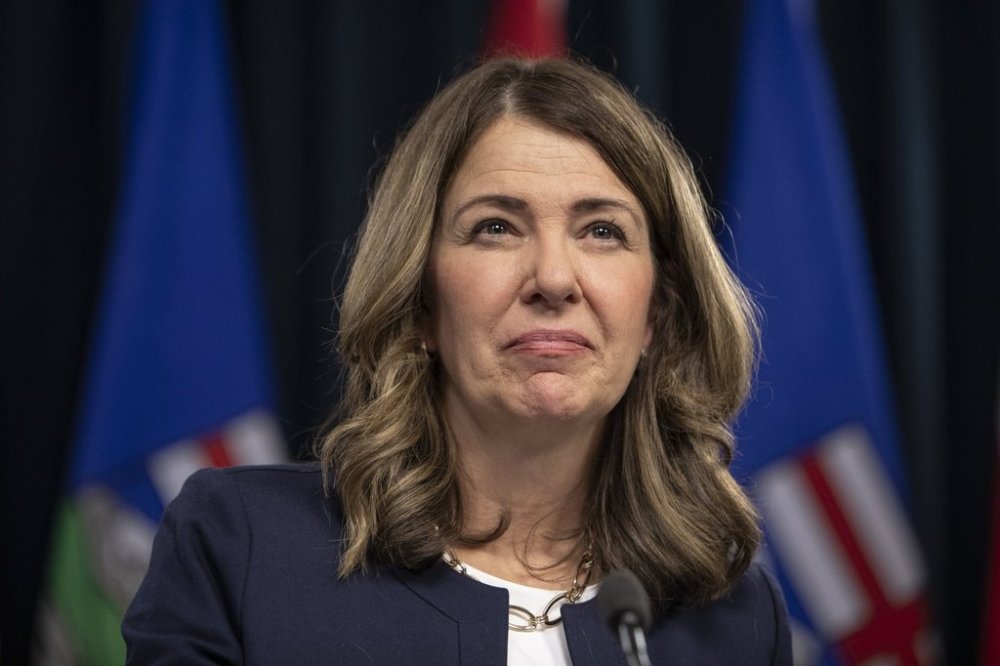
EDMONTON – Alberta Premier Danielle Smith’s government has wrapped up a fall legislature sitting featuring landmark legislation that raised questions on where political authority should end and the rule of law begin.
Smith’s government invoked the Charter’s notwithstanding clause four times in two separate bills, overriding citizen rights to shield the legislation from successful court challenges.
The government first used the clause when it legislated 51,000 teachers back to work after a three-week provincewide strike and put into force a contract that educators had previously rejected.
The use of the notwithstanding clause on teachers drew widespread criticism from advocacy organizations, civil liberty associations, lawyers groups and religious officials, such as Edmonton’s Anglican Bishop.
On Thursday, the day after the sitting ended, government house leader Joseph Schow told reporters the courts still exist as a check and balance against government power.
But he re-emphasized there was nothing unconstitutional about using the Charter’s notwithstanding clause, which the government also applied to three existing laws that police names and pronouns in school, ban transgender girls from participating in amateur female sports, and restrict gender-affirming health care for youth under 16.
The latter prohibits doctors from prescribing puberty blockers and hormone therapy for those under 16.
Schow said he and the government are proud of the legislation, including the law that introduced new sports rules, saying it protected women and girls.
“I do not have any concerns about (using the notwithstanding clause on the transgender laws) and making sure that the legislature (and) elected officials — duly elected by the people — are the ones who have to answer for this, not the courts,” he said.
Smith has said using the clause was necessary to ensure children stay safe and do not make life-changing medical decisions they might later regret.
Court challenges were filed against two of the three laws prior to the government invoking the notwithstanding clause to shield them, including by the Canadian Medical Association arguing it violates a doctor’s right to freedom of conscience. The Alberta Medical Association has repeatedly said puberty blockers do not render a person infertile or sterile and protect transgender children from more permanent changes that come with puberty.
Opposition NDP Leader Naheed Nenshi said Thursday that the fall sitting showed a government eager to strip Albertans of their human rights.
“This is an extremist government,” he said.
“Everything about this government shows their utter contempt and disregard for the rule of law, for the norms of how people communicate and talk in a society, and mostly their contempt for Albertans.”
Other government bills in the sitting used less drastic measures to try and stay out of court, such as one that protects the provincial public sector pension manager from being liable for past trading losses.
Another bill rendered moot a court review of a proposed referendum question on Alberta separation, which led the judge involved, Court of King’s Bench Justice Colin Feasby, to condemn it as an undemocratic move meant to silence the courts.
Smith and her justice minister, Mickey Amery, argued throughout the sitting that their actions are well within the confines of parliamentary democracy.
“Parliament and legislatures are supreme,” Smith told an Edmonton podcaster earlier this week.
“We can pass a law anytime we like, we can change the law anytime we like, we can revise the law anytime we like because we’re the democratically elected body.”
Political scientist Duane Bratt said the actions raise red flags when it comes to the separation of powers underpinning democracy.
“It really is a centralization of power in the premier’s office, and the courts are holding up as one of those counterweights,” said Bratt, with Calgary’s Mount Royal University.
Bratt also pointed to the premier’s rhetoric of late, in which she’s referred to judges as being unelected and behaving like “activists.”
In question period this week, Smith said the judge who criticized her government’s bill was “taking away the rights of Albertans” by reviewing the constitutionality of the proposed separation question.
“That (rhetoric) is, in combination with the legislation, a way of delegitimizing the judiciary,” Bratt said.
He said centralizing power is not new for Smith, pointing to laws from earlier in her tenure that gave the province more control over municipalities and universities.
“There is a pattern of behaviour here,” Bratt said.
This fall the government also put its foot down on professional regulatory bodies, like the provincial nursing college or engineer association, by stripping them of the ability to sanction members for conduct unrelated to their jobs.
Smith and Amery called the bill the government’s “Peterson Law” in recognition of psychologist and media personality Jordan Peterson, who was sanctioned in Ontario for controversial public statements.
The government also tabled a bill that gave it the power to dictate and write bylaws for the Alberta Law Foundation, which distributes grants aimed to improve access to the legal system.
It also outlawed a list of words future political parties can use in their names, including conservative, green, liberal, democratic, communist and independence.
That same bill also grants past, present and future Alberta justice ministers immunity from sanctions or penalties from the provincial regulator for lawyers.
Amery told reporters this week it was meant to ensure justice ministers can do their job “without the threat or fear of complaints or political activism creating problems.” He added that there’s a similar provision in place in Ontario.
This report by The Canadian Press was first published Dec. 11, 2025.