
Alberta emergency doctors detail waiting room horrors, preventable deaths to minister
Advertisement
Read this article for free:
or
Already have an account? Log in here »
We need your support!
Local journalism needs your support!
As we navigate through unprecedented times, our journalists are working harder than ever to bring you the latest local updates to keep you safe and informed.
Now, more than ever, we need your support.
Starting at $15.99 plus taxes every four weeks you can access your Brandon Sun online and full access to all content as it appears on our website.
Subscribe Nowor call circulation directly at (204) 727-0527.
Your pledge helps to ensure we provide the news that matters most to your community!
To continue reading, please subscribe:
Add Brandon Sun access to your Free Press subscription for only an additional
$1 for the first 4 weeks*
*Your next subscription payment will increase by $1.00 and you will be charged $20.00 plus GST for four weeks. After four weeks, your payment will increase to $24.00 plus GST every four weeks.
Read unlimited articles for free today:
or
Already have an account? Log in here »
EDMONTON – Alberta’s emergency room doctors, in a letter to the provincial government, have detailed front-line horror stories of preventable deaths along with indignities and suffering by patients in what one physician describes as “death zones.”
Dr. Paul Parks, president-elect of the Alberta Medical Association’s section of emergency medicine, confirmed Monday he sent the letter last week to Hospitals Minister Matt Jones and other health-care agency leaders.
The letter was obtained by The Canadian Press, but Parks said he didn’t leak it to the public.
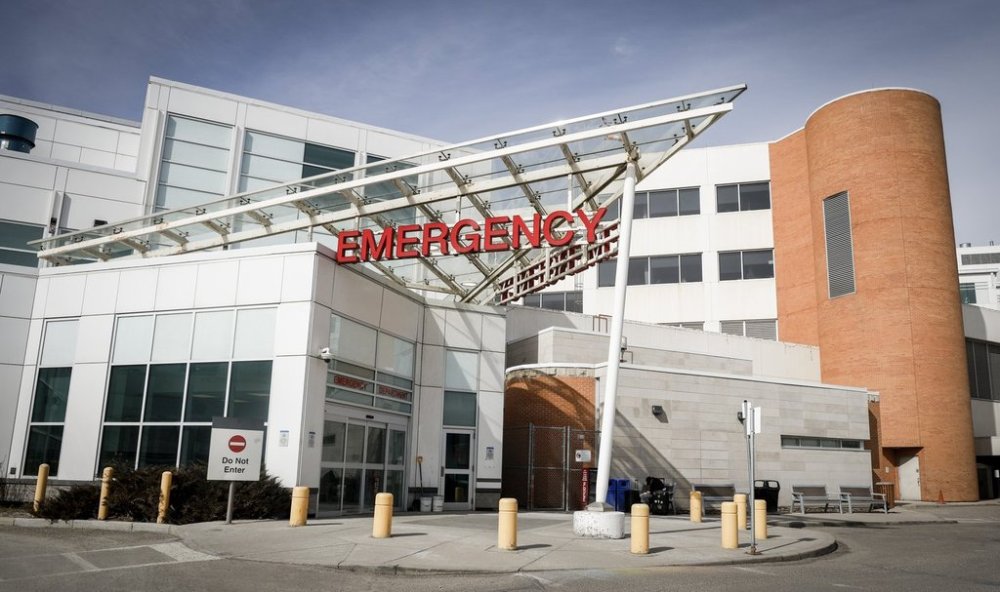
Parks and other doctors have been calling on the province for emergency measures to combat severe overcrowding in hospitals.
The letter lists anonymous stories of front-line care compiled by the association over the first two weeks of the year. There are six examples of cases that ended in deaths and more than 30 “near misses” — high-stakes diagnoses delayed by clogged waiting rooms.
Parks writes that those cases represent “the tip of the iceberg” of what front-line workers had been seeing.
“Our hallways and waiting rooms have become death zones, and we wonder how many ‘ticking time bombs’ will drop dead, when they should be receiving life-saving care in a functional emergency care space,” he says in the letter.
No names are mentioned. The circumstances vary widely but are tied in a thread of too many patients, too few caregivers and too little time.
A woman eventually diagnosed with a bowel obstruction waited eight hours over a night shift to be seen. She became septic and died, despite getting emergency surgery.
One patient died of cardiac arrest waiting for care in a packed hallway.
Another was passed from one emergency physician to another, while waiting nearly 24 hours to be seen by a specialist. The patient died of kidney failure.
A man in his fifties with a fever, weakness and a rapid heart rate left an emergency department after almost eight hours in a waiting room. Brought back by an ambulance hours later, he was admitted to intensive care with a severe blood infection and died after multi-organ failure.
Some of the cases echo the death of a man in Edmonton that made headlines for weeks and recently prompted the government to order a fatality inquiry.
Prashant Sreekumar, 44, died on Dec. 22, after waiting nearly eight hours with chest pains and increasing blood pressure in an emergency department.
Hospitals Minister Matt Jones was scheduled to take questions from reporters Tuesday in Calgary.
Kyle Warner, press secretary to Jones, said in a statement Monday the ministry is unable to comment on unverified, anonymous patient information circulating in the media due to privacy and legal considerations, although it does take all information related to patient outcomes seriously.
Warner said every hospital provider has internal quality assurance processes that automatically review cases with negative outcomes.
“It’s also important to recognize that people who come to emergency departments are often very ill or seriously injured, and the most urgent, life‑threatening patients are always seen first,” he said.
Warner added that Jones reached out to the medical association to meet with Acute Care Alberta, the provincial agency in charge of hospitals, to talk plans and solutions.
The letter from Parks was sent before Jones offered an update, along with senior health officials late last week, on a provincewide response to create capacity and free up resources.
It came as he and other physicians had been publicly sounding the alarm for urgent action.
Last week, Jones acknowledged the province has been dealing for weeks with “significant pressures,” including higher volumes of respiratory illness, population growth, and aging patients with more complex needs.
He also announced a triage liaison physician program launching Feb. 1 to better expedite care in emergency departments.
This report by The Canadian Press was first published Jan. 19, 2026.