
Union calls on Manitoba to address shortage of respiratory therapists in hospitals
Advertisement
Read this article for free:
or
Already have an account? Log in here »
We need your support!
Local journalism needs your support!
As we navigate through unprecedented times, our journalists are working harder than ever to bring you the latest local updates to keep you safe and informed.
Now, more than ever, we need your support.
Starting at $15.99 plus taxes every four weeks you can access your Brandon Sun online and full access to all content as it appears on our website.
Subscribe Nowor call circulation directly at (204) 727-0527.
Your pledge helps to ensure we provide the news that matters most to your community!
To continue reading, please subscribe:
Add Brandon Sun access to your Free Press subscription for only an additional
$1 for the first 4 weeks*
*Your next subscription payment will increase by $1.00 and you will be charged $20.00 plus GST for four weeks. After four weeks, your payment will increase to $24.00 plus GST every four weeks.
Read unlimited articles for free today:
or
Already have an account? Log in here »
WINNIPEG – Staffing vacancies of respiratory therapists at some Winnipeg hospitals have reached “dangerous levels,” with the union representing them warning the province that workers are stretched “beyond the breaking point.”
The Manitoba Association of Health Care Professionals, which represents 7,500 allied health professionals in public health care including more than 300 respiratory therapists, said Tuesday that short staffing at Winnipeg’s acute care hospitals is leading to high workloads and an increase in patient acuity.
“What it boils down to is they are not even at this point meeting their baseline staffing requirements, and we are hearing from those front-line staff every single day the toll that it’s taking on them and their patients,” union president Jason Linklater said.
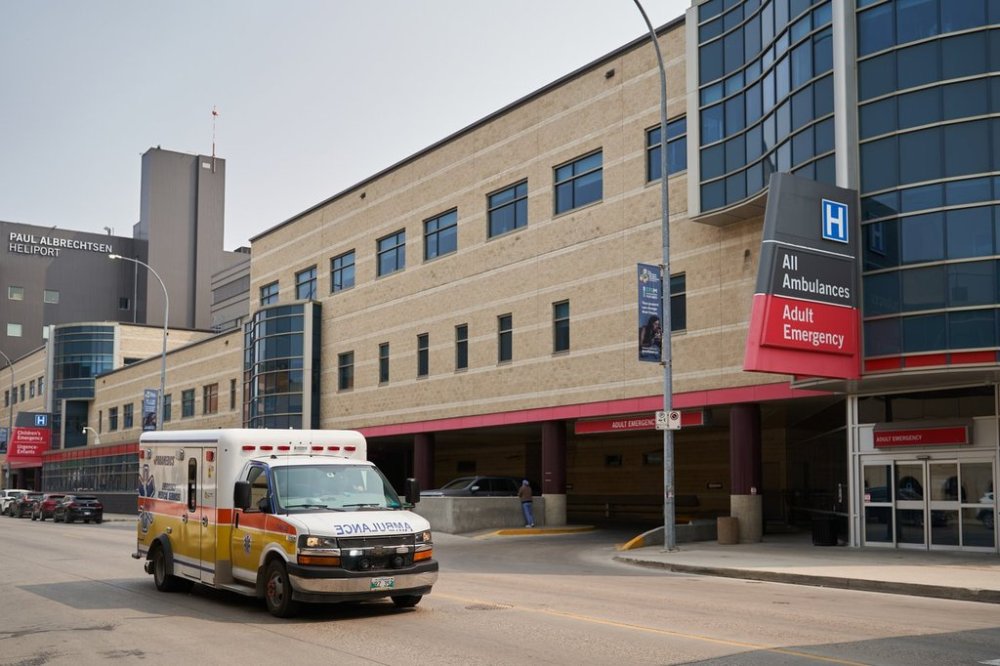
At the Health Sciences Centre, the province’s largest hospital, one-quarter of positions remain unfilled, said Linklater, while nearly half or 42 per cent of positions at Grace General Hospital are vacant and 36 per cent are empty at St. Boniface General Hospital.
That’s an estimated 50 combined respiratory positions vacant at the three hospitals, with the union saying there are more staffing shortages at smaller hospitals and community programs.
Respiratory therapists have highly specialized skills that are often required in emergency rooms and intensive care units. They are generally part of a team that includes nurses and doctors who respond to cardiac or respiratory arrests.
Part of their duties include putting a patient into a sedative state, monitoring life-saving machines and doing blood work.
“We’re everywhere from cradle to grave,” said Shere Gigolyk, a respiratory therapist at St. Boniface General Hospital and director of operations for the Society of Manitoba Respiratory Therapists.
A full complement of respiratory therapists at St. Boniface includes 11 daytime staff and eight on nights, said Gigolyk. Often there are six therapists working during the day and about half what is needed at night.
“We seem to be running from one critical incident to the next critical incident. And it’s not about choosing which critical incident is higher … it’s which one can wait five minutes,” said Gigolyk.
Recent schedules have shown hundred of shifts open, with therapists trying to fill these gaps with overtime, the union said. Data it obtained from the Winnipeg Regional Health Authority and Shared Health, the organization that oversees health-care delivery in the province, suggests nearly 90,000 overtime hours worked by respiratory therapists in the past two years.
The union has long called for the province to devise an allied health and human resources plan to address vacancy and retention rates, something Linklater said has not been done.
Gigolyk acknowledged that the Manitoba government understands the role respiratory therapists play, but in doing this has also developed opportunities outside the hospital that has resulted in workers finding employment in more advanced practices.
Other issues leading to staffing shortages include losing staff to academia and administrative work, longtime employees retiring and workplace culture.
“Governments themselves identified culture in health care as a huge problem, but they haven’t done anything to fix it,” said Linklater.
The union is calling for a premium for respiratory therapists working in emergency departments and intensive care units, incentives for night shifts and financial boosts for recent graduates to stay in the province.
It is also stressing the need to promote the job to students interested in a career in health care.
The union said 12 students are expected to graduate from the University of Manitoba’s respiratory therapy program this spring, which will not fill the dozens of positions available.
Health Minister Uzoma Asagwara said the government is focusing on training, recruitment and long-term workforce planning.
“Manitoba has doubled the number of funded respiratory therapy training seats, and we are working closely with the University of Manitoba to ensure those seats are filled and aligned with health-system needs,” Asagwara said in a statement.
“Through the Health Care Retention and Recruitment Office, we are actively recruiting respiratory therapists both within Manitoba and from outside the province, and last year alone, 16 respiratory therapists were hired into Manitoba’s health system.”
This report by The Canadian Press was first published Jan. 20, 2026.