
Lower colorectal cancer screening age to 45 from 50, Canadian Cancer Society urges
Advertisement
Read this article for free:
or
Already have an account? Log in here »
We need your support!
Local journalism needs your support!
As we navigate through unprecedented times, our journalists are working harder than ever to bring you the latest local updates to keep you safe and informed.
Now, more than ever, we need your support.
Starting at $15.99 plus taxes every four weeks you can access your Brandon Sun online and full access to all content as it appears on our website.
Subscribe Nowor call circulation directly at (204) 727-0527.
Your pledge helps to ensure we provide the news that matters most to your community!
To continue reading, please subscribe:
Add Brandon Sun access to your Free Press subscription for only an additional
$1 for the first 4 weeks*
- Enjoy unlimited reading on brandonsun.com
- Read the Brandon Sun E-Edition, our digital replica newspaper
*Your next Free Press subscription payment will increase by $1.00 and you will be charged $20.95 plus GST for four weeks. After four weeks, your payment will increase to $24.95 plus GST every four weeks.
Read unlimited articles for free today:
or
Already have an account? Log in here »
TORONTO – Michael Groves thought he had appendicitis.
In January 2021, he went to the emergency department with abdominal pains, but after testing, medical staff ruled it out and he went home.
A couple of days later, Groves, who lives in Ottawa, saw blood in his stool, so he told his family doctor.
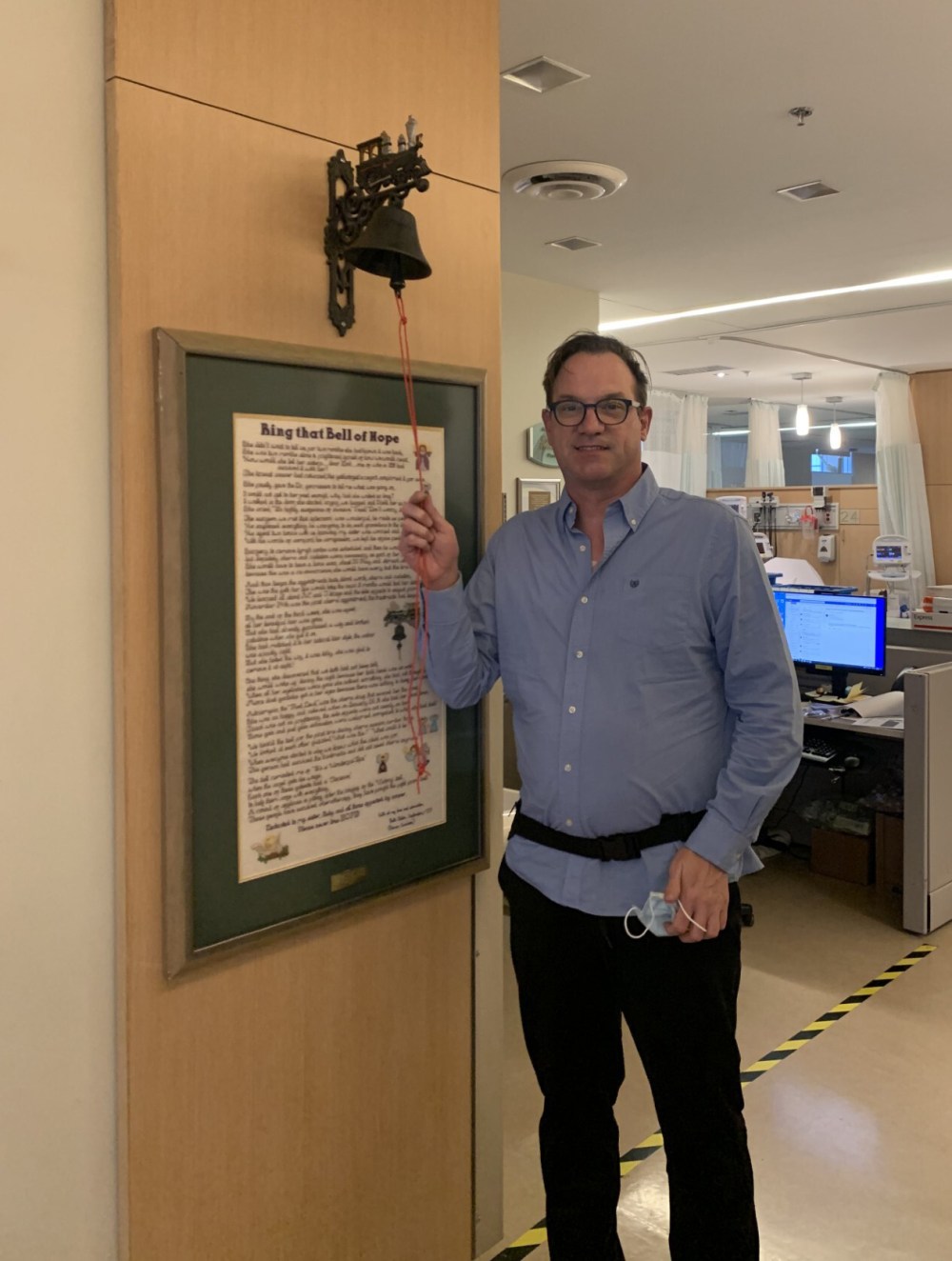
Both the pain and bleeding stopped, but his doctor decided to schedule the 49-year-old for a colonoscopy for that April to be on the safe side.
“The idea that it could be colon cancer, that never came to mind,” Groves said in an interview.
He was put under for the procedure and when he woke up, the gastroenterologist told him he had a five-centimetre tumour.
Groves was diagnosed with Stage 3 colorectal cancer. It had spread to two lymph nodes.
“The shock was just, like, wow, just devastating.”
At that point, he had no symptoms.
“I went for like a 5K run, I was feeling great,” Groves said.
“I wasn’t tired. It was just a normal guy in his 40s.”
He had surgery to remove “about a foot” of his colon and then began a gruelling six-month chemotherapy regime. He was off work for almost nine months.
Now 54, Groves believes that if there had been routine screening for colorectal cancer in his 40s, his tumour would have been caught at a much earlier stage and taken less of a toll.
He’s one of a growing number of people the Canadian Cancer Society says is getting colorectal cancer before the current routine screening age of 50.
On Wednesday, the society called on provinces and territories to lower the colorectal cancer screening age to 45.
It said people under 50 are two-to-2.5 times more likely to be diagnosed with colorectal cancer than they were in previous generations.
“That growth is something that’s very concerning for us and we think that it’s time for governments to react to that so that we can catch more of these cancers early,” said Brandon Purcell, advocacy manager for prevention and early detection at the Canadian Cancer Society, in an interview.
In routine screening, people between 50 and 74 years of age get a fecal immunochemical test — or FIT — to swab their stool at home and send the swab in a postage-paid envelope to a lab.
The Canadian Cancer Society recommends that people 75 and older who aren’t at high risk for colorectal cancer talk to their health-care provider about whether or not they should do the FIT.
If the sample tests positive for blood in the stool, that person is referred for a colonoscopy to check for cancer.
People younger than 50 who have specific risk factors or symptoms, including a family history of colorectal cancer or blood in the stool, are often sent for proactive colonoscopies.
But for everyone else, providing a FIT to those 45 years and older will allow for earlier detection of colorectal cancer, when the survival rate can be as high as 90 per cent, the cancer society said.
The survival rate is less than 15 per cent when it’s found in advanced stages, it said.
In addition to tumours, colonoscopies can also find precancerous polyps and remove them before they become dangerous. It takes eight to 10 years for a polyp to develop into cancer, said Barry Stein, president and CEO of Colorectal Cancer Canada, which is also calling for routine screening to start at age 45.
Both the Canadian Cancer Society and Colorectal Cancer Canada pointed to a recent modelling study as the latest in a growing amount of evidence supporting a younger screening age.
The study, published March 7 in the Journal of the Canadian Association of Gastroenterology, estimated that starting the home-based fecal immunochemical test at age 45 could potentially prevent 15,070 colorectal cancer cases and 6,100 deaths over the next 45 years.
Senior author Darren Brenner, a professor in oncology and community health sciences at the University of Calgary, said the research also estimated a cost savings of $233 million in cancer treatments, even after accounting for the costs of doing additional FIT tests and colonoscopies.
Stein said in addition to lowering the screening age, provinces should educate the public so more people who are eligible do the fecal immunochemical test.
“We need to get more people screened between the ages of 50 to 74 as well,” he said, noting that only about 40 per cent of people in that age group send in their FITs.
Stein said the target is to get at least 60 per cent of people who are eligible doing the test.
This report by The Canadian Press was first published March 11, 2026.
Canadian Press health coverage receives support through a partnership with the Canadian Medical Association. CP is solely responsible for this content.