
Invasive grasses may pose deadly risk post-wildfire, UBC researcher says
Advertisement
Read this article for free:
or
Already have an account? Log in here »
We need your support!
Local journalism needs your support!
As we navigate through unprecedented times, our journalists are working harder than ever to bring you the latest local updates to keep you safe and informed.
Now, more than ever, we need your support.
Starting at $15.99 plus taxes every four weeks you can access your Brandon Sun online and full access to all content as it appears on our website.
Subscribe Nowor call circulation directly at (204) 727-0527.
Your pledge helps to ensure we provide the news that matters most to your community!
To continue reading, please subscribe:
Add Brandon Sun access to your Free Press subscription for only an additional
$1 for the first 4 weeks*
*Your next subscription payment will increase by $1.00 and you will be charged $20.00 plus GST for four weeks. After four weeks, your payment will increase to $24.00 plus GST every four weeks.
Read unlimited articles for free today:
or
Already have an account? Log in here »
VANCOUVER – Invasive grasses are creeping into burnt landscapes years after wildfires and could fuel massive future fires that put people’s lives at risk, a University of British Columbia researcher says.
Jennifer Grenz, an assistant professor in the department of forest resources management, co-authored a study that focuses on the aftermath of the McKay Creek wildfire, a 46,000-hectare fire that burned near Lillooet in 2021 during the record-breaking heat dome.
The study, published this month in the journal “Fire Ecology,” took place in B.C.’s southern Interior, a region that includes dry forests and grassland and rugged terrain ranging from narrow valleys to tall ridges.
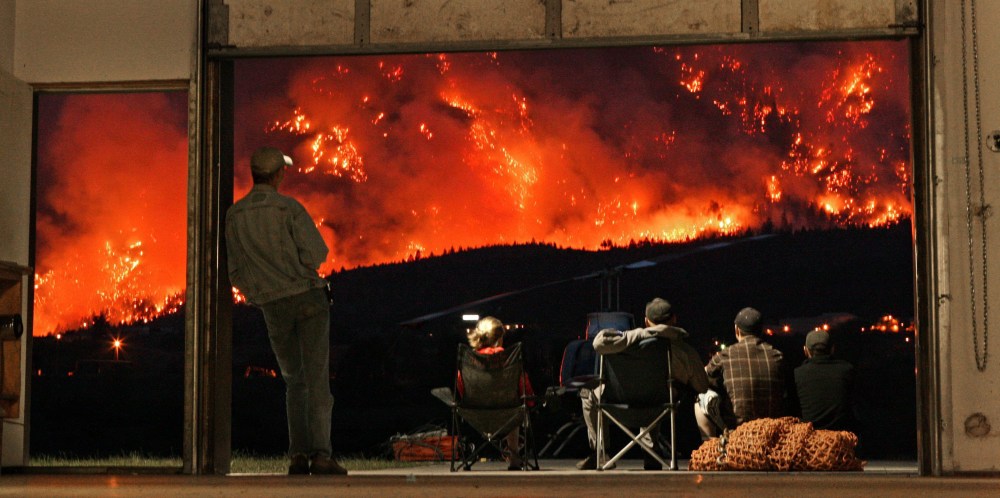
Grenz said that while native plants were slow to recover two years after the fire, invasive grasses like cheatgrass are starting to grow onto bare post-burn patches of ground in lower-elevation areas where people live, work and use for recreation.
“The grasses appear really early in the season for any other plants, and then they dry out before a lot of the other plants are even maturing,” she said. “And so, it creates highways of fuel that connect unburned areas to unburned areas and can run right down into our communities.”
Grenz said the grasses can cause fires to spread at “highway speed,” and noted that similar grasses contributed to deadly wildfires in Hawaii in 2023.
“You think that grasses aren’t a big deal, but this is actually going to lead to sort of the next set of fires here in B.C.,” Grenz predicted.
The study’s authors were invited to do their research by six Northern St’át’imc communities on whose traditional territory the McKay Creek wildfire took place.
“We cannot underestimate the value of the people who know their lands best and also know how those lands need to be managed,” she said, adding that Indigenous land stewardship could help prevent future wildfires.
Grenz said invasive grasses could lead to the next major wildfire in B.C., and said planting bare ground with native species after wildfires could help stop the spread of invasive plants.
She recommended the province create its own department with a dedicated budget to tackle invasive plants and employ invasive grass crews in the immediate aftermath of a wildfire to prevent the spread of troublesome species.
Last spring, B.C. gave around $2.8 million to environmental groups, local invasive species committees and researchers, including Grenz, to support invasive plant programs and management efforts.
But Grenz said the government needs to do more.
If they don’t, a B.C. wildfire like the one that killed 102 people in the town of Lahaina, Hawaii, could be a reality, she said.
“Lahaina is what is going to be happening here if we don’t take this seriously.”
This report by The Canadian Press was first published March 20, 2026.