
One person in Ontario who recently travelled to East Africa tested for Ebola virus: ministry
Advertisement
Read this article for free:
or
Already have an account? Log in here »
We need your support!
Local journalism needs your support!
As we navigate through unprecedented times, our journalists are working harder than ever to bring you the latest local updates to keep you safe and informed.
Now, more than ever, we need your support.
Starting at $15.99 plus taxes every four weeks you can access your Brandon Sun online and full access to all content as it appears on our website.
Subscribe Nowor call circulation directly at (204) 727-0527.
Your pledge helps to ensure we provide the news that matters most to your community!
To continue reading, please subscribe:
Add Brandon Sun access to your Free Press subscription for only an additional
$1 for the first 4 weeks*
- Enjoy unlimited reading on brandonsun.com
- Read the Brandon Sun E-Edition, our digital replica newspaper
*Your next Free Press subscription payment will increase by $1.00 and you will be charged $20.95 plus GST for four weeks. After four weeks, your payment will increase to $24.95 plus GST every four weeks.
Read unlimited articles for free today:
or
Already have an account? Log in here »
TORONTO – One person in Ontario was being tested for Ebola, the province’s health ministry said on Wednesday, as a deadly outbreak of a rare type of the virus in the Democratic Republic of Congo and Uganda had officials around the globe on alert, including in Canada where Global Affairs said consular services were ready to help Canadians in the region if they need it.
Ontario’s Ministry of Health spokesperson Jackson Jacobs said in an email the patient was in hospital and being tested for a range of infectious diseases, including the Ebola virus, “out of an abundance of caution,” given the person’s recent travel history.
A spokesperson for the Public Health Agency of Canada says the test is expected to arrive Thursday at the National Microbiology Laboratory in Winnipeg, and that results would be available within 24 hours.
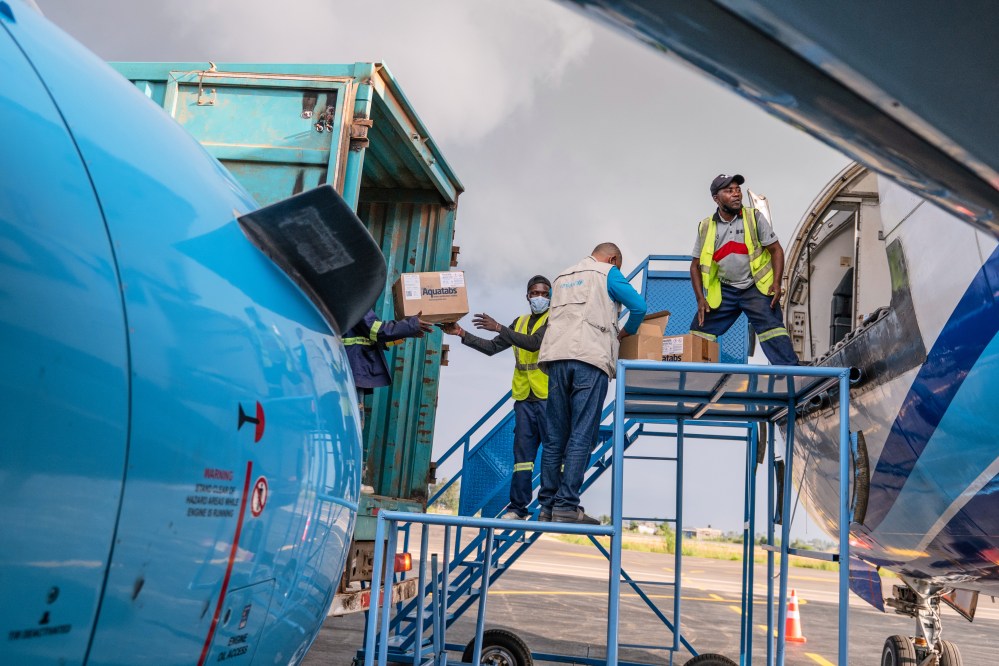
Currently there’s an outbreak of a rare type of Ebola, called Bundibugyo, in the Congo and neighbouring Uganda.
The World Health Organization said there are almost 600 suspected cases and 139 suspected deaths, though officials believe the scale of the spread is much larger.
It was not immediately clear which type of Ebola the patient in Ontario was being tested for, or where in the region they travelled to.
The Public Health Agency of Canada said there has never been a case of Ebola virus in Canada.
Symptoms include fever, vomiting, diarrhea, muscle pain and internal and external bleeding in later stages of the illness.
WHO Director-General Tedros Adhanom Ghebreyesus said the risk of the Bundibugyo Ebola outbreak is low on a global scale, but high at national and regional levels in Africa.
“We expect those numbers to keep increasing, given the amount of time the virus was circulating before the outbreak was detected,” he said, speaking of the spread of the virus that went undetected for weeks after the first known death, as a result of testing for a more common Ebola virus.
Global Affairs Canada said earlier on Wednesday that it was not aware of any Canadians affected by the Bundibugyo outbreak.
Thida Ith, a spokesperson for the federal agency, said there are thousands of registered Canadians in both DRC and Uganda, but that those numbers may not be up-to-date, and don’t reflect a desire to leave.
There are 2,300 Canadians registered as being in the Democratic Republic of Congo in Global Affairs’ voluntary registration for Canadians abroad, and 1,300 are registered in Uganda.
“Consular officials are standing ready to provide assistance to those who are requesting it,” said Anita Anand, the minister of foreign affairs, during a call with reporters from Estonia.
The federal government has advised Canadians not to travel to the eastern Ituri and North Kivu provinces stricken by Bundibugyo virus, a species of Ebola that has no vaccines or treatments.
“We increased this travel advisory on Friday. This is a situation we are monitoring very closely,” Anand said. That includes watching to see what border measures are imposed by allies, she said.
The updated notice states that if a Canadian decides to travel to the affected area despite the advisory, they should regularly reassess the situation to determine if their “presence in the area is warranted.”
At this point, Anand said, Canada has not received official requests for assistance from the DRC.
This report by The Canadian Press was first published May 20, 2026.
Canadian Press health coverage receives support through a partnership with the Canadian Medical Association. CP is solely responsible for this content.