
Climate change prompting Manitoba to extend disaster aid to more residents
Advertisement
Read this article for free:
or
Already have an account? Log in here »
We need your support!
Local journalism needs your support!
As we navigate through unprecedented times, our journalists are working harder than ever to bring you the latest local updates to keep you safe and informed.
Now, more than ever, we need your support.
Starting at $15.99 plus taxes every four weeks you can access your Brandon Sun online and full access to all content as it appears on our website.
Subscribe Nowor call circulation directly at (204) 727-0527.
Your pledge helps to ensure we provide the news that matters most to your community!
To continue reading, please subscribe:
Add Brandon Sun access to your Free Press subscription for only an additional
$1 for the first 4 weeks*
- Enjoy unlimited reading on brandonsun.com
- Read the Brandon Sun E-Edition, our digital replica newspaper
*Your next Free Press subscription payment will increase by $1.00 and you will be charged $20.95 plus GST for four weeks. After four weeks, your payment will increase to $24.95 plus GST every four weeks.
Read unlimited articles for free today:
or
Already have an account? Log in here »
WINNIPEG – Manitoba is making more people eligible for disaster aid as the effects of climate change intensify, but residents still don’t have access to a new federal tool that could help inform them of flood risks in their area.
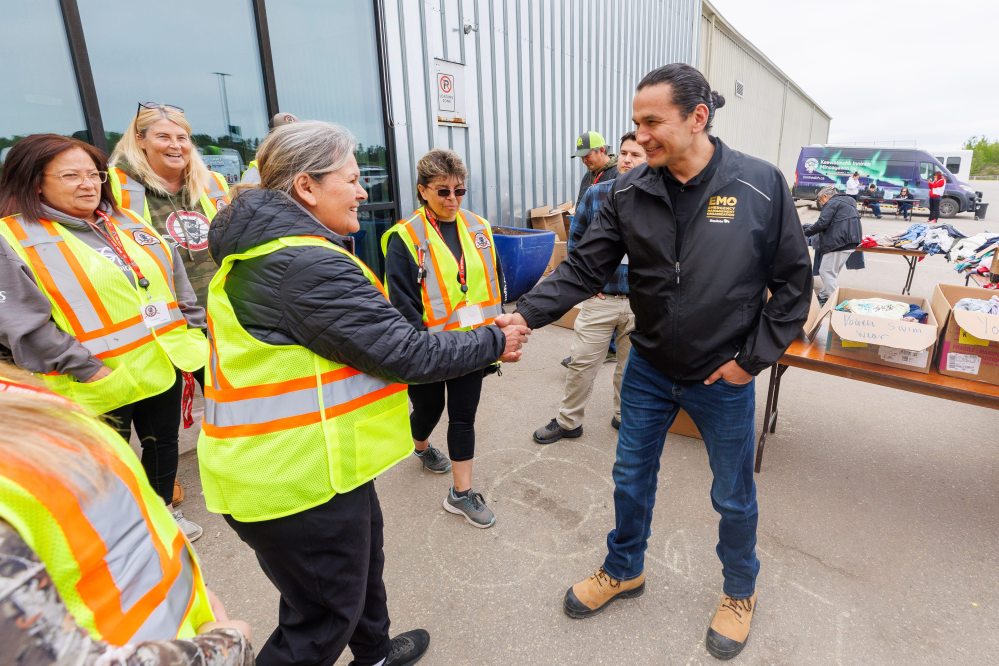
Premier Wab Kinew said Tuesday that residents who could have but didn’t buy flood insurance can still qualify for disaster financial assistance, in a break from existing rules.
“We’re not going to let the rules as posted on the website stand in the way of doing the right thing,” Kinew said at an event in Selkirk, Man.
“The climate is changing, and our policy and emergency response has to change with it.”
Parts of Manitoba got hit with torrential rain last week that led to rivers overflowing and basements filling with water.
Several municipalities declared states of local emergency as they worked to respond to the flooding.
Winnipeg was also hit by strong rains and flooded basements, but Kinew said he doesn’t believe residents will be eligible for the disaster relief because the city didn’t declare a state of emergency.
Some of those affected don’t have the added coverage needed for sewage backup or for overland flooding, an optional add-on introduced in Canada in 2015.
Kinew said it’s reasonable that people didn’t buy coverage for a kind of disaster they haven’t seen after decades of living somewhere.
“For folks who’ve never seen a natural disaster of this sort in certain parts of the province, I don’t think we can hold them to a rule that was developed before the impacts of climate change were as apparent.”
Providing government aid, however, can reduce the chance that residents buy flood insurance in the future.
A Public Safety Canada study released in 2024 found that removing disaster financial assistance is one of the key ways to improve uptake of private flood insurance. The study said it’s important that there aren’t alternatives to buying coverage.
The Insurance Bureau of Canada didn’t push back on Kinew’s planned policy change. But Liam McGuinty, the association’s vice-president of federal affairs, said there are plenty of private insurance options available.
“By and large, there is availability for overland flood coverage,” he said.
“What’s equally important for governments to do, as they’re considering their role, is to think about how we create more resilient communities and protect our homes.”
He said it’s also important that Canadians know the flood risk they face, so they can make informed decisions about coverage.
But Manitoba has decided not to allow residents access to a new federal Flood Risk Finder that’s been ready as of May.
The online tool, in the works for years, will allow users to conduct a simple address search and find out about the area’s flood risk, rated on a four-point scale.
The federal government has said it will only be available in provinces that opt in, and Manitoba said at the time of the launch it wasn’t going to participate.
Governments have been concerned the data could affect property values, but experiences in other countries have shown that not to be the case, said Jason Thistlethwaite, a flood risk expert and associate professor at the University of Waterloo.
“Let’s be adults in the room and tell Canadians,” he said.
While cost of coverage is an issue, part of the challenge of getting people insured for flooding is they appear to be unaware of their flood risk. A 2020 University of Waterloo survey found six per cent of Canadians in flood-prone areas knew about the dangers they faced.
Thistlethwaite said the federal tool could provide more accessible and up-to-date information than current regional or provincial data, and help inform residents of their exposure.
“It’s frankly unconscionable that we don’t have this information out,” he said.
Manitoba’s Ministry of Transportation and Infrastructure said in May that while it had decided not to participate in the federal program, it would continue to provide feedback to help the federal government in the development of the tool.
The ministry said it continues to gather and provide high-quality flooding data that takes into account flood protection infrastructure across the province.
This report by The Canadian Press was first published June 16, 2026.