
Alberta Parks issues local state of emergency in Kananaskis Country due to flooding
Advertisement
Read this article for free:
or
Already have an account? Log in here »
We need your support!
Local journalism needs your support!
As we navigate through unprecedented times, our journalists are working harder than ever to bring you the latest local updates to keep you safe and informed.
Now, more than ever, we need your support.
Starting at $15.99 plus taxes every four weeks you can access your Brandon Sun online and full access to all content as it appears on our website.
Subscribe Nowor call circulation directly at (204) 727-0527.
Your pledge helps to ensure we provide the news that matters most to your community!
To continue reading, please subscribe:
Add Brandon Sun access to your Free Press subscription for only an additional
$1 for the first 4 weeks*
- Enjoy unlimited reading on brandonsun.com
- Read the Brandon Sun E-Edition, our digital replica newspaper
*Your next Free Press subscription payment will increase by $1.00 and you will be charged $20.95 plus GST for four weeks. After four weeks, your payment will increase to $24.95 plus GST every four weeks.
Read unlimited articles for free today:
or
Already have an account? Log in here »
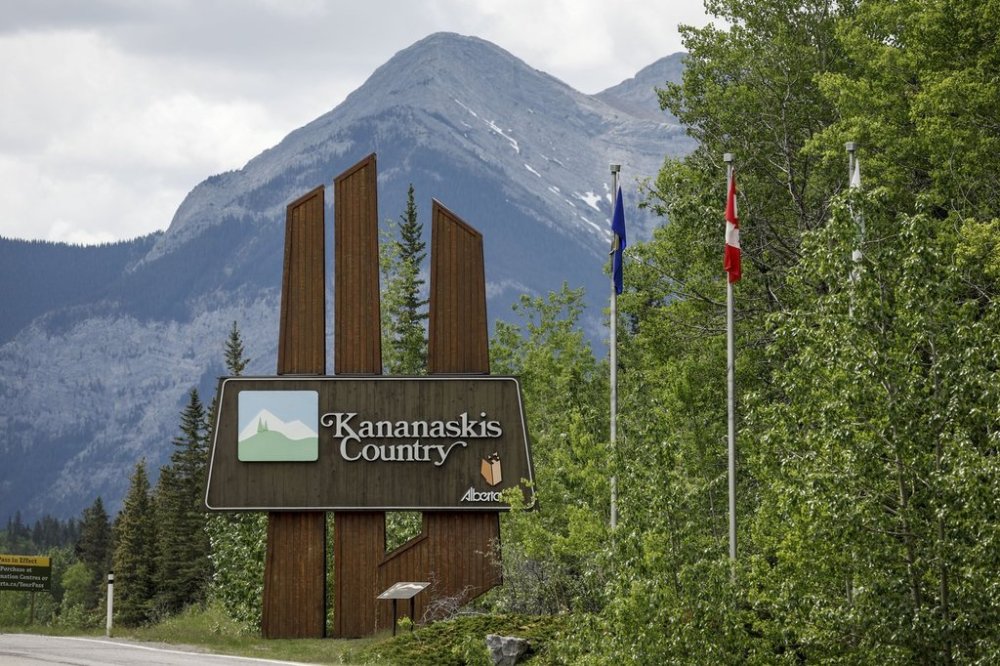
KANANASKIS – Officials say a local state of emergency has been declared at a provincial park in southern Alberta due to flooding, with some people unable to leave due to road conditions.
Parks Alberta said emergency teams are in Kananaskis Country, west of Calgary, supporting campground evacuations as necessary, monitoring infrastructure and maintaining road closures where needed.
“People already in the area are asked to remain where they are,” Parks Alberta said in an advisory Monday.
“As water levels are elevated throughout the region, the public is reminded to use caution near rivers, creeks and other water bodies.”
Parks Alberta didn’t say how many people are trapped or if anyone has been injured because of the weather.
Todd Loewen, Alberta’s minister of forestry and parks, said that William Watson Lodge and the Peter Lougheed Discovery Centre are available to provide temporary shelter to anyone who needs a safe, dry place to stay.
“Visitors are encouraged to postpone non-essential travel until conditions improve,” Loewen said on social media. “Impacted reservations will be automatically cancelled and refunded.”
In the nearby town of Canmore, residents had been told to prepare to leave on short notice and to have enough essentials packed to be away from home for at least 72 hours.
Canmore rescinded all evacuation alerts by Monday afternoon along with a flood watch, but said a high streamflow advisory remained in place.
“While things are stabilizing, creek banks may still be unsafe due to erosion,” the town said in a social media post. “Please respect all trail closures in place, inspections are still ongoing.”
The province said Monday the Elbow River west of Calgary has risen by two metres and could rise another half metre in the coming days.
The flood warning, which includes Bragg Creek, warns that some homes upstream of the town may have access roads and driveways cut off, and that there may be localized flooding near the Glencoe Golf Course.
In Calgary, city officials said heavy rainfall over the weekend has lead to increasing flows and water levels in the Bow and Elbow rivers.
“While overbank river flooding is not expected in Calgary communities, Calgarians can expect to see localized areas of flooding next to rivers and creeks, closed pathways, and potential for basement seepage in some low-lying areas along the Bow River,” the city said in a statement.
Brian Proctor, meteorologist with Environment and Climate Change Canada, said about 102 millimetres of rain fell in the Kananaskis area since Saturday, while the Calgary area received about 50 millimetres.
He said the area can expect less precipitation for the rest of the week.
“In general, I think probably a warming and drying trend is what people should anticipate,” Proctor said in an interview Monday.
Meanwhile, Alberta’s capital city broke its record over the weekend for the wettest June on record.
Proctor said 265 millimetres of rain has fallen in Edmonton so far this month, beating the record set more than a century ago.
“The old record was 217 millimetres from June of 1914,” he said. “And the all-time wettest month in Edmonton was July in 1901 when the city received 283 millimetres of rain.”
Last week, Edmonton issued a water supply alert due to the heavy rain, saying that its stormwater system was near capacity.
Residents were told to limit showers and baths, delay running the dishwasher and doing laundry for about a day.
However, water restrictions remain in other parts of central Alberta.
A flood alert is in effect for all Beaver County municipalities, including Tofield, Ryley, Holden and Viking.
“Overland flooding continues to affect the entire county, with pumping and roadwork ongoing,” the alert says.
“Everyone in Beaver County municipalities must reduce all non-essential water use.”
This report by The Canadian Press was first published June 29, 2026.
— By Daniela Germano in Edmonton