
Obamacare rolls shrank dramatically in many states over the past year, new federal data shows
Advertisement
Read this article for free:
or
Already have an account? Log in here »
We need your support!
Local journalism needs your support!
As we navigate through unprecedented times, our journalists are working harder than ever to bring you the latest local updates to keep you safe and informed.
Now, more than ever, we need your support.
Starting at $15.99 plus taxes every four weeks you can access your Brandon Sun online and full access to all content as it appears on our website.
Subscribe Nowor call circulation directly at (204) 727-0527.
Your pledge helps to ensure we provide the news that matters most to your community!
To continue reading, please subscribe:
Add Brandon Sun access to your Free Press subscription for only an additional
$1 for the first 4 weeks*
- Enjoy unlimited reading on brandonsun.com
- Read the Brandon Sun E-Edition, our digital replica newspaper
*Your next Free Press subscription payment will increase by $1.00 and you will be charged $20.95 plus GST for four weeks. After four weeks, your payment will increase to $24.95 plus GST every four weeks.
Read unlimited articles for free today:
or
Already have an account? Log in here »
NEW YORK (AP) — States across the country saw steep drops in the number of people covered by the Affordable Care Act over the past year, with Ohio and Oklahoma each losing nearly one-third of enrollees, according to new federal data that provides the first complete 50-state breakdown of sharp enrollment declines following the January expiration of enhanced subsidies.
The data, posted in late June by the Trump administration and first reported on by The Associated Press, reveals how changes in each state’s insured population led to around 2.6 million fewer Americans having Obamacare plans in February compared with the same time last year.
It captures not only how many people signed up for or were automatically reenrolled in plans in 2026, but how many paid their first monthly premiums to keep coverage, according to Cynthia Cox, a vice president and director of the ACA program at the healthcare research nonprofit KFF, who reviewed the dataset. She said it accounts for people who were retroactively removed from coverage after a nonpayment grace period ended.
“This is the first time we’ve seen state-level data that shows how much ACA marketplace enrollment truly fell,” Cox said. “It’s in line with our expectations, but it does show a very steep drop in the number of people with ACA coverage.”
Healthcare affordability is a central issue to voters
Health analysts have kept a close eye on changes in ACA enrollment since the expiration of so-called enhanced premium tax credits caused many Americans’ monthly health insurance fees to double or triple, forcing some to forgo coverage entirely. The subsidies had been at the center of a bitter fight in Congress last fall, with Democrats and some Republicans calling for their renewal.
Health insurance costs have been rising across ACA and other health insurance programs at a time when voters in the approaching November elections say affordability is among their top concerns.
In a report released last week, the U.S. Department of Health and Human Services suggested the significant drop in enrollment this year could be attributed to a federal crackdown on fraudulent or “phantom” enrollment. But analysts have said it was more likely related to the Jan. 1 expiration of federal subsidies, and other changes, including tightened requirements on which immigrants could access subsidized plans.
Mike Rhoads, deputy commissioner of life and health at the Oklahoma Insurance Department, cited a crackdown on fraudulent enrollments as one reason ACA enrollments dropped. But he said in his state, the biggest factor was money.
“It’s all about affordability at this point in time,” he said in an interview, adding that he expects the problem to continue with insurers forecast to raise rates again next year.
Ohio, Oklahoma and Arizona saw the most significant drop-offs
An AP analysis of the data finds that Ohio and Oklahoma each saw a more than 32% decline in ACA enrollment over the past year. They lost larger shares of their covered populations than any other state.
Following closely behind, and losing more than a fourth of their enrollees, were Arizona, South Carolina, Minnesota, Indiana, Michigan, Mississippi, Louisiana and Missouri.
Florida, a state that relies highly on ACA insurance in part because it did not expand Medicaid and is home to many gig workers and entrepreneurs, still has more residents in the marketplace than any other state, at nearly 4 million. But it also saw the highest number of enrollees drop coverage this year — around 443,000.
The data doesn’t show whether people who dropped ACA health insurance this year found coverage elsewhere, and chances are some of them became insured through employer plans or other options. But Cox said most people who left the marketplace are likely going without insurance, because it is typically a “place of last resort” to get health coverage for people who aren’t eligible elsewhere.
Some of the states that saw the largest enrollment declines were the same ones that saw the biggest enrollment gains after the federal government introduced enhanced subsidies during the COVID-19 pandemic. Cox said that isn’t surprising, because those states likely had large numbers of people who enrolled only because the enhanced subsidies made coverage much more affordable.
Only one state saw an increase in its covered population. New Mexico gained some 14% more enrollees in the government health insurance program compared with the same time last year. It was the only state in the nation that fully replaced the lost federal subsidies using its own funds.
Federal marketplace states saw biggest enrollment losses
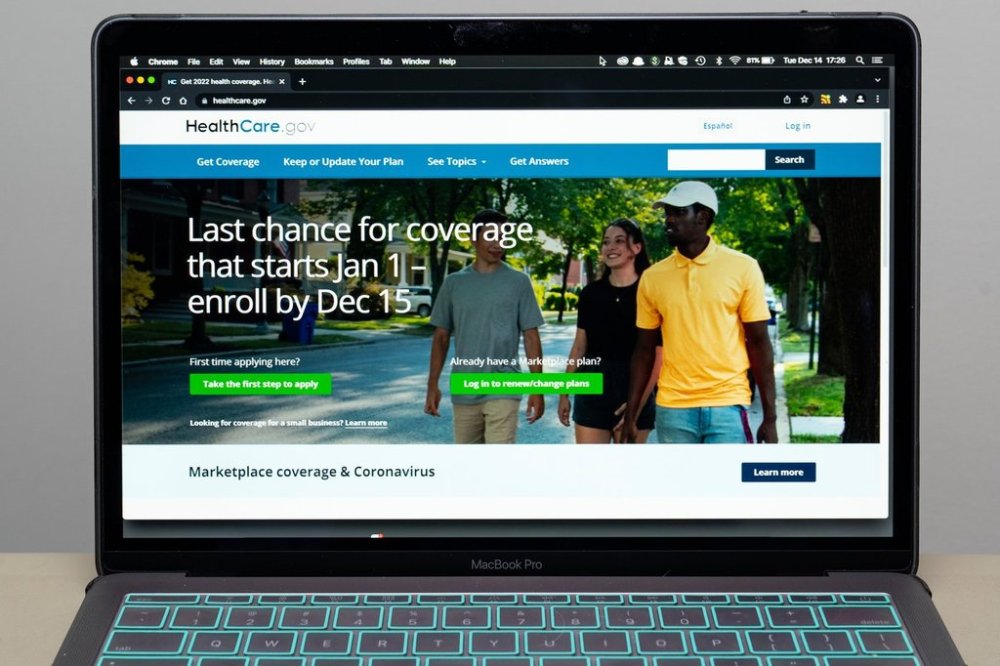
About three in five states use the federal marketplace Healthcare.gov, while the rest operate their own state-based marketplaces for ACA insurance.
The new data shows that federal marketplace states overall lost larger shares of enrollees than states with state-based exchanges.
One reason for that could be that many states with their own marketplaces took steps to offset costs for their residents when the enhanced subsidies expired in January.
New Mexico, which saw double-digit enrollment gains, is the most extreme example of that. In a special legislative session last fall, lawmakers in the state approved a plan to use state funds to make up for the missing subsidies through mid-2026. In March, the state’s governor signed a bill to continue making up the difference through mid-2027.