
First images released of the wreck of Quest, explorer Ernest Shackleton’s last ship
Advertisement
Read this article for free:
or
Already have an account? Log in here »
We need your support!
Local journalism needs your support!
As we navigate through unprecedented times, our journalists are working harder than ever to bring you the latest local updates to keep you safe and informed.
Now, more than ever, we need your support.
Starting at $15.99 plus taxes every four weeks you can access your Brandon Sun online and full access to all content as it appears on our website.
Subscribe Nowor call circulation directly at (204) 727-0527.
Your pledge helps to ensure we provide the news that matters most to your community!
To continue reading, please subscribe:
Add Brandon Sun access to your Free Press subscription for only an additional
$1 for the first 4 weeks*
- Enjoy unlimited reading on brandonsun.com
- Read the Brandon Sun E-Edition, our digital replica newspaper
*Your next Free Press subscription payment will increase by $1.00 and you will be charged $20.95 plus GST for four weeks. After four weeks, your payment will increase to $24.95 plus GST every four weeks.
Read unlimited articles for free today:
or
Already have an account? Log in here »
ST. JOHN’S – A team of explorers led by the Royal Canadian Geographical Society has released the first images of the wreck of Quest, the ship upon which legendary Antarctic explorer Sir Ernest Shackleton died in 1922.
The ghostly ship now lies at the bottom of the Labrador Sea, tangled in errant fishing nets. The images released Wednesday show the bow upright on the sea floor, its distinct portholes like eyes peering into the black.
The wreck is surrounded by debris, and it appears to now be home to a variety of fish and other life, said John Geiger, the society’s chief executive officer and leader of the expedition.
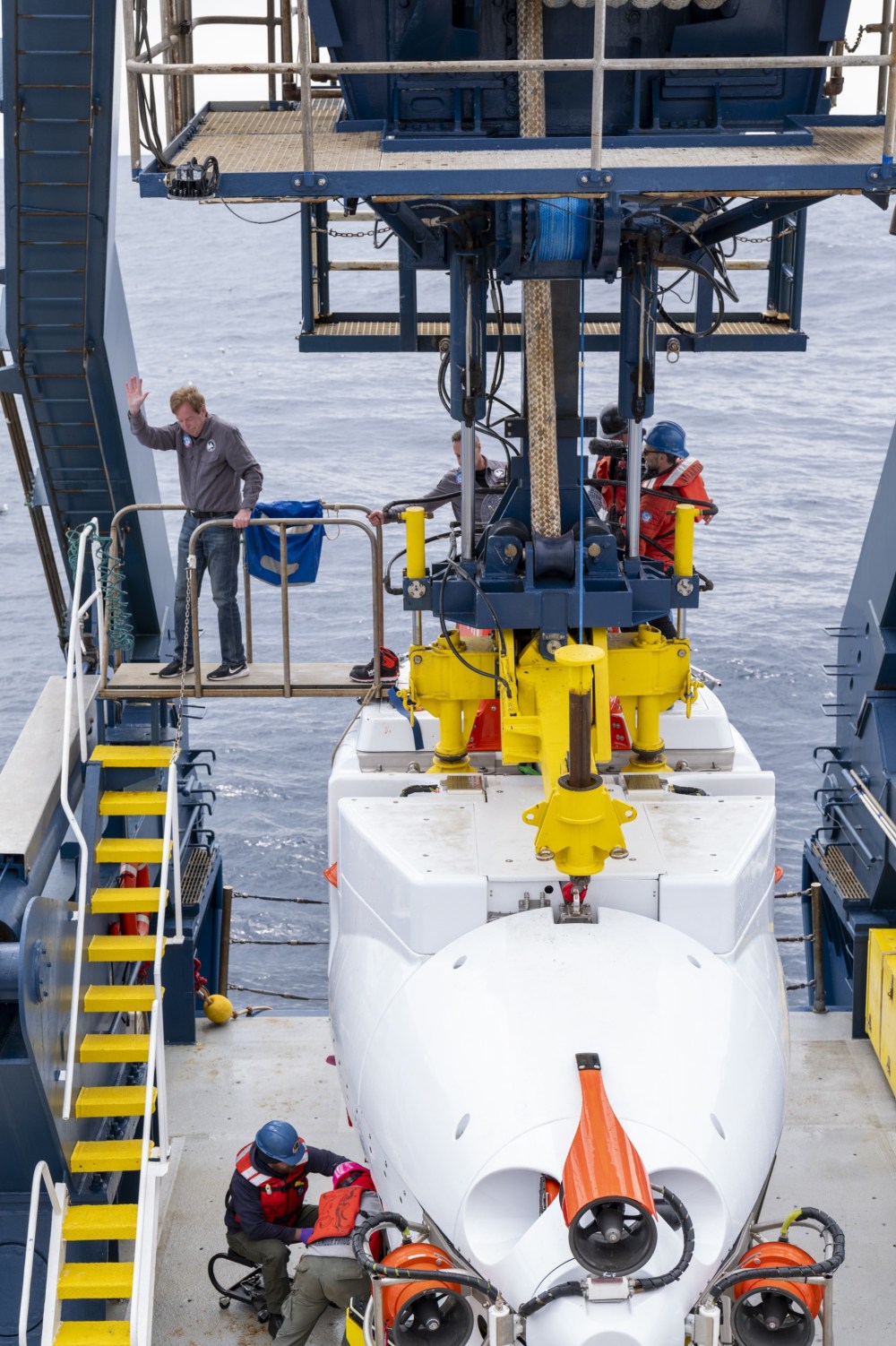
He was among a small group of adventurers who visited the wreck Tuesday in a submersible, making them the first people to see Quest in person since it sank off the south coast of Labrador in 1962.
As the submersible peeked over the bow and onto the deck, Geiger said he felt connected to the famed Anglo-Irish explorer, whose death on the ship marked the end of what historians consider the “heroic age” of Antarctic exploration.
“This is the deck upon which Shackleton died at age 47, tragically,” he said in an interview Tuesday. “I just felt an incredible connection with him and with his story.”
Shackleton is perhaps best known for his 1914 exploration trip to the Antarctic region aboard the Endurance, which got trapped in the ice and was eventually crushed. He and his crew survived on ice floes and then made their way to Elephant Island, off the east coast of Antarctica.
Shackleton and a few of his crew then set out in a whale boat to find help. Over the course of the next four months, he made several trips back to rescue his entire team.
He died of a heart attack on Quest, a schooner-rigged steamship which Shackleton bought specifically to travel to Canada’s High Arctic.
Geiger led a successful expedition in 2024 that first located Quest about 80 kilometres off Labrador’s southern coast, in about 390 metres of water. Now he is leading a new mission — the Heroic Age Expedition — using high-tech subsea technology from Voyis, part of Newfoundland-based Kraken Robotics, to build a digital, three-dimensional model of the wreck that the public can explore.
The team is also heading to the waters off Greenland to survey the shipwreck of the Terra Nova, upon which explorer Robert Falcon Scott sailed to the Antarctic in 1910. The Terra Nova was discovered in 2012 by the Schmidt Ocean Institute, which is headquartered in California.
The project links Canada to two of the greatest polar explorers ever known, Geiger said, adding, “We’re hoping to excite interest in exploration, especially among young people.”
Tuesday’s descent showed Quest was heavily damaged when it slammed into the sea floor, and there are wide holes torn into the deck, he said.

He looked into one and saw a white enamel wash basin, evidence of the crews who sailed the ship through the treacherous waters of the Labrador Sea decades ago.
He also found an urgent lesson about ocean protection in the muddy, discarded nets that were draped over the historic vessel.
“The fact that a heroic-age wreck has got fishing nets covering parts of it was surprising and disturbing for us,” Geiger said. “We have to look after our oceans.”
Geiger made the trip aboard the DSV Alvin, the first submersible to take people to the Titanic shipwreck. Alongside him were private astronaut Mark Pathy, the expedition’s chief mission specialist, and vessel pilot Bruce Strickrott, with the Woods Hole Oceanographic Institution, which is a partner in the initiative.
Quest became a sealing vessel after Shackleton’s death, working off Newfoundland and Labrador. The Terra Nova also became a sealer, and was based in St. John’s, N.L., according to the Woods Hole Oceanographic Institution.
This report by The Canadian Press was first published July 8, 2026.