
Alberta lets the dogs out, recruits more canine muscle in fight against mussels
Advertisement
Read this article for free:
or
Already have an account? Log in here »
We need your support!
Local journalism needs your support!
As we navigate through unprecedented times, our journalists are working harder than ever to bring you the latest local updates to keep you safe and informed.
Now, more than ever, we need your support.
Starting at $15.99 plus taxes every four weeks you can access your Brandon Sun online and full access to all content as it appears on our website.
Subscribe Nowor call circulation directly at (204) 727-0527.
Your pledge helps to ensure we provide the news that matters most to your community!
To continue reading, please subscribe:
Add Brandon Sun access to your Free Press subscription for only an additional
$1 for the first 4 weeks*
- Enjoy unlimited reading on brandonsun.com
- Read the Brandon Sun E-Edition, our digital replica newspaper
*Your next Free Press subscription payment will increase by $1.00 and you will be charged $20.95 plus GST for four weeks. After four weeks, your payment will increase to $24.95 plus GST every four weeks.
Read unlimited articles for free today:
or
Already have an account? Log in here »
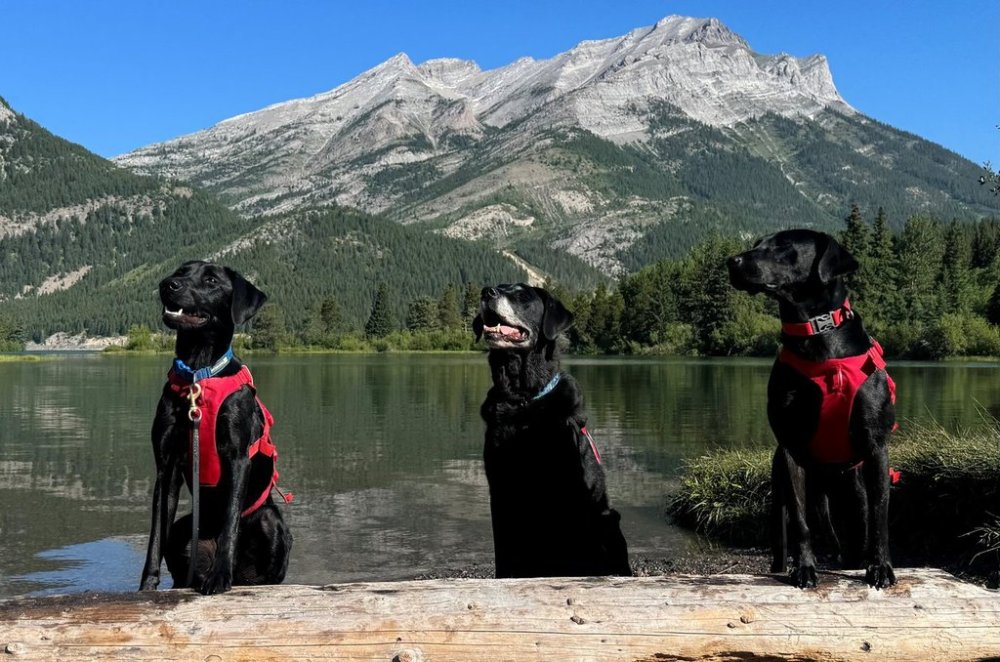
CALGARY – Hilo, Jane and Winnie are a part of Alberta’s muscle against invasive mussels that have spread throughout the Great Lakes and Canadian waterways since the 1980s.
So far, species of invasive mussels haven’t made their way into Alberta, and the canines work among human teams that scan boats entering the province to maintain that streak.
But the threat is nearing, with golden mussels just recently established in California, said Cindy Sawchuk, the lead for the province’s Aquatic Invasive Species Operations and Conservation Canine Program.
“These mussels really like to hide in damp, dark places (and) a lot of them are hard to see,” said Sawchuk, emphasizing their small size.
“The dogs are really complementing that human inspection and giving us kind of a better idea about what could be on that boat.”
The mussels that Hilo, Jane and Winnie — two black Labradors and a black Lab-cross — are looking for are originally from regions in eastern Europe and Southeast Asia. They include golden, zebra and quagga mussels.
Mussels are considered filter feeders that strain food and other particles out of water, but risk hogging the food sources from larger fish. It can cut back on the amount of fish, especially large fish, in Alberta’s lakes.
Alberta started inspecting boats in 2013, with canines joining two years later. There are currently 11 inspection stations across the province.
While humans look over boats with their eyes and rub their hands across the hulls, searching for the sandpaper-like feel of developing mussels, dogs hone in on the odour with their noses.
When the dogs are successful, they’re given a special toy that they’ve been trained to crave in exchange for finding the scent.
“They are so excited and it builds up that dopamine when they’re searching like, ‘Could we find something, could it be here?’ And then you know after that it’s really just a game for them,” she said.
Workers will often hide mussels on the boat to ensure the dogs are still adept at sniffing them out and give them a chance to “get their paycheque,” she added.
Hilo, nicknamed “The Professor” because of his slow, methodical search patterns, has been around since the program’s inception and had switched professions from his role at a guide dog school in California.
Winnie, who was found in a shelter, and Jane, found in Mexico, are new recruits to the force. A fourth dog, Diesel, spends his retirement in a supervisor role.
Sawchuk says fewer than one in 1,000 dogs have the drive and energy for the work.
When they graduate training, they can scour shorelines, beaches and docks as well as the boats. Hilo found mussels along the bottom of tall reeds while training in Texas.
Sawchuk can tell when he’s trying to communicate something, like hidden mussels, because of their shared bond. She considers Hilo family.
“We really want that bond, right? So, that trust is there; that relationship is there.”
This report by The Canadian Press was first published July 31, 2026.