
Supreme Court to hear case on constitutionality of requiring oath to the Crown
Advertisement
Read this article for free:
or
Already have an account? Log in here »
We need your support!
Local journalism needs your support!
As we navigate through unprecedented times, our journalists are working harder than ever to bring you the latest local updates to keep you safe and informed.
Now, more than ever, we need your support.
Starting at $15.99 plus taxes every four weeks you can access your Brandon Sun online and full access to all content as it appears on our website.
Subscribe Nowor call circulation directly at (204) 727-0527.
Your pledge helps to ensure we provide the news that matters most to your community!
To continue reading, please subscribe:
Add Brandon Sun access to your Free Press subscription for only an additional
$1 for the first 4 weeks*
- Enjoy unlimited reading on brandonsun.com
- Read the Brandon Sun E-Edition, our digital replica newspaper
*Your next Free Press subscription payment will increase by $1.00 and you will be charged $20.95 plus GST for four weeks. After four weeks, your payment will increase to $24.95 plus GST every four weeks.
Read unlimited articles for free today:
or
Already have an account? Log in here »
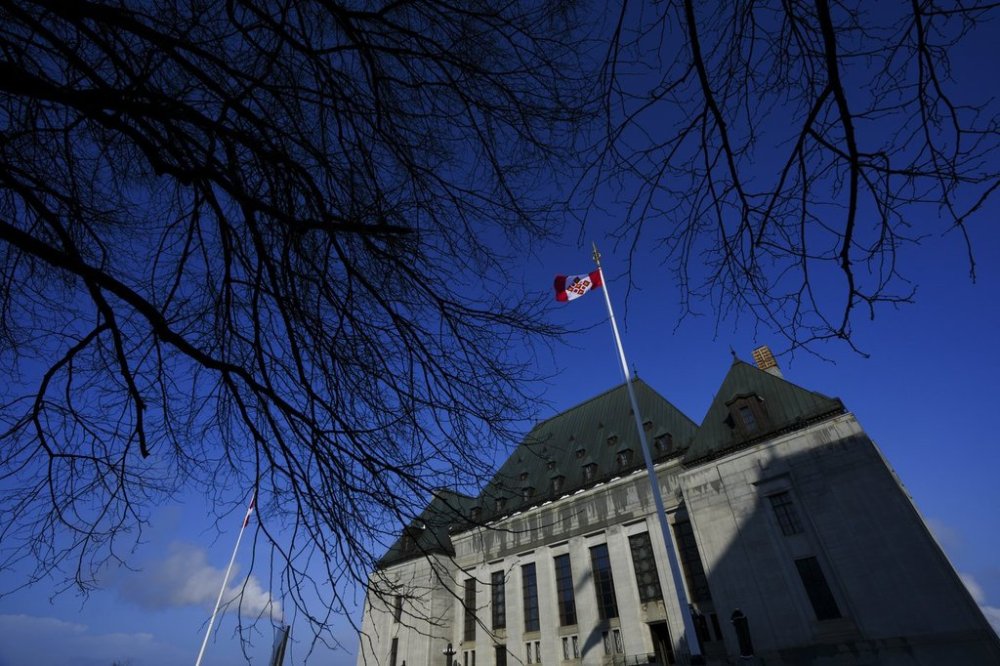
OTTAWA – The Supreme Court of Canada says it will hear a case on whether requiring prospective lawyers to swear the Oath of Allegiance to the reigning monarch is unconstitutional.
The decision comes after Alberta’s top court decided in December that the rule in the province violates the constitution and infringes on religious freedom.
The Court of Appeal of Alberta said the legally required oath forced Prabjot Wirring to choose between practising law in Alberta and his faith as an Amritdhari Sikh.
Wirring originally challenged the oath in June 2022, arguing he swore an allegiance to Akal Purakh, the Creator in the Sikh faith, and couldn’t make an allegiance or devotion to any other figure or entity.
“I knew from Day 1, because of my faith as a Sikh and because of my own integrity and my values, I wasn’t going to be able to take this oath,” said Wirring in an interview.
He said the case goes well beyond his own circumstances.
“Forcing Indigenous and racialized communities, who have been impacted by the violence of colonialism, to have to swear an Oath of Allegiance to be able to practice law and practice their profession is deplorable and very problematic.”
An Alberta judge dismissed his suit in 2023 but the Appeal Court’s three-judge panel overturned that decision last year. The decision made the oath no longer a requirement in Alberta.
The Appeal Court found the previous judge erred in deciding that Wirring could swear the oath, because it was an allegiance to the abstract ideal of the rule of law, not an entity like the Queen or King.
However, the Appeal Court ruled Wirring couldn’t swear an allegiance to anything other than the Akal Purakh.
Wirring eventually became a member of the Law Society of Alberta in 2023 when he transferred from Saskatchewan through a new interprovincial licensing process, introduced several months after he challenged the Oath of Allegiance.
The Appeal Court said Alberta could remedy the issue by: making the oath optional, as it is in Nova Scotia, New Brunswick, Yukon and Ontario; remove the requirement, as has been done in B.C., Prince Edward Island and Saskatchewan; or revise the oath’s phrasing.
The Alberta government appealed the ruling to the Supreme Court.
Wirring said he knew from the beginning the challenge to the roughly century-old rule could be a lengthy one, but he was prepared to take it to this stage.
“We’re challenging institutionalized systemic discrimination. That’s never easy, and it’s never a quick overnight battle.”
Alberta’s ministry of justice said in a statement that the government is pleased the Supreme Court of Canada has granted leave for an appeal on the case.
It said it was unable to comment further because the matter is before the courts.
This report by The Canadian Press was first published Aug. 6, 2026.