
Congo to receive 70,000 doses of Ervebo Ebola vaccine which has been effective in past outbreaks
Advertisement
Read this article for free:
or
Already have an account? Log in here »
We need your support!
Local journalism needs your support!
As we navigate through unprecedented times, our journalists are working harder than ever to bring you the latest local updates to keep you safe and informed.
Now, more than ever, we need your support.
Starting at $15.99 plus taxes every four weeks you can access your Brandon Sun online and full access to all content as it appears on our website.
Subscribe Nowor call circulation directly at (204) 727-0527.
Your pledge helps to ensure we provide the news that matters most to your community!
To continue reading, please subscribe:
Add Brandon Sun access to your Free Press subscription for only an additional
$1 for the first 4 weeks*
- Enjoy unlimited reading on brandonsun.com
- Read the Brandon Sun E-Edition, our digital replica newspaper
*Your next Free Press subscription payment will increase by $1.00 and you will be charged $20.95 plus GST for four weeks. After four weeks, your payment will increase to $24.95 plus GST every four weeks.
Read unlimited articles for free today:
or
Already have an account? Log in here »
BUNIA, Congo (AP) — Congo will receive 70,000 doses of the Ervebo vaccine, which has been effective in past Ebola outbreaks, the World Health Organization and partners said Thursday, announcing a step seen as a major boost to efforts to contain what officials have described as the fastest Ebola outbreak in history.
The Ervebo vaccine is licensed for use against Ebola virus, one of the viruses that cause Ebola disease, but not for Bundibugyo virus, which is responsible for the current outbreak which has so far killed 2,476 people out of the 5,208 confirmed cases
WHO said in a statement that while it’s not known whether Ervebo may protect against the Bundibugyo virus, “early laboratory and animal data suggest it may provide some protection.”
The allocation includes 20,000 doses for a Phase 3 clinical trial to understand the impact of the vaccine on the Bundibugyo virus, the agency said. The remaining 50,000 doses will be used for front-line and health workers as recommended by WHO experts.
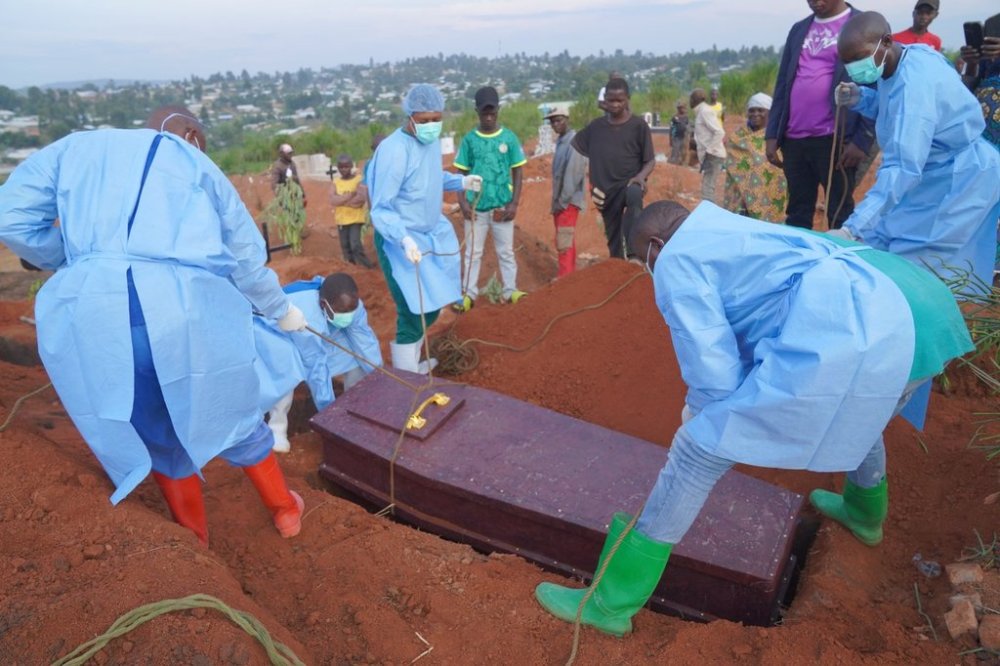
The outbreak raging in six provinces in eastern Congo has infected and killed more people at a greater speed than any other Ebola outbreak in history, and is spreading about three times faster compared to the 2014-2016 outbreak across West Africa — the deadliest Ebola outbreak on record with more than 11,000 deaths.
The International Coordinating Group on Vaccine Provision, which includes WHO and other partners, said the doses will be released immediately following a request from Congo’s government.
WHO Director-General Tedros Adhanom Ghebreyesus called the approval “an important example of global solidarity in action.” He said the agency and its partners remain committed to supporting strengthened surveillance, rapid detection, quality care, community engagement and vaccination efforts to bring the outbreak under control.
The lack of approved vaccines or treatments for the rare Bundibugyo virus has been a major issue for responders. Most new cases have been reported outside of the people being monitored, showing the virus continues to spread faster than efforts to track it. That has been a key contributor to the recorded deaths.
The case fatality rate so far is 47.5% although it is far worse in some places where response efforts are more challenging, such as in North Kivu province where the fatality rate is up to 70%.
Experts believe the virus began spreading from the mining town of Mongbwalu as early as February, months before authorities declared the outbreak on May 15.