
Officials say 24 Canadians missing after flash floods in Nepal and China
Advertisement
Read this article for free:
or
Already have an account? Log in here »
We need your support!
Local journalism needs your support!
As we navigate through unprecedented times, our journalists are working harder than ever to bring you the latest local updates to keep you safe and informed.
Now, more than ever, we need your support.
Starting at $15.99 plus taxes every four weeks you can access your Brandon Sun online and full access to all content as it appears on our website.
Subscribe Nowor call circulation directly at (204) 727-0527.
Your pledge helps to ensure we provide the news that matters most to your community!
To continue reading, please subscribe:
Add Brandon Sun access to your Free Press subscription for only an additional
$1 for the first 4 weeks*
- Enjoy unlimited reading on brandonsun.com
- Read the Brandon Sun E-Edition, our digital replica newspaper
*Your next Free Press subscription payment will increase by $1.00 and you will be charged $20.95 plus GST for four weeks. After four weeks, your payment will increase to $24.95 plus GST every four weeks.
Read unlimited articles for free today:
or
Already have an account? Log in here »
Prime Minister Mark Carney says his government is closely following the situation in Nepal and China after two dozen Canadians were reported missing in flash flooding in the region.
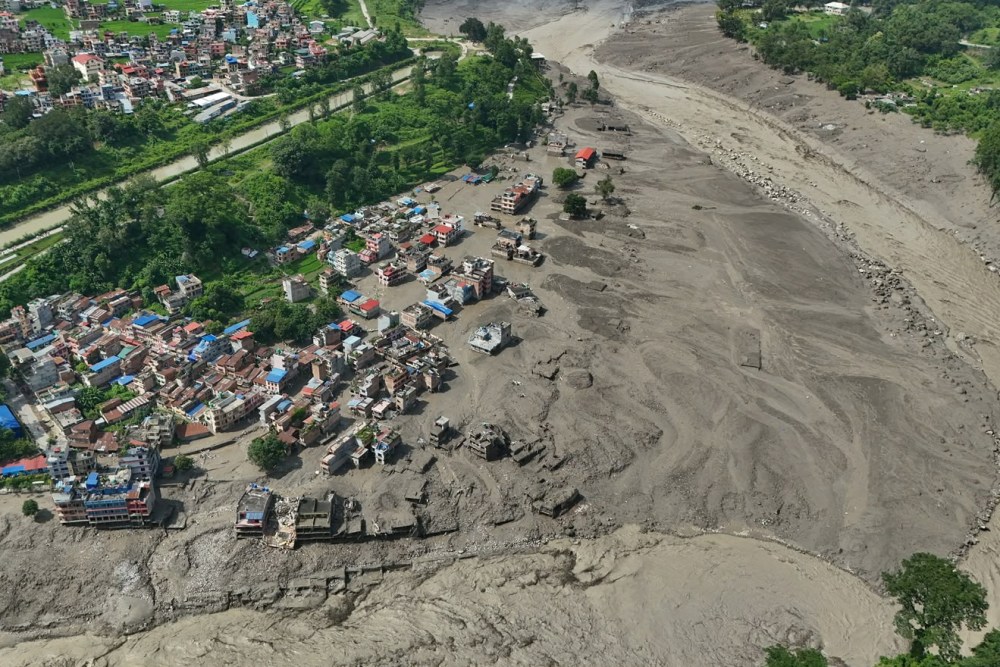
Officials in Nepal said Wednesday that 24 people from Canada were among those missing in the flash floods in a border area of Nepal and China.
Police in Nepal reported at least 157 dead and hundreds of tourists, workers and others are unaccounted for. China’s state broadcaster CCTV reported at least three dead and 265 missing in the Tibet region’s Gyirong County.
Carney said all Canadians in the region should sign up for Registration of Canadians Abroad, a free service that lets the federal government contact and assist citizens during an emergency in other countries.
“The flash floods along Nepal’s Bhotekoshi River are absolutely devastating,” Carney said Wednesday on social media.
“Canadians are thinking of all those in distress right now, those who have lost a loved one, and all those who are still waiting for answers.”
Foreign Affairs Minister Anita Anand said Global Affairs Canada consular officials are in contact with local authorities and ready to assist Canadians in the region.
“We are monitoring the situation and stand ready to provide assistance as appropriate,” she said.
Global Affairs said in a statement that its Registration of Canadians Abroad system indicates that there are 820 Canadians in Nepal and five Canadians in the Tibet Autonomous Region in China.
However, the department said those numbers provide only an estimate of Canadians in the region as registration is voluntary.
“Therefore, the number of registrants for any given area may not be fully representative of the number of Canadians actually residing in or visiting that area,” it said in the statement.
“Due to power outages in the region, establishing full communication with those on the ground may be challenging and may take time.”
Bharat Raj Paudyal, ambassador of Nepal to Canada, said crews are working around the clock to find those missing.
“We do not know yet if they were unfortunately deceased or if they are still alive and are out of communication,” he said of the missing Canadians.
He said thousands of people have been affected by the flash flooding.
“It has washed away several small towns along the bank of the river,” he said.
The Nepalese Canadian Community Services said its members are “deeply saddened by the tragic loss of lives and widespread devastation.”
“At this difficult and painful time, our thoughts, prayers and solidarity are with our homeland and with all those who have been affected by this tragedy,” the group said in a statement on social media.
Sudarshan Sapkota, the group’s president, said staff fielded about 20 calls and more emails by Wednesday afternoon from Nepalese in Canada looking for help contacting their friends and relatives in the flooded areas.
“They’re worried because there are no phone networks. There are no calls, no messages,” he said in a phone interview from Toronto.
“We are trying to give hope to them. That’s all we can do right now.”
The organization is trying to reach government officials in Nepal to get more details on the victims and others who are affected so it can relay that information to families in Canada, Sapkota said.
Officials in Nepal said 403 people, including 341 foreign nationals, were reported missing.
Sunil Sharma, a tourism board spokesperson, said 133 were from India on pilgrimage to Mount Kailash in Tibet, a sacred site for Hindus. Also missing are 47 from the United States, 34 from Australia and 33 from Britain.
In Ottawa, Rajina Dhungana woke up Wednesday morning to messages from her brother in Nepal’s capital city Kathmandu confirming that he was OK, but there was severe devastation in her home country.
The 28-year-old is from the hard-hit Nuwakot district.
“People back home are saying that they have never witnessed anything like this before. The places where I grew up have been completely changed by the floods,” she said in a phone interview.
“It’s devastating and heartbreaking.”
Dhungana said she worries about her parents, who live in the Trishuli area of the Nuwakot district. The town didn’t face the same severe flooding as other regions of the district but the crushing amount of water wiped out infrastructure including power lines and bridges.
She has not been able to make contact with her parents because phone lines are down.
“For a small country like Nepal, it takes months and months to rebuild all those things.”
The U.S. Geological Survey reported a magnitude 4.4 earthquake early Wednesday, about 100 kilometres north of Kathmandu, near the border with China’s autonomous region of Tibet.
Climate experts at the Kathmandu-based International Centre for Integrated Mountain Development said an avalanche from a glacier likely caused the flash flood.
This report by The Canadian Press was first published Aug. 26, 2026.
— With files from Catherine Morrison in Ottawa and The Associated Press