
‘Dooming the moose’: Manitoba Cree chief calls for voluntary stop to hunting
Advertisement
Read this article for free:
or
Already have an account? Log in here »
We need your support!
Local journalism needs your support!
As we navigate through unprecedented times, our journalists are working harder than ever to bring you the latest local updates to keep you safe and informed.
Now, more than ever, we need your support.
Starting at $15.99 plus taxes every four weeks you can access your Brandon Sun online and full access to all content as it appears on our website.
Subscribe Nowor call circulation directly at (204) 727-0527.
Your pledge helps to ensure we provide the news that matters most to your community!
To continue reading, please subscribe:
Add Brandon Sun access to your Free Press subscription for only an additional
$1 for the first 4 weeks*
- Enjoy unlimited reading on brandonsun.com
- Read the Brandon Sun E-Edition, our digital replica newspaper
*Your next Free Press subscription payment will increase by $1.00 and you will be charged $20.95 plus GST for four weeks. After four weeks, your payment will increase to $24.95 plus GST every four weeks.
Read unlimited articles for free today:
or
Already have an account? Log in here »
WINNIPEG – The leader of a First Nation in Manitoba is urging all moose hunters to stop hunting in the community’s traditional territory due to what she calls dwindling population numbers.
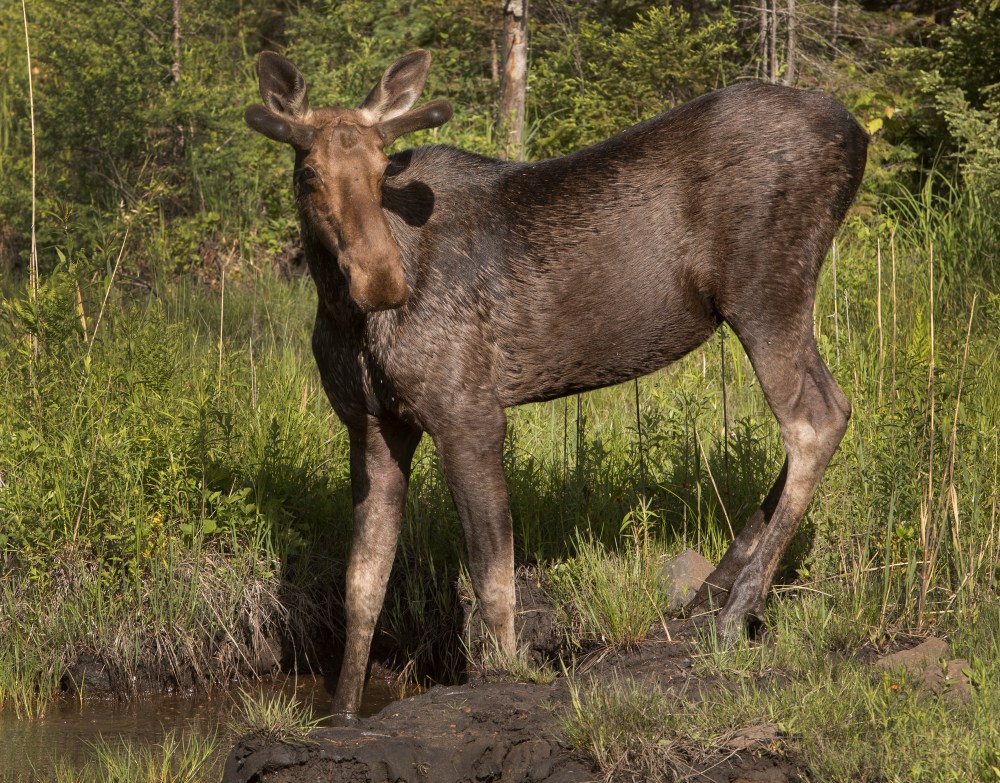
Misipawistik Cree Nation Chief Heidi Cook is advocating for a “voluntary hunting closure” of an approved game hunting area that encompasses a large part of the community along the northwestern shores of Lake Winnipeg.
Cook is appealing to all hunters, including members of Misipawistik, to prioritize the long-term health of the moose population by halting harvesting in the area beginning Monday, when the season opens.
“At this moment in time, the moose population just cannot sustain that harvest. So we’re asking all Manitobans to stand with us in protecting moose and calling on our government to do better,” Cook said in an interview.
“We need to take action, all of us collectively, to protect that moose population so that it can be there for generations of hunters to come. This is our responsibility.”
Cook said information last year from the province, based on an aerial survey, estimated 64 bull moose were in the area.
The government has issued 62 bull moose tags for the same area this year, said the chief.
That doesn’t take into account community hunters, who have treaty rights to hunt on their traditional territory and don’t require government-issued licences or tags.
A government report from last year suggests the moose population in Misipawistik’s territory has remained stable over the past decade.
But the community has observed a sharp drop in the number of moose harvested by members.
Cook said historically the community would harvest up to 19 moose in a season but that hasn’t happened for the past 10 to 15 years.
The First Nation has been raising concerns with the province for years, said Cook, but it hasn’t seen much “meaningful change.”
“What our people have been experiencing for a number of years is that it’s almost an involuntary closure. We just don’t have the moose,” she said.
“This is something that is part of our responsibility. We have a right to moose, but we also have a responsibility to protect that moose and make sure that it can survive and be healthy.
“If we continue with the hunt as is, we’re dooming the moose to not being able to be available for future generations.”
Cook said areas south of the First Nation have seen total hunting closures because of the way the province has managed the moose population.
In 2024, Misipawistik warned the province its members couldn’t meaningfully hunt for moose in their territory and asked the government to put licences on hold.
The government reduced the number issued and committed to working with the community to determine moose population dynamics and the First Nation’s food needs, but Cook has said that didn’t happen.
The First Nation took the province to court last year in an attempt to halt moose harvesting in its territory, arguing it infringes on the community’s right to hunt for food and that moose are important for social and ceremonial purposes.
The importance of the animals affects the community in more ways than “just an empty freezer,” added Cook.
“It’s hard, because the moose is such an important cultural species. It’s tied to our relationship with the land, the sharing that happens between families, just the seasonal rhythms of being out and having those moose camps.”
In 2018, Misipawistik developed a land guardian program to track moose in the area.
Cook said the program has been successful in reducing poaching and animals killed in highway accidents. This hunting season, the guardians will also be tasked with educating hunters about moose population concerns.
The community doesn’t plan to set up blockades or checkpoints to prevent hunting there, Cook said.
It will instead encourage people to reach out to the government and advocate for better moose management.
“We won’t be stopping anyone from accessing the land. We want to minimize conflict,” she said. “I think the important thing to emphasize is our shared love for moose.”
This report by The Canadian Press was first published Sept. 18, 2026.