
Three B.C. glaciers face extinction within decades due to climate change, study says
Advertisement
Read this article for free:
or
Already have an account? Log in here »
We need your support!
Local journalism needs your support!
As we navigate through unprecedented times, our journalists are working harder than ever to bring you the latest local updates to keep you safe and informed.
Now, more than ever, we need your support.
Starting at $15.99 plus taxes every four weeks you can access your Brandon Sun online and full access to all content as it appears on our website.
Subscribe Nowor call circulation directly at (204) 727-0527.
Your pledge helps to ensure we provide the news that matters most to your community!
To continue reading, please subscribe:
Add Brandon Sun access to your Free Press subscription for only an additional
$1 for the first 4 weeks*
- Enjoy unlimited reading on brandonsun.com
- Read the Brandon Sun E-Edition, our digital replica newspaper
*Your next Free Press subscription payment will increase by $1.00 and you will be charged $20.95 plus GST for four weeks. After four weeks, your payment will increase to $24.95 plus GST every four weeks.
Read unlimited articles for free today:
or
Already have an account? Log in here »
Three glaciers in British Columbia’s southwest could “disappear completely” within decades in what a researcher says is the result of years of inaction on climate change.
A new study from Simon Fraser University published in the journal Annals of Glaciology says the Whistler Glacier is in the most dire condition and could disappear within the next 10 years.
That glacier has shrunk by 95 per cent in the last five decades, while the Horstman and Blackcomb glaciers have lost up to 75 per cent of their area over the same period and will melt down between three and seven decades.
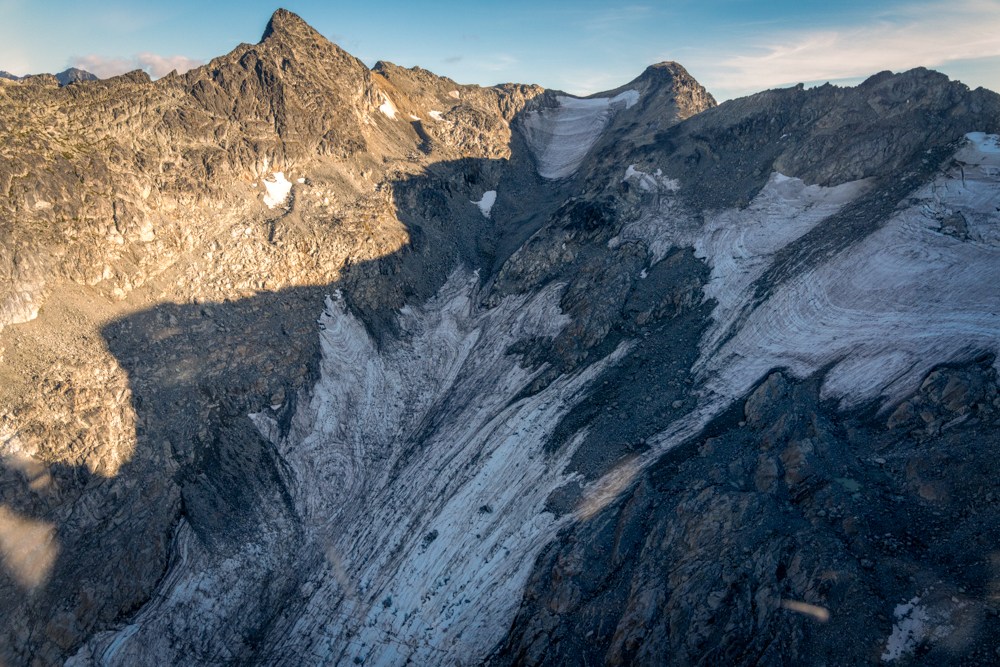
Lead researcher Chloé Monty says glaciers have been retreating globally due to climate change, but it was still shocking to see the extent of the shrinkage seen in the three B.C. glaciers based on image comparisons.
She says there’s nothing that can be done to save those glaciers from extinction but it’s not too late to prevent the larger glaciers in B.C. and Canada from disappearing.
Monty says a reduction in carbon emissions would prevent the larger glaciers from shrinking in Canada and around the world.
“Glaciers respond slowly to climate, so the changes that we’re seeing now are reflecting the changes to the climate that have happened in the last several decades,” Monty says.
Glaciers are measured by coverage area to determine if they still meet thresholds to continue to qualify as a glacier, and the SFU research shows the Whistler Glacier has already shrunk to the point that it fractured into three smaller ice masses.
Once glaciers fall below the thresholds they could instead be classified as “ice patches,” although experts are still debating the terminology used to describe former glaciers.
Monty says that, by some definitions, Whistler Glacier has already disappeared.
“Technically Whistler Glacier is a relict glacier,” she says. “Has it disappeared? That depends on your definition.
“The question is really, when will it get to zero ice?”
Glaciers have been popular summer skiing locations and both the Whistler and Horstman glaciers have hosted summer ski camps in the past.
Whistler Blackcomb ski resort suspended summer skiing indefinitely on the Horstman Glacier last year after beginning in the 1980s, while summer skiing activities stopped on Whistler Glacier in the late 1990s.
Monty says resorts are doing the right thing for business by developing other summer activities such as mountain biking to compensate for the loss of skiing and the tourism industry needs to adapt too.
The larger challenge — taking steps to mitigate climate change to preventing larger losses — is still something that can be tackled, and Monty says the study on the B.C. glaciers should provide a warning of what could happen if no steps are taken.
“This is definitely a very sad story,” she says. “But it doesn’t mean that there aren’t things that we can do to reduce our carbon emissions now that would help prevent the loss of bigger glaciers and the losses also to the ice sheets that would contribute probably more significantly to sea level rise.”
This report by The Canadian Press was first published Sept. 23, 2026.