
Canada presenting itself as climate leader at COP31, despite policy rollbacks
Advertisement
Read this article for free:
or
Already have an account? Log in here »
We need your support!
Local journalism needs your support!
As we navigate through unprecedented times, our journalists are working harder than ever to bring you the latest local updates to keep you safe and informed.
Now, more than ever, we need your support.
Starting at $15.99 plus taxes every four weeks you can access your Brandon Sun online and full access to all content as it appears on our website.
Subscribe Nowor call circulation directly at (204) 727-0527.
Your pledge helps to ensure we provide the news that matters most to your community!
To continue reading, please subscribe:
Add Brandon Sun access to your Free Press subscription for only an additional
$1 for the first 4 weeks*
- Enjoy unlimited reading on brandonsun.com
- Read the Brandon Sun E-Edition, our digital replica newspaper
*Your next Free Press subscription payment will increase by $1.00 and you will be charged $20.95 plus GST for four weeks. After four weeks, your payment will increase to $24.95 plus GST every four weeks.
Read unlimited articles for free today:
or
Already have an account? Log in here »
OTTAWA – Canada will present itself as an international climate leader when it sends a delegation to the annual UN climate talks next week in Turkey, despite its rollbacks of climate policy under Prime Minister Mark Carney.
Government officials held a technical briefing for journalists Monday ahead of the annual two-week COP31 conference, which is the main forum for the UN Framework Convention on Climate Change and the 2015 Paris climate pact.
That pact committed signatories to reducing emissions sharply to keep global warming below 2 C and as close as possible to 1.5 C above pre-industrial levels by the end of this century. A UN report last month said that goal is now impossible because emissions have not come down fast enough.
That report will be a key feature of the upcoming COP31, where discussions will include how to get emissions cut to at least keep things below 2 C by 2100.
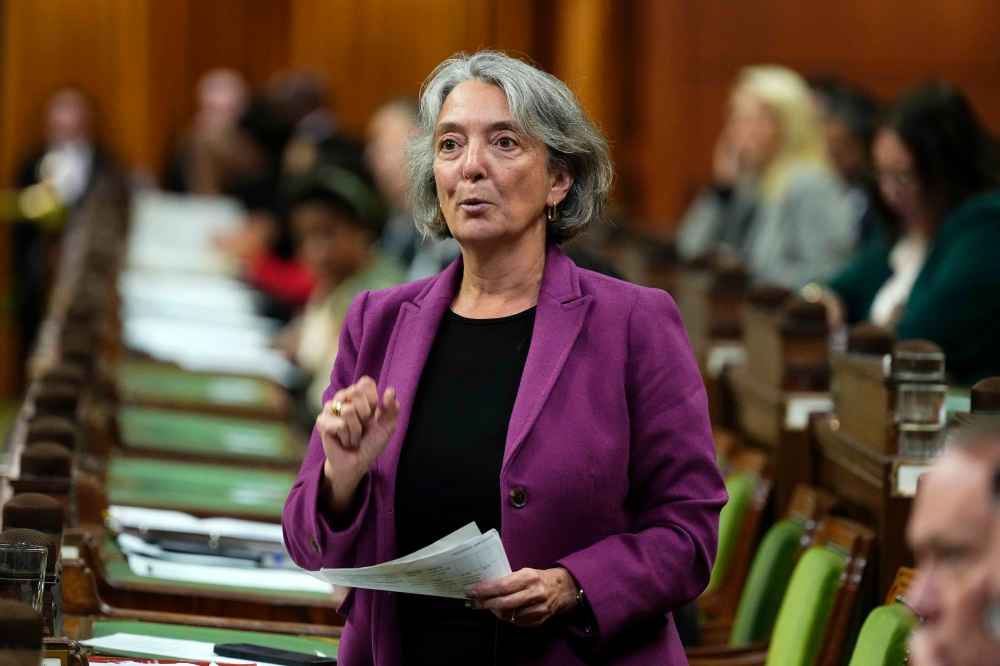
Carney will not attend the leaders’ summit off the top of the summit, but Environment Minister Julie Dabrusin will be in Turkey for the first week of talks. Officials said she will co-convene a ministerial meeting with the European Union of the Global Methane Pledge — a group of 159 countries committed to collectively reducing global methane emissions by 30 per cent from 2020 levels by 2030.
In June, UN Secretary-General António Guterres launched a global call to action on methane during an address at the London Climate Action Week.
Canadian officials on Monday said Canada will be “promoting” methane mitigation at COP31, stressing to other countries on how it is a “high impact, cost effective” way to address emissions.
In its latest annual national emissions report last month, the Canadian Climate Institute credited “fugitive methane emission reductions” as the main driver for why Canada’s oil and gas sector accounted for a lower level of emissions in 2025, despite boosts in production.
Canada has also delayed the implementation of its own methane regulations, which — along with other climate rollbacks — has prompted steep criticism from environmental advocates.
In June, a number of Canada’s most prominent environment groups, including the David Suzuki Foundation, Ecojustice, Greenpeace Canada, Nature Canada and Environmental Defence, pushed for meetings with Carney’s aides as well as members of Parliament, to discuss what they called “urgent concerns about the government’s moves to eviscerate environmental laws and procedures and to undermine Canada’s nature, climate and clean energy goals.”
Just last week, Canada’s environment commissioner found that in November 2024, the government abandoned work on a 2021 pledge to ban the export of thermal coal, without any record of having a directive to do so.
Government officials have since said the work is only “paused,” though the report said Ottawa formalized the end of the work in August 2025 as part of budget cuts.
The report also found that despite initially looking at ways to enforce the ban through legislation, Ottawa later sought to find non-regulatory ways to enact the ban. That included looking at “voluntary measures” which the Office of Canada’s Auditor General’s said wouldn’t be legally enforceable.
Government officials refused to answer during Monday’s technical briefing whether Canada informed any of its international partners that its work to ban thermal coal exports had ended — or paused.
Meanwhile, the government’s own numbers show Canada is nowhere close to meeting its international commitment to reduce emissions by 40 per cent of 2005 levels, while other reports suggest net-zero by 2050 is also off the table.
Carney has been accused of backsliding on climate policy for the better part of the last year.
He eliminated the consumer carbon price in March 2025 — on his first day in office. While he promised a strengthened industrial carbon pricing system, he was accused of weakening that system through an agreement with Alberta in May that has ramifications for every other province and territory.
His government also repealed the electric vehicle sales mandate — Ottawa has promised stronger tailpipe standards but those are still years away — and to cancel the oil and gas emissions cap. Carney’s government also has delayed methane regulations in Alberta.
In a video in June Carney said federal climate policy under former prime minister Justin Trudeau was too expensive and divisive.
“I want to be clear on this point. The changes we have made will mean that our emissions will be higher in the next few years than they were projected to be under the previous government’s plan,” Carney said in the video.
“But in my judgment, that plan was not sustainable over the long term.”
Still, government officials told the briefing on Monday that Canada remains a “credible international actor on climate change” that other countries are keen to engage with.
This report by The Canadian Press was first published Nov. 2, 2026.