
Health Canada warns of rare vision loss risk with Ozempic and other semaglutide drugs
Advertisement
Read this article for free:
or
Already have an account? Log in here »
We need your support!
Local journalism needs your support!
As we navigate through unprecedented times, our journalists are working harder than ever to bring you the latest local updates to keep you safe and informed.
Now, more than ever, we need your support.
Starting at $15.99 plus taxes every four weeks you can access your Brandon Sun online and full access to all content as it appears on our website.
Subscribe Nowor call circulation directly at (204) 727-0527.
Your pledge helps to ensure we provide the news that matters most to your community!
To continue reading, please subscribe:
Add Brandon Sun access to your Free Press subscription for only an additional
$1 for the first 4 weeks*
- Enjoy unlimited reading on brandonsun.com
- Read the Brandon Sun E-Edition, our digital replica newspaper
*Your next Free Press subscription payment will increase by $1.00 and you will be charged $20.95 plus GST for four weeks. After four weeks, your payment will increase to $24.95 plus GST every four weeks.
Read unlimited articles for free today:
or
Already have an account? Log in here »
TORONTO – Health Canada has issued a warning about a “very rare” risk of vision loss with Ozempic, Wegovy and other semaglutide drugs.
In the warning issued Wednesday, the department said it has completed a safety review “that found a possible link between prescription semaglutide drugs and the risk of non-arteritic anterior ischemic optic neuropathy.”
The eye condition, also known as NAION, “causes sudden painless vision loss or vision changes due to reduced blood flow to the optic nerve.”
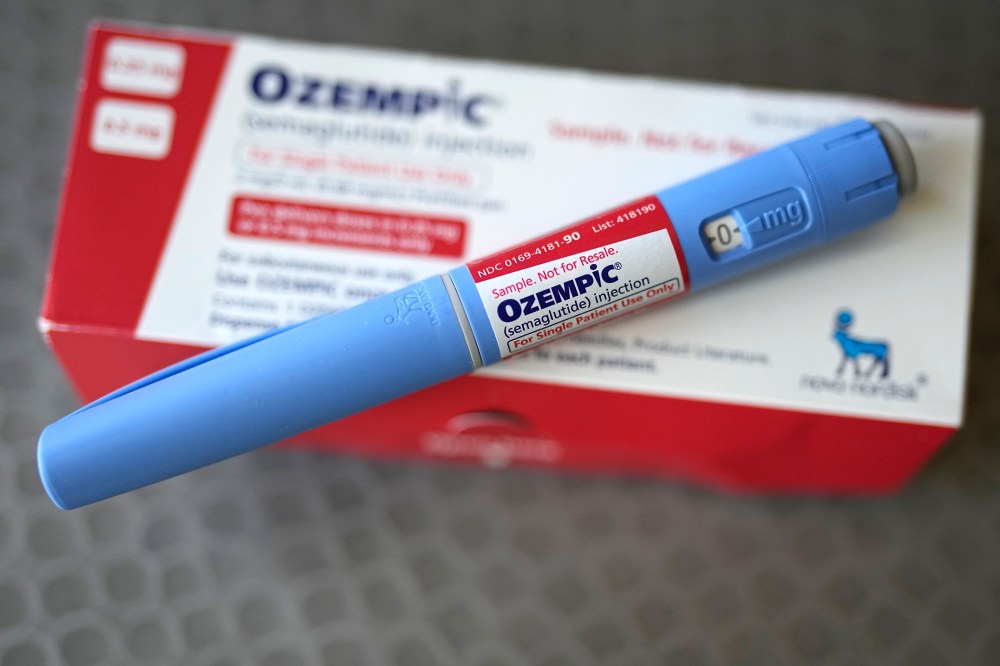
Health Canada said it is working with semaglutide manufacturers to include warnings about the condition in their product monographs.
Patients taking the diabetes and weight loss drugs should talk to their health-care provider about the potential risks before taking them, the warning said.
Anyone currently taking semaglutide should get urgent medical attention if they experience blurring, cloudiness, rapidly worsening sight or sudden vision loss.
Health Canada said its safety review focused on semaglutide drugs, but it is also assessing the risk with all other GLP-1 drugs.
Earlier in November, the U.S. Food and Drug Administration announced manufacturers of all GLP-1 medications — including tirzepatide drugs Mounjaro and Zepbound — must add a warning about NAION to their product labels.
Non-arteritic anterior ischemic optic neuropathy is the most common type of damage to the optic nerve in adults over 50, Health Canada’s summary of its review said.
People with diabetes, high blood pressure and high cholesterol are at increased risk for the condition.
The link between semaglutide and NAION “is not fully understood,” the summary said, but a rapid drop in blood sugar levels after using the medication “may cause swelling of the optic nerve and reduce its blood supply, especially in individuals with other risk factors.”
It’s not known how long it takes symptoms of the condition to develop, the summary said.
In an email on Wednesday, the Canadian Association of Optometrists said it has been aware of the rare risk of NAION “for some time.”
“If you’re starting a GLP-1 medication and haven’t had an eye exam in the last year, it’s a good idea to get your eyes checked. It’s also important to let your optometrist know that you’re taking the medication,” said Dr. Allison Scott, the association’s president.
“Anyone experiencing sudden vision loss should seek immediate eye care. An optometrist can assess the issue and, where necessary, facilitate an urgent referral to an ophthalmologist,” she said.
This report by The Canadian Press was first published Nov. 25, 2026.
Canadian Press health coverage receives support through a partnership with the Canadian Medical Association. CP is solely responsible for this content.